
Pineal Guardian Side Effects: Interactions & Who Should Avoid It
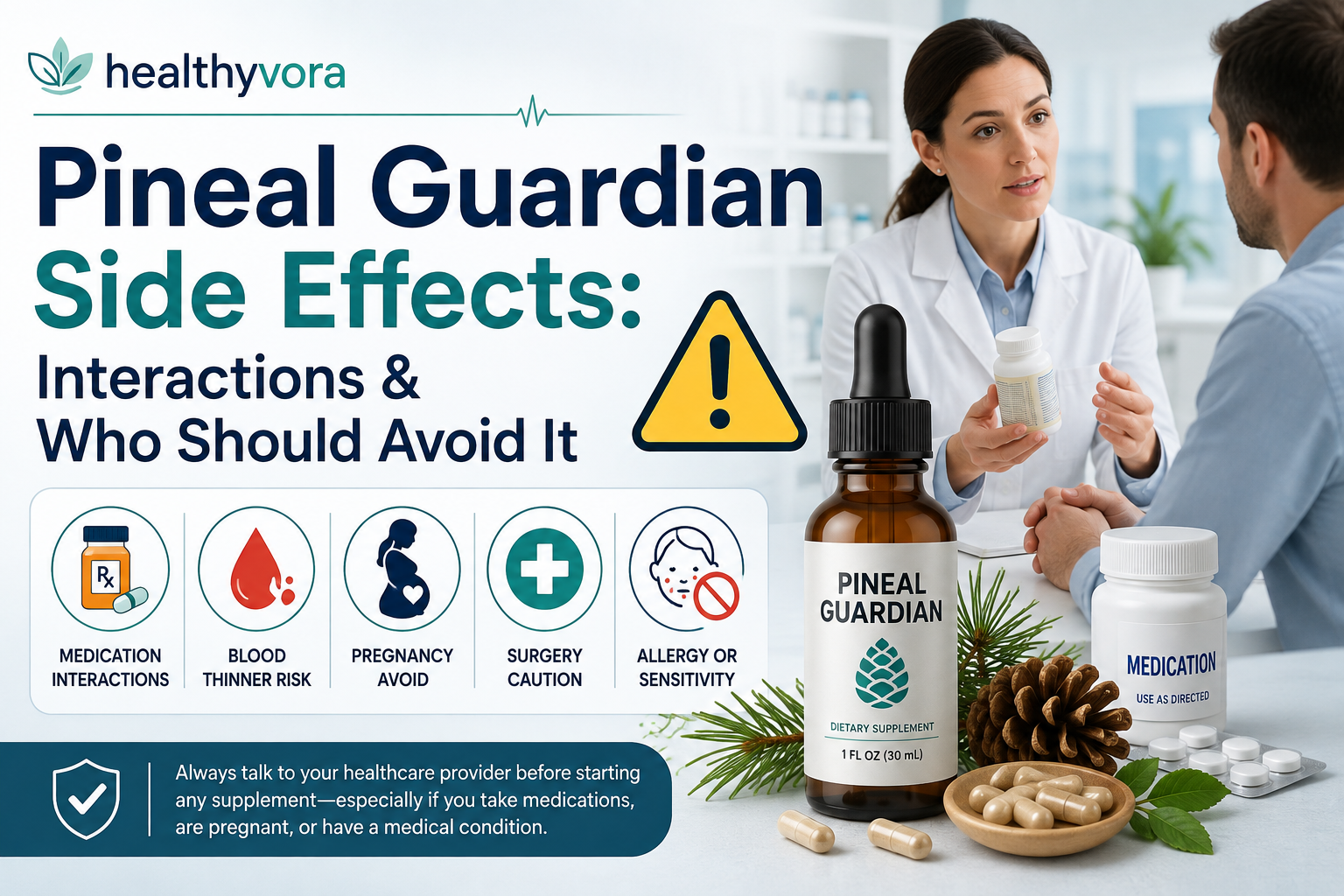
Pineal Guardian side effects may include digestive discomfort, nausea, diarrhea, headache, dizziness, or allergic reactions, depending on a person’s sensitivity to its herbal and algae-based ingredients. The most important safety concern is not necessarily a minor side effect, but a possible interaction with blood thinners, diabetes medications, blood pressure drugs, or medicines taken before surgery.
Pineal Guardian is marketed as a liquid dietary supplement containing ingredients such as ginkgo biloba, bacopa monnieri, pine bark extract, chlorella, spirulina, lion’s mane, moringa, tamarind, and neem. Although promotional materials may describe the formula as natural, “natural” does not automatically mean risk-free. HealthyVora recommends reviewing the current Supplement Facts label and speaking with a pharmacist or licensed healthcare professional before combining this product with medication.
Medical notice: This article provides general educational information and does not replace medical advice. Do not stop, replace, or adjust a prescription medication because of a dietary supplement without consulting your healthcare provider.
What Is Pineal Guardian?
Pineal Guardian is promoted as a botanical dietary supplement intended to support memory, mental clarity, brain health, and pineal gland function. The promotional ingredient information currently lists pine bark extract, tamarind, chlorella, ginkgo biloba, spirulina, lion’s mane mushroom, bacopa monnieri, moringa, and neem. ingredients have different biological properties. Combining them in one formula may also combine their potential adverse effects and medication interactions. Individual research on an ingredient cannot prove that the complete Pineal Guardian formula produces the same benefit or risk, especially when the amount of each ingredient is unclear or differs between product versions.
Consumers should therefore evaluate Pineal Guardian as a multi-ingredient supplement rather than assuming that every ingredient behaves independently. The current bottle label, serving size, ingredient amounts, expiration date, and manufacturer details are more important than descriptions found in reviews or advertisements.
Does Pineal Guardian Cause Side Effects?
Pineal Guardian may cause side effects, but the likelihood and severity are difficult to predict without product-specific clinical safety studies and clearly disclosed ingredient doses. A person may tolerate one ingredient alone but experience symptoms after taking a concentrated multi-herb blend.
The manufacturer’s promotional page states that no side effects have been linked to the product. However, this type of statement should not be interpreted as proof that adverse reactions are impossible. The FDA explains that dietary supplements are not approved for safety and effectiveness before being marketed in the same way as prescription drugs. Supplement companies are responsible for product safety and accurate labeling. tial Mild Side Effects
Possible mild reactions associated with ingredients in the formula include:
- Nausea or an unsettled stomach
- Abdominal cramps
- Diarrhea or increased bowel movements
- Gas or bloating
- Headache
- Dizziness
- Dry mouth
- Temporary fatigue or sleep changes
- Itching, rash, or another mild allergic reaction
Bacopa monnieri is particularly associated with gastrointestinal effects. Human research and NIH safety information describe nausea, abdominal cramping, diarrhea, increased stool frequency, gas, headache, dizziness, and occasional rash among its possible reactions. supplements may also cause headache, nausea, diarrhea, digestive upset, dizziness, or allergic skin reactions. More severe allergic responses have occasionally been reported. tial Allergic Reactions
People with allergies to mushrooms, algae, plants, or herbal extracts should use extra caution. Lion’s mane is a mushroom, while spirulina and chlorella are algae-derived ingredients. A reaction could involve itching, hives, swelling, coughing, wheezing, or difficulty breathing.
Stop using the supplement and obtain emergency medical care if you develop swelling of the lips, tongue, face, or throat; severe wheezing; trouble breathing; fainting; or a rapidly spreading rash.
Pineal Guardian Side Effects at a Glance
| Potential concern | Ingredients that may contribute | Who should be cautious | Recommended response |
|---|---|---|---|
| Stomach upset, nausea, or diarrhea | Bacopa, ginkgo, moringa, algae ingredients | People with sensitive digestion or gastrointestinal disorders | Stop use if symptoms are persistent or severe |
| Headache or dizziness | Ginkgo, bacopa, multi-herb combination | People taking blood pressure medication or prone to dizziness | Avoid driving and contact a clinician if symptoms continue |
| Bleeding or bruising | Ginkgo; possibly other circulation-related botanicals | People taking anticoagulants, antiplatelets, or frequent NSAIDs | Discuss the supplement with a pharmacist before use |
| Reduced warfarin effectiveness | Vitamin K-rich chlorella | People taking warfarin | Do not begin use without INR-management guidance |
| Low blood glucose | Moringa and possibly neem | People taking insulin or diabetes medication | Monitor glucose and consult the prescribing clinician |
| Allergic reaction | Lion’s mane, spirulina, chlorella, botanical extracts | People with mushroom, algae, or plant allergies | Stop immediately; seek urgent care for breathing problems |
Can Pineal Guardian Interact With Medications?
Yes. Pineal Guardian may interact with medications because several of its ingredients can influence blood clotting, blood glucose, blood pressure, digestion, or drug metabolism. The exact clinical significance will depend on the dose, the medication, the person’s health, and the consistency of the supplement.
The FDA warns that supplements can change how a medication is absorbed, metabolized, or removed from the body. This may cause a person to receive too much or too little of the intended medication effect. Thinners and Antiplatelet Drugs
Ginkgo biloba is the clearest interaction concern in the Pineal Guardian ingredient list. It may increase bleeding risk when taken with anticoagulant or antiplatelet medications.
Potentially relevant medications include:
- Warfarin
- Apixaban
- Rivaroxaban
- Dabigatran
- Heparin
- Clopidogrel
- Daily aspirin
The FDA specifically warns that combining ginkgo with warfarin, aspirin, or other products that affect clotting may increase the potential for internal bleeding. assume a low supplement dose eliminates this concern. People taking anticoagulants often require stable routines and careful monitoring. Starting or stopping a botanical blend can introduce another variable.
Chlorella and Warfarin
Chlorella creates a different concern because it can be rich in vitamin K. Vitamin K may reduce warfarin’s anticoagulant effect, while ginkgo may increase bleeding risk. Having both ingredients in one product could make the overall response difficult to predict.
A published case report noted that chlorella’s vitamin K content may inhibit warfarin’s effect. Anyone taking warfarin should ask the clinician managing their INR before using Pineal Guardian. Pain Relievers
Nonsteroidal anti-inflammatory drugs can also increase bleeding risk. Examples include ibuprofen and naproxen. Occasional use does not guarantee a dangerous interaction, but frequent NSAID use combined with ginkgo deserves professional review, especially in people with ulcers, previous gastrointestinal bleeding, kidney disease, or advanced age.
Diabetes Medications
Moringa has been studied for possible effects on glucose regulation, although human findings remain mixed and are not sufficient to predict how the amount in Pineal Guardian will behave. Some studies have reported changes in glucose markers, while others found little or no clinically significant effect. taking insulin, metformin, sulfonylureas, GLP-1 medicines, or other glucose-lowering treatments should monitor for symptoms such as sweating, trembling, sudden hunger, confusion, weakness, or an unusually rapid heartbeat.
The safest approach is to ask the prescribing clinician whether extra glucose monitoring is needed after beginning any multi-ingredient supplement.
Blood Pressure Medications
Some botanical ingredients may influence circulation or blood pressure. This could theoretically add to the effect of antihypertensive medicines and cause lightheadedness, weakness, or fainting, particularly when standing up quickly.
Use extra caution with Pineal Guardian if you take a beta blocker, ACE inhibitor, angiotensin receptor blocker, calcium channel blocker, or diuretic. Evidence for a direct product-level interaction is limited, so a pharmacist should evaluate the complete medication list rather than relying on general online interaction checkers.
Seizure Medications
People with epilepsy or a history of unexplained seizures should consult a neurologist before taking ginkgo-containing supplements. Ginkgo products may have clinically relevant effects in susceptible individuals, and interactions can depend on how an extract was prepared.
Do not use Pineal Guardian as a replacement for an anticonvulsant or as a treatment for memory difficulties related to epilepsy medication.
Thyroid, Psychiatric, and Sedating Medications
Bacopa and other botanicals may affect neurotransmitter pathways or cause dizziness, fatigue, or sleep changes in some users. People taking antidepressants, anxiety medications, sleep aids, antipsychotics, stimulants, or thyroid medication should request an individualized interaction review.
This does not mean an interaction will definitely occur. It means that multi-ingredient formulas can be difficult to evaluate without knowing the extract strength and dose of each component.
Who Should Avoid Pineal Guardian?
Pineal Guardian should generally be avoided unless a healthcare professional approves it when a person is pregnant, breastfeeding, under 18, preparing for surgery, taking blood thinners, or managing a serious medical condition.
Pregnant or Breastfeeding Individuals
Pregnant and breastfeeding people should avoid Pineal Guardian unless their obstetric clinician specifically approves the complete formulation. Many dietary supplements and herbal combinations have not been adequately tested during pregnancy or lactation. Ginkgo may also present concerns related to bleeding or labor. ren and Teenagers
The product is marketed for adults, and children process medicines and supplements differently from adults. The FDA warns that combining dietary supplements and medications can create particular risks for children because metabolism changes with age. e With Bleeding Disorders
Avoid unsupervised use if you have hemophilia, thrombocytopenia, von Willebrand disease, unexplained bruising, frequent nosebleeds, a history of hemorrhagic stroke, or previous gastrointestinal bleeding.
People Preparing for Surgery or Dental Procedures
Tell your surgeon, anesthesiologist, dentist, and pharmacist about Pineal Guardian well before a procedure. Supplements may affect bleeding, anesthesia response, heart rate, or blood pressure. The FDA notes that healthcare professionals may recommend discontinuing certain supplements two or three weeks before surgery, depending on the situation. choose a discontinuation date on your own when the supplement is being used alongside prescribed medication. Follow the surgical team’s instructions.
People With Liver or Kidney Disease
The liver and kidneys help process and eliminate many compounds. People with impaired organ function may be more vulnerable to concentrated extracts, contaminants, or unexpected ingredient levels.
Seek professional guidance if you have chronic kidney disease, hepatitis, cirrhosis, fatty liver disease with abnormal laboratory results, a previous supplement-related liver reaction, or unexplained elevations in liver enzymes.
People With Mushroom or Algae Allergies
Lion’s mane, chlorella, and spirulina may not be suitable for individuals with known reactions to mushrooms or algae-derived products. People with severe allergies should not experiment with a multi-ingredient formula without medical supervision.
People Taking Multiple Medications
The risk of an interaction rises as the number of medications and supplements increases. Older adults, transplant recipients, cancer patients, and people managing several chronic conditions should have the complete ingredient list reviewed by a pharmacist. see also.
Extra caution is necessary with medications that have a narrow therapeutic index, meaning small changes in blood concentration can alter safety or effectiveness. NCCIH notes that evidence on many herb-drug interactions is limited, but caution is especially important with medicines such as warfarin, digoxin, and certain cancer treatments.
How to Reduce the Risk of Pineal Guardian Side Effects
- Read the current Supplement Facts panel. Confirm the serving size, ingredient amounts, other ingredients, allergens, lot number, and expiration date.
- Create a full medication list. Include prescriptions, over-the-counter drugs, vitamins, herbal teas, gummies, powders, and other supplements.
- Ask a pharmacist to check interactions. Pharmacists can evaluate the complete combination rather than reviewing one ingredient in isolation.
- Follow the labeled serving. Do not double the dose because you missed a serving or because results are not immediate.
- Avoid starting several products together. Introducing multiple supplements at once makes it difficult to identify the cause of a reaction.
- Monitor relevant health measurements. People with diabetes or hypertension may need to track glucose or blood pressure more closely.
- Keep the bottle and packaging. The lot number and ingredient label may be important if an adverse event occurs.
- Stop at the first concerning reaction. Contact a healthcare professional rather than trying to “push through” worsening symptoms.
Warning Signs That Require Medical Attention
Stop taking Pineal Guardian and obtain urgent medical advice if you experience:
- Unusual bruising or bleeding
- Blood in the urine
- Black or tar-like stools
- Vomiting blood or material resembling coffee grounds
- A severe or sudden headache
- Fainting, confusion, or extreme weakness
- Persistent vomiting or diarrhea
- Yellow skin or eyes
- Dark urine with upper abdominal pain
- Facial swelling, wheezing, or difficulty breathing
- A seizure or loss of consciousness
In the United States, the FDA recommends stopping a dietary supplement and seeking medical care when a serious adverse reaction occurs. Consumers and healthcare professionals can also report supplement-related adverse events through the FDA’s safety reporting system.
Common Pineal Guardian Safety Mistakes
Assuming Natural Means Harmless
Botanical ingredients can have pharmacological effects. The FDA and NCCIH both caution that natural products can interact with medications and may not be appropriate for certain medical conditions. ing the Exact Product Version
Supplement formulas may change. Pineal Guardian and Pineal Guardian X listings may not always contain identical ingredients, concentrations, serving instructions, or inactive ingredients. Evaluate the bottle you actually plan to use.
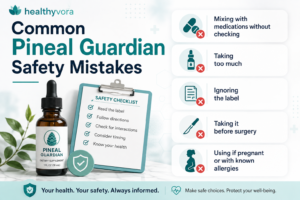
Taking It With Several “Brain” Supplements
Combining multiple memory or focus products may duplicate ginkgo, bacopa, mushrooms, stimulants, or other botanicals. This can increase the total dose without making the duplication obvious.
Replacing Medical Treatment
Memory changes, confusion, sleep disruption, headaches, or concentration problems can have medical causes. A supplement should not replace evaluation for medication side effects, sleep apnea, depression, thyroid disorders, vitamin deficiencies, neurological disease, or another treatable condition.
Buying Without Checking Quality Information
Quality matters with mushroom, plant, and algae ingredients. The FDA monitors certain algae-derived products for microcystin contamination and advises manufacturers to control potential toxin exposure. This does not prove that Pineal Guardian is contaminated, but it supports choosing products with accessible identity, purity, and contaminant-testing documentation.
Why Use HealthyVora for Supplement Safety Research?
HealthyVora approaches supplement content from a safety-first perspective. Instead of treating promotional claims as clinical proof, we separate known ingredient information from assumptions about the finished formula.
Our review process emphasizes:
- Clear explanations of possible side effects
- Medication-interaction warnings
- Responsible interpretation of ingredient research
- FDA and NIH consumer guidance
- Practical questions to discuss with a physician or pharmacist
This approach helps U.S. consumers make informed decisions without promising guaranteed cognitive, sleep, detoxification, or pineal gland results.
Final Verdict: Is Pineal Guardian Safe?
Pineal Guardian may be tolerated by some healthy adults, but it cannot be described as universally safe or free of side effects. Its multi-ingredient formula includes ginkgo, bacopa, chlorella, moringa, lion’s mane, spirulina, and other botanicals with potential adverse effects or medication interactions.
The most significant concerns involve blood thinners, antiplatelet drugs, warfarin management, surgery, diabetes treatment, allergies, pregnancy, breastfeeding, and serious liver, kidney, bleeding, or neurological conditions.
Before purchasing or starting the supplement, photograph the Supplement Facts panel and show it to your pharmacist or healthcare provider. HealthyVora encourages readers to treat that personalized interaction review—not a marketing statement—as the logical next step.
Frequently Asked Questions
1. What are the most common Pineal Guardian side effects?
Possible side effects include nausea, diarrhea, abdominal cramps, headache, dizziness, bloating, and allergic skin reactions. The actual risk depends on ingredient amounts and individual sensitivity.
2. Can Pineal Guardian cause stomach problems?
Yes. Bacopa monnieri is associated with nausea, abdominal cramping, diarrhea, gas, and increased bowel movements in some users.
3. Can Pineal Guardian be taken with warfarin?
Do not combine them without medical supervision. Ginkgo may increase bleeding risk, while vitamin K-rich chlorella may reduce warfarin’s effect and affect INR control.
4. Does Pineal Guardian interact with aspirin?
It may. Ginkgo combined with aspirin could increase bruising or bleeding risk, especially with daily or high-dose aspirin use.
5. Can people with diabetes use Pineal Guardian?
They should consult their prescribing clinician first. Moringa and other ingredients may influence glucose, potentially affecting diabetes treatment or monitoring needs.
6. Should Pineal Guardian be stopped before surgery?
Inform the surgical team as early as possible. A clinician may recommend stopping it before surgery because some ingredients may affect bleeding, blood pressure, or anesthesia.
7. Is Pineal Guardian safe during pregnancy?
It should generally be avoided unless an obstetric clinician approves the complete formula. Its multi-herb combination has not been adequately established as safe during pregnancy.
8. Can Pineal Guardian cause an allergic reaction?
Yes. Mushroom, algae, and botanical ingredients may cause itching, rash, swelling, wheezing, or a more serious allergic reaction in sensitive individuals.
9. Is Pineal Guardian FDA-approved?
No dietary supplement is FDA-approved for safety and effectiveness before marketing in the same way as a prescription drug. Manufacturers are responsible for product safety and labeling compliance.
10. What should I do after experiencing a side effect?
Stop taking the supplement and contact a healthcare professional. Seek emergency help for breathing difficulty, severe bleeding, fainting, seizures, or facial and throat swelling.