
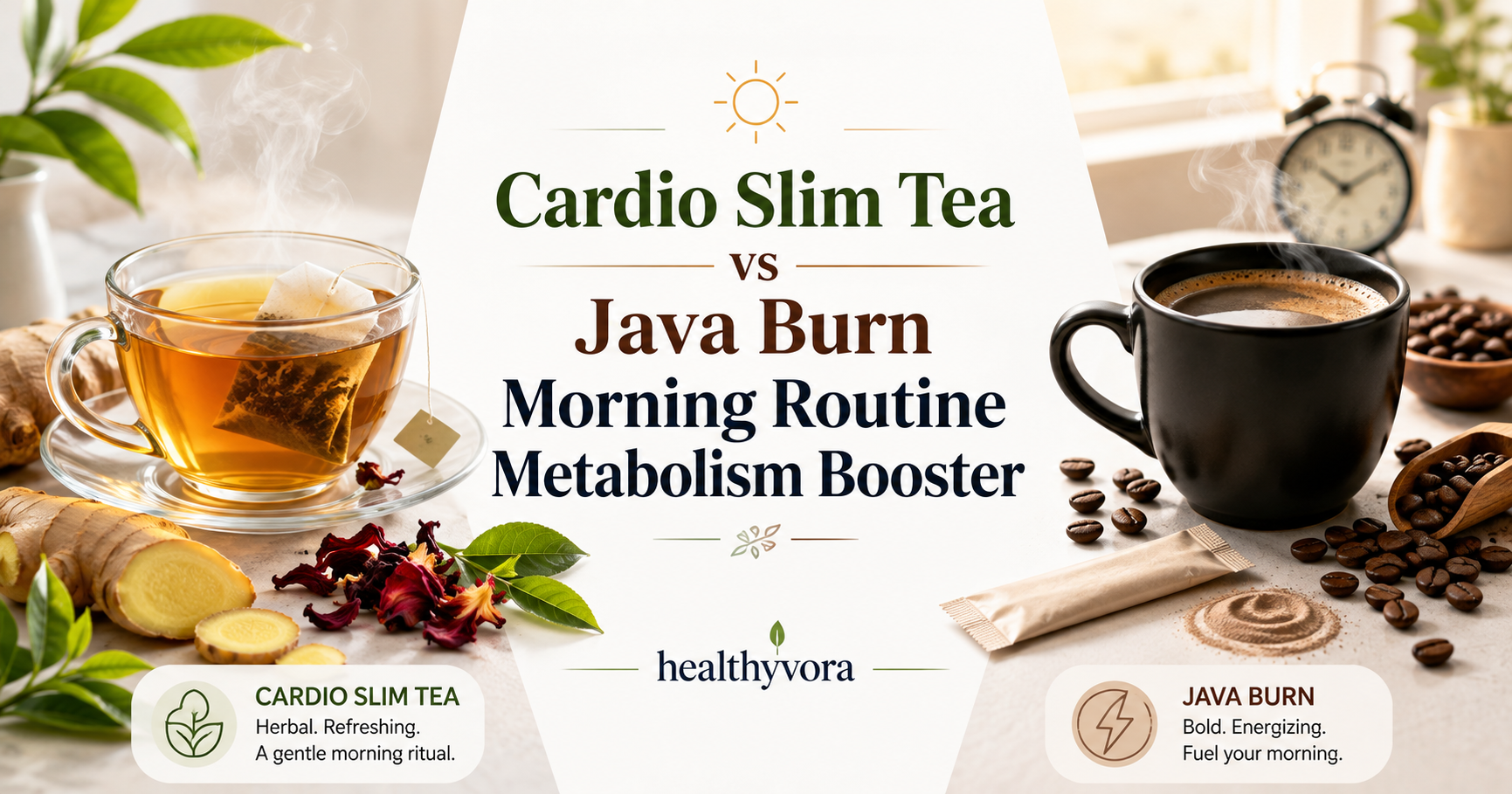
Cardio Slim Tea vs Java Burn Morning Routine Metabolism Booster
Cardio Slim Tea and Java Burn approach the morning metabolism routine in very different ways. Java Burn is built around adding a supplement to coffee, making it the more natural fit for people who already start the day with a cup of coffee. Cardio Slim Tea creates a separate herbal-tea ritual and may appeal more to people trying to reduce sugary beverages or avoid relying heavily on coffee. However, healthyvora found an important limitation on both sides: neither complete product should be treated as clinically proven to produce substantial or lasting weight loss simply by “boosting metabolism.” Research on common ingredients suggests that any weight-related effects are generally modest and should be considered alongside diet, physical activity, sleep, and overall calorie intake.
Quick answer: Java Burn has the convenience advantage for regular coffee drinkers. Cardio Slim Tea makes more sense for people who prefer a tea-based wellness routine. Neither should be viewed as a replacement for nutrition, exercise, medical care, or an evidence-based weight-management plan.

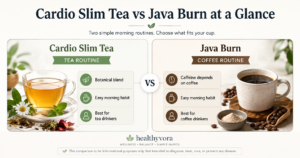
Cardio Slim Tea vs Java Burn at a Glance
| Comparison | Cardio Slim Tea | Java Burn |
|---|---|---|
| Routine | Brewed as herbal tea | Designed to be used with coffee |
| Best fit | Tea drinkers and people who enjoy a separate wellness drink | People who already drink coffee every morning |
| Prominent ingredients | Green tea, hibiscus, beetroot, ginger, oolong and other botanicals | Green tea extract, green coffee, chromium, L-carnitine, L-theanine and vitamins |
| Caffeine consideration | Marketing emphasizes decaffeinated green tea, but the ingredient information also mentions oolong tea; verify the current label | Total caffeine exposure depends heavily on the coffee used with it |
| Metabolism evidence | Evidence mainly relates to individual ingredients rather than the complete formula | Evidence mainly relates to individual ingredients rather than the complete formula |
| Main convenience advantage | Can replace another beverage in the routine | Fits directly into an existing coffee habit |
Current Cardio Slim Tea materials describe a broad botanical formula that includes ingredients such as beetroot powder, decaffeinated green tea, hibiscus, ginger, oolong tea, hawthorn and other plant ingredients. Java Burn’s published product materials emphasize ingredients including chromium, green coffee, green tea extract, L-theanine and L-carnitine. Product pages and formulations can change, so the physical Supplement Facts panel should always take priority over older online ingredient lists.
What Is Cardio Slim Tea?
Cardio Slim Tea is a multi-ingredient herbal tea marketed around metabolism, weight management and general wellness. Instead of swallowing capsules or mixing a powder into water, users prepare it as a conventional tea beverage. Public product directions have described steeping a tea bag in hot water, although buyers should follow the instructions on the current package rather than assuming every online direction remains unchanged.
The ingredient profile is broader than a standard cup of green tea. Public materials have listed ingredients including beetroot, hibiscus, decaffeinated green tea, ginger, oolong tea, hawthorn, dandelion, grape-seed extract and several additional botanicals. HealthyVora has previously noted that different public pages have not always presented the ingredient list identically, which makes current-label verification especially important.
What makes Cardio Slim Tea different in the morning?
Its biggest practical difference is behavioral rather than metabolic: making tea creates its own morning ritual. Someone who normally begins the day with a sweetened beverage could potentially use unsweetened tea as a lower-calorie alternative. In that situation, the calorie reduction from what the tea replaces may matter more to long-term weight management than expecting an herbal ingredient to dramatically increase calorie burning.
What Is Java Burn?
Java Burn is marketed as a dietary supplement intended to accompany coffee. Its primary product information recommends using the product with coffee, particularly as part of a morning routine. That makes the concept straightforward: instead of introducing another beverage, the supplement is attached to a habit millions of Americans already have. see also.
Public Java Burn ingredient information has included green tea extract, green coffee, chromium, L-carnitine, L-theanine, vitamin D and other vitamins or supporting ingredients. It is important to separate research on those individual nutrients from evidence for the finished product. A study showing a small effect from one ingredient does not automatically prove that a proprietary combination will produce the same outcome.
Why does Java Burn fit a coffee drinker’s routine?
The advantage is simplicity. Someone already brewing coffee does not need to create a second beverage routine. Consistency can matter in any wellness plan because even a theoretically useful strategy has little practical value if it is too inconvenient to maintain.
Which Is the Better Morning Routine Metabolism Booster?
For routine convenience, Java Burn has the edge for coffee drinkers; Cardio Slim Tea has the edge for tea drinkers. But the phrase “metabolism booster” needs context. A supplement may contain ingredients associated with thermogenesis, energy metabolism or fat oxidation without creating a large enough effect to produce meaningful weight loss on its own.
The NIH Office of Dietary Supplements notes that caffeine can increase energy expenditure and fat oxidation, but the degree to which those effects translate into meaningful weight loss is uncertain. Its review of weight-loss supplements also describes effects from green tea, chromium, green coffee and carnitine as small or modest rather than dramatic.
That means the better question is not simply, “Which product burns more fat?” A more useful question is, “Which routine can I follow safely while maintaining the habits that actually drive long-term weight management?”
Cardio Slim Tea vs Java Burn Ingredients
Green tea and green tea extract
Green tea appears in the Cardio Slim Tea discussion, while Java Burn materials list green tea extract. Research has investigated green-tea catechins for weight management, but the NIH concludes that green tea may lead to only a small amount of weight loss. Concentrated green tea extract also has different safety considerations from simply drinking ordinary brewed green tea; adverse effects have been reported, including gastrointestinal symptoms and, rarely, liver injury.
Chromium in Java Burn
Chromium is commonly marketed for glucose metabolism and body-composition support. NIH reviews of clinical trials suggest that chromium supplementation may result in a very small reduction in weight or body fat on average, but the magnitude is not large enough to consider chromium a stand-alone weight-loss solution.
L-carnitine in Java Burn
L-carnitine plays a genuine biological role in transporting fatty acids within cells. However, that biological mechanism should not be confused with guaranteed fat loss. Research reviewed by NIH suggests that supplementation can produce small differences in body weight in some studies, while outcomes vary between populations and trials.
Cardio Slim Tea’s botanical blend
Cardio Slim Tea takes a broader herbal approach, combining tea ingredients with botanicals such as hibiscus, beetroot, ginger, hawthorn and dandelion. That variety may appeal to consumers looking for an herbal beverage, but a longer ingredient list is not evidence that a product will produce greater fat loss. It also increases the importance of checking for potential medication or supplement interactions.
Caffeine: One of the Most Important Differences
Java Burn is designed to be paired with coffee, so consumers need to count the caffeine in the coffee itself instead of looking only at the supplement. Coffee strength, serving size and additional caffeinated beverages can significantly change daily intake.
The FDA says that for most healthy adults, approximately 400 mg of caffeine per day is an amount not generally associated with negative effects, but individual sensitivity varies considerably. People can experience insomnia, nervousness, increased heart rate or other symptoms at lower amounts.
Cardio Slim Tea may appear more attractive to caffeine-sensitive shoppers because its marketing discusses decaffeinated green tea. However, public ingredient information has also listed oolong tea, so buyers should not assume that “decaffeinated green tea” automatically means the entire finished blend contains zero caffeine. Check the current package for a specific caffeine declaration.
A Practical Morning Routine for Either Product
A good morning metabolism routine does not need to be complicated. The supplement, if you choose to use one, should be the smallest part of a broader routine rather than the entire strategy.
- Start with hydration. Drink water after waking instead of relying entirely on coffee or tea for fluids.
- Use the product only according to its current label. Do not double the serving because you want faster results.
- Include protein and fiber at breakfast. A balanced meal can support fullness more reliably than expecting a metabolism supplement to suppress appetite.
- Control liquid calories. Large amounts of sugar, flavored creamer or syrups can turn a morning coffee into a substantial source of calories.
- Add movement. A walk, resistance training or another form of regular physical activity contributes far more to overall energy expenditure than relying on a supplement.
- Protect your sleep. If morning caffeine becomes afternoon caffeine and interferes with sleep, the routine can work against weight-management goals.
NIH guidance continues to identify calorie control, healthy dietary patterns and physical activity as the foundation of sustainable weight management. Supplements are secondary tools, not substitutes for those behaviors.
Who May Prefer Cardio Slim Tea?
- People who genuinely enjoy herbal tea.
- People trying to replace soda or another sweetened morning beverage.
- Consumers who prefer a slower, dedicated wellness ritual.
- People who do not want their supplement routine tied directly to coffee.
- Consumers willing to carefully review a multi-herb ingredient panel for interactions.
Cardio Slim Tea should not be used as a substitute for blood-pressure medication, diabetes treatment or cardiovascular care. Dietary supplements promoted for weight control can interact with medications, and NIH specifically recommends discussing them with a healthcare professional when medical conditions are present.
Who May Prefer Java Burn?
- Regular morning coffee drinkers.
- People who prioritize convenience and habit consistency.
- Consumers interested in ingredients such as chromium, green tea extract and L-carnitine.
- People who do not want to prepare a separate herbal beverage.
- Adults who can comfortably manage their total caffeine intake.
Java Burn may be less appealing to someone who is already sensitive to coffee, experiences anxiety or sleep disruption after caffeine, or regularly consumes several additional caffeinated beverages.
What U.S. Consumers Should Know About Supplement Claims
Dietary supplements sold in the United States are regulated differently from prescription and over-the-counter drugs. The FDA does not generally approve dietary supplements for effectiveness before they reach the market. Manufacturers remain responsible for safety and truthful labeling, and consumers should not interpret wording such as “manufactured in an FDA-registered facility” as FDA approval of the finished supplement.
This distinction matters especially for products associated with weight loss. The FDA maintains warnings about weight-loss products that have contained hidden or undeclared drug ingredients, which is another reason to avoid assuming that a dramatic marketing claim proves either effectiveness or safety.
Common Mistakes to Avoid
Expecting metabolism support to override calorie intake
A small increase in energy expenditure cannot reliably compensate for a consistently high-calorie diet.
Doubling the serving
Taking more than the current label recommends does not prove that results will happen faster and can increase the possibility of side effects.
Ignoring coffee extras
If Java Burn is added to coffee containing large amounts of sugar, syrups or cream, the drink can undermine the calorie-control goal that motivated the supplement purchase.
Assuming herbal means interaction-free
Herbal ingredients can still interact with medications or affect people with existing medical conditions. NIH advises consumers using weight-loss supplements to discuss potential risks with a healthcare provider, particularly when conditions such as hypertension, diabetes, liver disease or heart disease are present.
Judging progress by one morning weigh-in
Body weight naturally changes with hydration, sodium intake, bowel contents and other factors. Look at longer-term trends rather than interpreting every daily fluctuation as fat loss or fat gain.
Why Use healthyvora When Comparing Morning Supplements?
At healthyvora, the useful question is not which marketing page makes the strongest promise. It is whether the formula, routine, evidence, safety considerations and practical cost make sense for the person considering it.
That means separating manufacturer claims from independent evidence, checking the current Supplement Facts label, identifying potential caffeine or medication concerns, and keeping expectations realistic. This approach is especially important with metabolism and weight-management products, where attractive mechanisms do not always translate into meaningful real-world results.
Final Verdict: Cardio Slim Tea or Java Burn?
Java Burn is the more convenient morning-routine option for someone who already drinks coffee, while Cardio Slim Tea is the more natural lifestyle fit for someone who prefers tea. That is a routine advantage—not proof that either product causes superior weight loss.
If caffeine exposure is an important concern, Cardio Slim Tea deserves consideration, but verify its current caffeine information because public ingredient lists include tea-derived components. If coffee is already part of your morning, Java Burn is easier to integrate, but the caffeine in your entire cup—and the rest of your day—still matters.
Most importantly, the available evidence for familiar ingredients such as green tea, green coffee, chromium and carnitine suggests modest or uncertain effects rather than dramatic metabolism changes. Sustainable weight management still depends primarily on nutrition, calorie balance, regular activity, sleep and appropriate medical guidance.
Healthyvora CTA: Before choosing Cardio Slim Tea, Java Burn, or another metabolism supplement, use healthyvora to compare the current ingredient label, realistic evidence, caffeine exposure and safety considerations. The most useful choice is the one that fits your routine without replacing the fundamentals of good health.
Frequently Asked Questions
1. Is Cardio Slim Tea better than Java Burn?
Neither is universally better. Cardio Slim Tea suits tea-based routines, while Java Burn is more convenient for regular coffee drinkers.
2. Which is better for a morning routine?
Java Burn integrates more directly into an existing morning coffee routine. Cardio Slim Tea requires brewing a separate tea.
3. Does Java Burn actually boost metabolism?
Its ingredients are marketed for metabolic support, but evidence on individual ingredients does not prove that the complete product creates substantial or lasting weight loss.
4. Does Cardio Slim Tea increase metabolism?
Some tea ingredients have been studied for metabolism and weight management, but research does not establish Cardio Slim Tea itself as a powerful metabolism booster.
5. Which product has more caffeine?
Java Burn is intended to be combined with coffee, so its routine can involve considerably more caffeine. Check both products’ current labels and count caffeine from all beverages.
6. Can I use Cardio Slim Tea instead of coffee?
Yes, if the current product directions suit you. Replacing a high-calorie coffee drink with unsweetened tea may also reduce morning calorie intake.
7. Can I take Java Burn without coffee?
The product is specifically marketed around use with coffee. Follow the current label rather than assuming another beverage provides an equivalent use case.
8. Are metabolism supplements FDA approved?
Dietary supplements generally do not receive FDA premarket approval for effectiveness in the same way prescription drugs do.
9. Can I use either product while taking medication?
Ask a healthcare professional first, particularly if you use medications for blood pressure, blood sugar, heart conditions or other chronic conditions.
10. What matters more than a morning metabolism booster?
Consistent nutrition, calorie balance, physical activity, adequate sleep and appropriate medical care have a much larger role in sustainable weight management.