
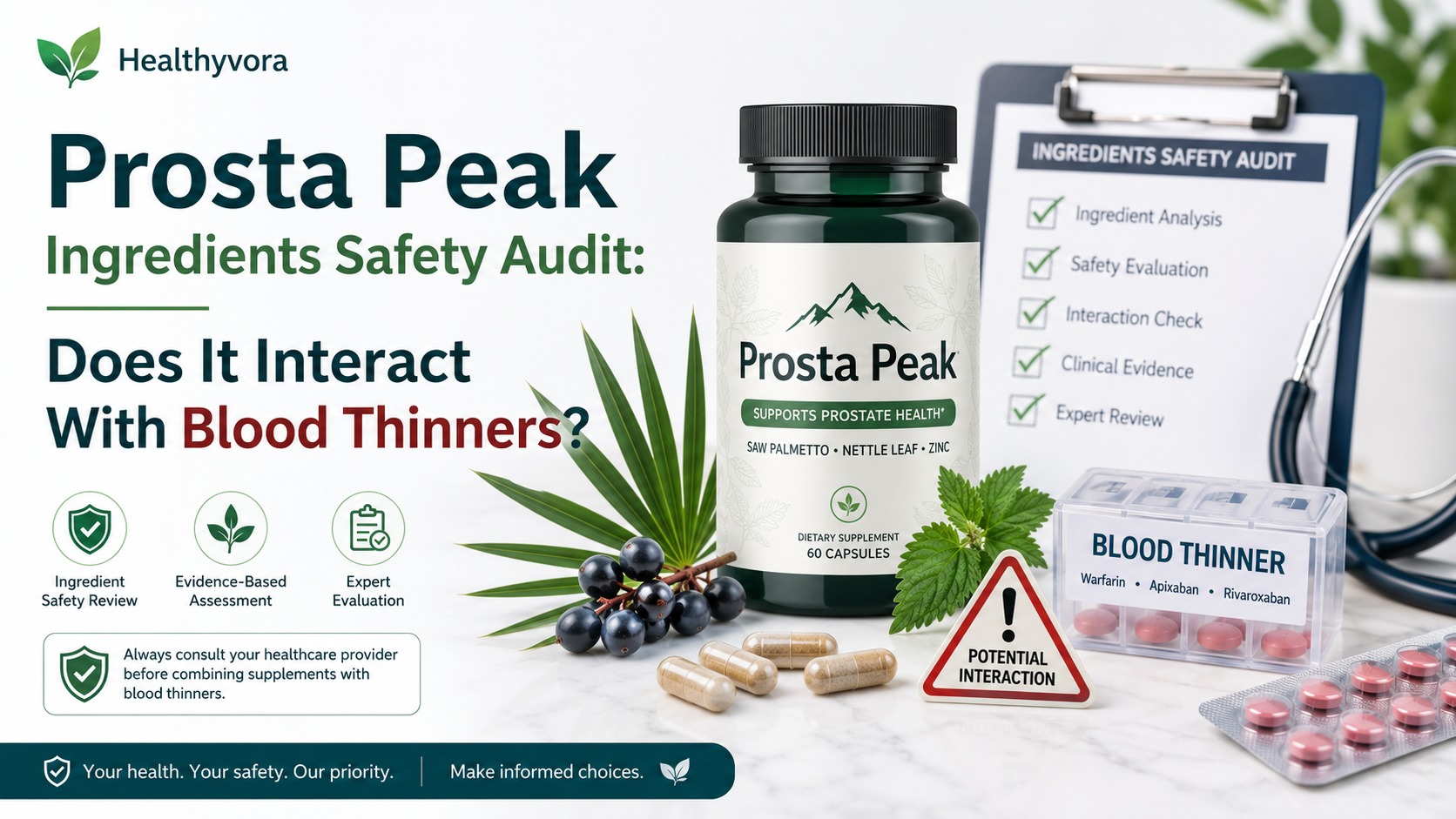
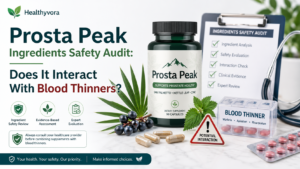
Prosta Peak Ingredients Safety Audit: Does It Interact With Blood Thinners?
Short answer: Prosta Peak should not automatically be considered safe for someone taking a blood thinner. The current official Prosta Peak sales page identifies ingredients including saw palmetto, cat’s claw, green tea, pygeum, raspberry, and soursop while describing the overall formula as a proprietary blend containing more than 20 plants and nutrients. At least two of the specifically disclosed botanicals—saw palmetto and cat’s claw—have recognized precautions involving anticoagulant or antiplatelet medications. Anyone taking warfarin, Eliquis, Xarelto, Pradaxa, Savaysa, clopidogrel, aspirin, or another medicine that affects clotting should have the complete product label reviewed by a physician or pharmacist before using Prosta Peak.
This Healthyvora safety audit focuses on medication interactions rather than marketing claims. That distinction matters because a supplement can be marketed as “natural” while still containing biologically active substances capable of changing bleeding risk or altering how medicines work.
Does Prosta Peak Interact With Blood Thinners?
Potentially, yes. There is enough interaction concern in the disclosed formula that people taking anticoagulants or antiplatelet drugs should not start Prosta Peak without professional medication review.
The concern does not mean that every person combining the products will experience bleeding. It means the combination introduces uncertainties that matter clinically. Saw palmetto has been associated with additive anticoagulant effects and increased bleeding risk, while cat’s claw has also been flagged for possible increased bruising or bleeding when combined with blood-thinning medication.
This distinction is particularly important for Americans using prescription anticoagulants for atrial fibrillation, previous blood clots, pulmonary embolism, heart-valve conditions, or stroke prevention. For these patients, even seemingly minor supplement interactions deserve attention.
A dietary supplement does not have to be a prescription drug to affect clotting, medication metabolism, or bleeding risk.
What Ingredients Are Currently Disclosed for Prosta Peak?
The official Prosta Peak website describes the product as containing a proprietary blend of more than 20 plants and nutrients. However, its public-facing ingredient section prominently identifies only a limited group of ingredients, including:
- Saw palmetto
- Cat’s claw
- Green tea
- Pygeum
- Raspberry
- Soursop, also known as graviola
The website also describes a smaller blend featuring green tea extract, raspberry, saw palmetto, and pygeum.
This creates the first important finding in any Prosta Peak ingredients safety audit: a marketing page that names several headline ingredients is not equivalent to reviewing the complete Supplement Facts panel on the physical bottle.
If the formula contains more than 20 substances but the consumer-facing page highlights only a fraction of them, it is difficult to perform a complete medication-interaction assessment based on the website alone.
Why the Complete Supplement Facts Label Matters
For someone who does not take prescription medication, incomplete online ingredient information may simply be inconvenient. For someone taking an anticoagulant, it becomes a safety issue.
Two different supplement ingredients can affect clotting through different mechanisms. Another ingredient could affect drug metabolism, while a vitamin could oppose the effect of a medication such as warfarin.
Before taking Prosta Peak, compare the exact bottle you received with the ingredient information available online. Formulas, sellers, and product listings can change, so the physical Supplement Facts panel should be treated as the primary reference for the product in your possession.
Prosta Peak Blood Thinner Interaction Risk by Ingredient
| Ingredient | Main Safety Issue | Blood Thinner Concern | Practical Action |
|---|---|---|---|
| Saw Palmetto | Possible effects on clotting | May increase bruising or bleeding with anticoagulants or antiplatelet drugs | Discuss with a physician or pharmacist before combining |
| Cat’s Claw | Possible cardiovascular and drug interactions | May increase bruising or bleeding risk | Avoid self-combining with blood thinners |
| Green Tea / Green Tea Extract | Possible medication interaction depending on preparation and dose | Large green-tea intake can affect warfarin response; extracts differ | Tell the clinician exactly which form and dose is on the label |
| Pygeum | Limited interaction data | No well-established anticoagulant interaction, but evidence is limited | Include it in the medication review |
| Raspberry Extract | Concentrated extract may differ from normal food intake | No major established interaction based simply on dietary raspberry | Do not assume concentrated extracts behave like food |
| Soursop / Graviola | Limited high-quality medication interaction data | Uncertainty rather than proven safety | Use extra caution when taking prescription medication |
| Undisclosed Proprietary-Blend Components | Exact ingredients or amounts may not be obvious online | Interaction cannot be fully assessed without the label | Have the complete label reviewed |
Saw Palmetto Is One of the Most Important Ingredients to Check
Saw palmetto deserves special attention in this safety audit because it appears prominently in Prosta Peak and is widely used in prostate-support products.
Although many consumers associate saw palmetto with benign prostate enlargement and urinary support, an herb’s intended use does not determine its interaction profile. Clinical reference sources caution that saw palmetto may have additive effects when combined with anticoagulants or antiplatelet medications.
Cases involving prolonged bleeding and anticoagulant effects have also been reported. Those reports do not prove that every user will experience the same problem, but they are enough to justify caution when clotting is already being deliberately altered by medication.
What About Saw Palmetto and Eliquis?
Eliquis, or apixaban, is an anticoagulant used to reduce the risk of blood clots and stroke. A person taking Eliquis should not assume saw palmetto is safe simply because it is available without a prescription.
The appropriate question is not whether saw palmetto is “natural.” The question is whether adding it could increase bleeding risk in that individual, considering age, kidney function, other medications, previous bleeding, dose, and additional supplements.
What About Saw Palmetto and Xarelto?
The same caution applies to Xarelto, or rivaroxaban. Combining an anticoagulant with supplements that may influence bleeding should be reviewed professionally rather than tested through trial and error.
Cat’s Claw Adds Another Interaction Concern
Cat’s claw, or Uncaria tomentosa, is another disclosed Prosta Peak ingredient that deserves attention.
Memorial Sloan Kettering Cancer Center advises people taking warfarin or other blood thinners that cat’s claw may increase bruising and bleeding risk, although the clinical significance is not completely established.
That uncertainty is precisely why a multi-ingredient product requires more caution than evaluating one vitamin in isolation. A person might tolerate one botanical without difficulty, yet a formula containing multiple biologically active substances may create a more complicated interaction profile.
Green Tea and Warfarin Require a Different Kind of Caution
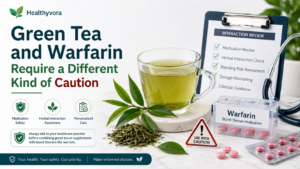
Green tea illustrates why supplement interactions are not always about “more bleeding.” In sufficiently large amounts, green tea can provide vitamin K and potentially oppose warfarin’s anticoagulant effect.
That does not mean an unspecified amount of green tea extract in Prosta Peak will necessarily alter INR. Green tea beverages and concentrated extracts are not identical, and the official Prosta Peak page does not provide enough publicly visible dose information to make that prediction.
The practical lesson is simple: warfarin users should tell the clinician managing their INR about any new supplement containing green tea rather than making sudden changes without monitoring.
What If the Bottle Contains Vitamin K or Vitamin E?
This is one of the most important label checks for anyone performing a Prosta Peak ingredients safety audit.
Vitamin K and Warfarin
Vitamin K can reduce warfarin’s anticoagulant effect because warfarin works by interfering with vitamin K-dependent clotting pathways. Consistency in vitamin K intake is therefore important for people taking warfarin.
If the exact Prosta Peak bottle in your possession lists vitamin K1, vitamin K2, menaquinone, MK-7, or another vitamin K source, do not make assumptions about whether the dose is insignificant. Show the label to the clinician responsible for your anticoagulation management.
Vitamin E and Bleeding Risk
Supplemental vitamin E is another ingredient worth checking. At higher supplemental intakes, vitamin E can increase bleeding risk, and the NIH Office of Dietary Supplements notes that vitamin E supplements can interact with anticoagulant or antiplatelet medicines such as warfarin.
The key point is not that Prosta Peak necessarily contains a clinically significant amount of either vitamin. The point is that the complete bottle label—not an incomplete online ingredient summary—is necessary to answer the safety question responsibly.
Which Blood Thinners Require Extra Caution?
The term “blood thinner” is commonly used for two related but different medication categories.
Anticoagulants
- Warfarin, commonly known as Coumadin or Jantoven
- Apixaban, or Eliquis
- Rivaroxaban, or Xarelto
- Dabigatran, or Pradaxa
- Edoxaban, or Savaysa
- Injectable anticoagulants such as enoxaparin
Antiplatelet Drugs
- Clopidogrel, or Plavix
- Aspirin when used for cardiovascular protection
- Prasugrel
- Ticagrelor
A person taking more than one medication that affects clotting—for example, an anticoagulant plus an antiplatelet drug—may have a different baseline bleeding risk from someone taking a single medication. Supplements should therefore be assessed in the context of the entire medication list.
Why This Issue Matters for U.S. Consumers
Dietary supplements in the United States are regulated differently from prescription drugs. The FDA does not approve dietary supplements for safety and effectiveness before they reach the market in the same way it approves new prescription medications. see also.
Manufacturers and distributors are responsible for ensuring their supplements comply with applicable requirements, while the FDA can take action when products are unsafe, adulterated, or improperly marketed.
For consumers, that makes label reading and medication reconciliation particularly important. A bottle being sold legally as a dietary supplement does not mean it has been individually tested with warfarin, Eliquis, Xarelto, or every other prescription medication.
How to Check Prosta Peak Before Taking It With Medication
A safe review does not require guessing. Use a structured process.
- Photograph the Supplement Facts panel. Capture every ingredient, serving size, proprietary blend, warning, and inactive ingredient.
- Write down every medication you take. Include prescriptions, aspirin, pain medicines, and over-the-counter products.
- Include other supplements. Fish oil, vitamin E, turmeric, ginkgo, garlic concentrates, and other products may also matter.
- Show the complete list to a pharmacist or physician. Pharmacists are particularly useful for screening medication-supplement interactions.
- Ask specifically about bleeding and clotting. Do not ask only, “Is this supplement okay?” Mention the anticoagulant by name.
- Do not change your prescription medication yourself. A supplement is not a reason to skip, reduce, or discontinue an anticoagulant without medical instructions.
Warning Signs That Need Prompt Medical Attention
People taking anticoagulants are usually given individualized guidance about signs of excessive bleeding. Symptoms that can be concerning include:
- Unusual or rapidly increasing bruising
- Bleeding that is difficult to stop
- Frequent nosebleeds
- Blood in urine
- Black or bloody stools
- Vomiting or coughing blood
- Severe unexplained weakness or dizziness
- A sudden severe headache, especially after a fall or head injury
If significant bleeding or another medical emergency is suspected, seek urgent medical care rather than waiting to see whether stopping a supplement resolves the problem.
Common Mistakes When Evaluating Prostate Supplements
Assuming “Natural” Means Interaction-Free
Natural compounds can have pharmacological effects. Some herbs influence platelets, clotting, blood pressure, liver enzymes, or medication transport.
Checking Only the Featured Ingredients
A bottle marketed around saw palmetto may contain many additional botanicals, minerals, or vitamins. Review every ingredient.
Ignoring Aspirin or Clopidogrel
They may not be anticoagulants in the strict pharmacological sense, but both affect platelet activity and therefore matter when evaluating bleeding risk.
Stopping a Blood Thinner to Take a Supplement
This can be dangerous. Anticoagulants are commonly prescribed to prevent serious events such as stroke or recurrent blood clots. Never replace or interrupt prescribed therapy because of an over-the-counter prostate product without medical direction.
Assuming a Normal First Week Proves Long-Term Safety
Absence of immediate symptoms does not rule out an interaction. Medication effects, accumulated exposure, illness, dietary changes, and additional drugs can alter risk over time.
Is Prosta Peak Safe for People Who Do Not Take Blood Thinners?
There is no single yes-or-no answer that applies to everyone.
Safety depends on the exact formula, ingredient doses, medical history, allergies, kidney and liver function, other medications, and the reason the individual is considering a prostate supplement.
Men with persistent urinary symptoms should also remember that frequent urination, weak stream, urgency, difficulty starting urination, or waking repeatedly at night can have several causes. A supplement should not delay evaluation when symptoms are new, worsening, painful, associated with blood in the urine, or accompanied by an inability to urinate.
Why Healthyvora Uses a Medication-First Safety Approach
Healthyvora’s approach to supplement evaluation starts with a practical question: what is the reader already taking?
Ingredient benefits are only part of a useful review. A product marketed for prostate support may look appropriate based on its intended use while being a poor choice for a person taking anticoagulants, antiplatelet drugs, or several other medications.
For that reason, a responsible Prosta Peak review should distinguish manufacturer claims from established interaction evidence, identify uncertainty when exact doses are unavailable, and encourage readers to verify the physical label before making a decision.
Final Safety Verdict: Prosta Peak and Blood Thinners
Prosta Peak cannot be considered automatically compatible with blood thinners. The product’s official website identifies saw palmetto and cat’s claw, both of which have recognized bleeding-related precautions with anticoagulant therapy. Green tea creates additional considerations, especially for warfarin users, and the proprietary nature of the broader formula makes the complete Supplement Facts panel essential.
If you take warfarin, Eliquis, Xarelto, Pradaxa, Savaysa, clopidogrel, cardiovascular-dose aspirin, or another medication that affects clotting, have the exact Prosta Peak label reviewed by your physician or pharmacist before starting it.
The safest decision is not based on whether a supplement is natural or popular. It is based on the complete ingredient list, the medications you already take, your medical history, and professional assessment of the combination.
Frequently Asked Questions About Prosta Peak and Blood Thinners
1. Does Prosta Peak interact with blood thinners?
It potentially can. Saw palmetto and cat’s claw are disclosed Prosta Peak ingredients with recognized precautions involving anticoagulants or increased bleeding risk.
2. Can I take Prosta Peak with warfarin?
Do not start the combination without having the complete Prosta Peak label reviewed by the healthcare professional managing your warfarin therapy.
3. Can Prosta Peak be taken with Eliquis?
Because Prosta Peak contains botanicals that may influence bleeding, people taking Eliquis should consult a physician or pharmacist before using it.
4. Can I take Prosta Peak with Xarelto?
The combination requires professional review. Do not assume an herbal prostate supplement is automatically compatible with rivaroxaban.
5. Does saw palmetto thin the blood?
Saw palmetto is not a prescription blood thinner, but clinical references warn that it may have additive anticoagulant effects and increase bruising or bleeding risk.
6. Does cat’s claw interact with anticoagulants?
Potentially. Cat’s claw has been identified as a concern for people taking warfarin or other blood thinners because it may increase bruising or bleeding.
7. Can green tea interfere with warfarin?
Large amounts of green tea can provide enough vitamin K to reduce warfarin’s effect. Concentrated extracts vary, so warfarin users should disclose green-tea supplements to their clinician.
8. What if my Prosta Peak label contains vitamin K?
Show the label to the healthcare professional managing your warfarin. Vitamin K can counteract warfarin’s anticoagulant effect, and consistency of intake is important.
9. Should I stop my blood thinner before taking Prosta Peak?
No. Never stop or reduce prescribed anticoagulant therapy simply to start a supplement unless the prescribing healthcare professional specifically instructs you to do so.
10. What is the safest way to evaluate Prosta Peak?
Photograph the full Supplement Facts panel and give it, along with your complete medication and supplement list, to a pharmacist or physician for interaction screening.
Take the Next Step With Healthyvora
If you are researching Prosta Peak, start with the label rather than the marketing promises. Healthyvora recommends comparing every ingredient against your medications, paying particular attention to anticoagulants, antiplatelet drugs, and supplements that may affect bleeding. When prescription blood thinners are involved, confirming the combination with a qualified healthcare professional is the logical next step before adding Prosta Peak to your routine.