
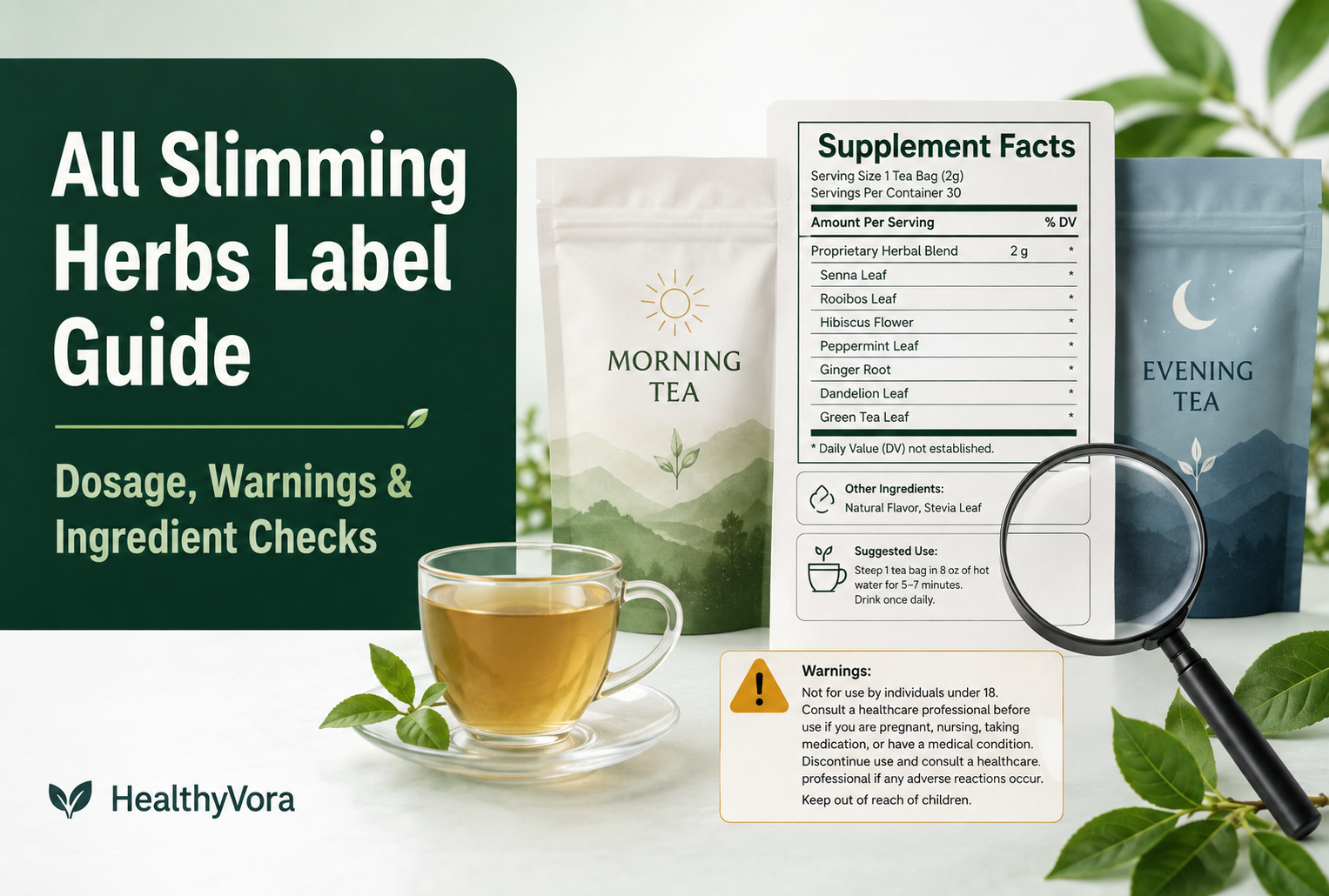
All Slimming Herbs Label Guide: Dosage, Warnings & Ingredient Checks
Visit Official Website
What Does the All Slimming Herbs Label Say?
Short answer: All Day Slimming Tea is marketed as a 30-day, two-pouch routine with 30 morning tea bags and 30 evening tea bags. A current U.S. retailer listing states three to four cups of Morning Energy Tea and one cup of Evening Detox Tea. That online direction is not a personalized medical dose, and it raises important questions because the published materials do not provide a clear caffeine amount or individual botanical quantities.
“`
| Label area | What public materials indicate | What to verify on your package |
|---|---|---|
| Product format | Morning Energy Tea plus Evening Detox Tea; usually 30 bags of each | Net quantity, servings per container, and whether both pouches match the outer box |
| Morning directions | A retailer listing states three to four cups daily | Exact serving size, preparation method, caffeine per serving, and maximum daily use |
| Evening directions | One cup in the evening is promoted | Senna amount, steeping time, frequency, duration limit, and required warnings |
| Active ingredients | Two multi-herb ingredient lists are published | Amount per serving or proprietary-blend total, botanical part, extracts, and allergens |
A serving direction tells you what the manufacturer suggests. It does not prove that the amount is effective, risk-free, or appropriate for your medical history.
Why Label Review Matters for U.S. Consumers
In the United States, dietary supplements are regulated differently from prescription and over-the-counter drugs. The FDA does not approve dietary supplements for safety or effectiveness before sale. The company is responsible for safety, lawful labeling, and truthful claims, while FDA oversight largely occurs after products enter the market.
A compliant Supplement Facts panel normally identifies the serving size, servings per container, dietary ingredients, and amounts per serving. A proprietary blend may list a total blend weight without revealing each ingredient’s individual amount. The label should also show other ingredients, net contents, the manufacturer, packer, or distributor, and a domestic contact for reporting serious adverse events.
This applies whether you buy in New York, California, Texas, Florida, or elsewhere in the country. “Made in an FDA-registered facility” is not the same as “FDA approved,” and “natural” does not mean free from side effects or interactions.
All Day Slimming Tea Ingredients Explained
The ingredient order and formula can change, so compare the list below with the physical product you receive. Do not use a pouch if its label is missing, damaged, unreadable, or materially different from the product ordered.
Morning Energy Tea Ingredients
Published materials list green tea, oolong tea, orange peel, lemongrass, ginger, dandelion leaf, ginseng root, garcinia cambogia, monk fruit, and natural mint and lemon flavor.
- Green and oolong tea: Both come from Camellia sinensis and normally contain caffeine unless processed to remove it. The public retailer page calls the product decaffeinated, yet a dependable milligram amount is not displayed. Ask the manufacturer for caffeine per tea bag and per prepared cup.
- Garcinia cambogia: It is commonly promoted for appetite or weight control, but the NIH Office of Dietary Supplements says it has little to no effect on weight loss. Reported concerns include headache, nausea, and digestive symptoms.
- Ginseng, ginger, and dandelion: These botanicals may have biologic effects and may not suit every medication plan. Their presence should trigger a pharmacist review rather than an assumption that a familiar herb is harmless.
- Monk fruit and flavors: Check the “Other Ingredients” area for flavor carriers, sweeteners, or allergens not obvious from the front label.
Evening Detox Tea Ingredients
Published materials list senna leaf, licorice root, peppermint leaf, fennel fruit, orange peel, cinnamon bark, dandelion leaf, lemongrass, ginger, monk fruit, and natural honey and lemon flavor.
- Senna: This is a stimulant laxative. It can increase bowel activity and temporarily change stool weight or constipation-related bloating, but that is not body-fat loss.
- Licorice root: Standard licorice may contain glycyrrhizin, which can affect blood pressure, potassium balance, and heart rhythm. The public ingredient list does not clarify the amount or whether the formula uses deglycyrrhizinated licorice (DGL).
- Peppermint, fennel, cinnamon, and ginger: These may contribute flavor or digestive comfort, but their inclusion does not establish that the finished tea removes toxins, produces fat loss, or treats a digestive disorder.
Visit Official Website
All Slimming Herbs Dosage: How to Interpret the Directions
Do not equate the online recommendation with a medically established dosage. The retailer direction of three to four morning cups could multiply exposure to caffeine and every botanical in that pouch. Without ingredient weights and caffeine milligrams, a reader cannot calculate that exposure reliably.
- Confirm that you have the correct morning or evening pouch.
- Read the serving size and maximum daily frequency on the physical label.
- Follow the stated water volume and steeping time; do not make the tea stronger than directed.
- Do not add extra cups because a testimonial reports faster results.
- Ask a pharmacist to review both pouches, all medicines, and other supplements before the first serving.
- Do not combine the evening tea with another laxative, “detox” tea, diuretic, or stimulant unless a clinician specifically approves the combination.
How Long Can You Use the Evening Tea?
Because it contains senna, duration matters. MedlinePlus advises not taking senna for more than one week without speaking with a doctor. Frequent or continued use may make the bowel depend on laxatives and lose normal activity. This guidance conflicts with promotional suggestions to use the two-tea routine daily for months, so medical clearance is important before repeated evening use. see also.
Does All Slimming Herbs Contain Caffeine?
The safest answer is that the caffeine content is unclear. Green and oolong tea naturally contain caffeine, while one retailer specification describes the product as decaffeinated. “Decaffeinated” also does not necessarily mean caffeine-free. If the label does not state milligrams, contact the manufacturer and avoid guessing—especially if you have insomnia, anxiety, palpitations, high blood pressure, or use other caffeine products.
Warnings and Medication Checks
Senna Warning Signs
Senna may cause stomach discomfort, nausea, cramps, faintness, and urine discoloration. Diarrhea can contribute to dehydration or electrolyte imbalance. Stop use and contact a healthcare professional for severe or persistent diarrhea, marked weakness, fainting, worsening abdominal pain, or palpitations. Rectal bleeding requires prompt medical attention.
Licorice Root Risks
The NCCIH licorice safety review states that glycyrrhizin can cause serious adverse effects, including irregular heartbeat, particularly with large or long-term intake. People with hypertension or heart or kidney conditions may be vulnerable even at smaller amounts. Licorice interactions with corticosteroids have also been reported.
Who Should Seek Medical Clearance or Avoid Use?
- Anyone who is pregnant, planning pregnancy, breastfeeding, or under 18.
- People with high blood pressure, heart disease, an irregular heartbeat, kidney disease, liver disease, or diabetes.
- People with unexplained abdominal pain, nausea, vomiting, bowel obstruction, chronic diarrhea, or a sudden persistent change in bowel habits.
- Anyone taking prescription medicine, especially blood-pressure, heart, diabetes, diuretic, corticosteroid, anticoagulant, or other medicines affected by dehydration or potassium changes.
- People already using laxatives, detox products, stimulants, or multiple weight-management supplements.
- Anyone preparing for surgery or medical testing, because supplements can interact with medicines, anesthesia, or laboratory results.
Call 911 for difficulty breathing, collapse, severe chest symptoms, or another medical emergency. In the United States, a supplement-related adverse event can also be reported through FDA MedWatch.
“`
Seven Ingredient and Package Checks Before You Buy
- Request current label photos. Obtain readable images of both Supplement Facts panels, directions, and warnings before ordering.
- Check amounts. Look for milligrams per serving, total proprietary-blend weight, caffeine, and senna information.
- Confirm identity. Match the product name, UPC if available, manufacturer or distributor, lot number, and expiration date.
- Inspect the seal. Do not use a package with a broken tamper seal, unusual odor, moisture, or damaged tea bags.
- Ask about independent testing. A recent certificate of analysis should match the product and lot. A generic “lab tested” statement is not the same as lot-specific documentation.
- Search FDA notices. Review the FDA’s weight-loss product notifications. Absence from the list is not proof of safety because FDA has not tested every product.
- Save records. Keep the label, receipt, seller details, checkout terms, and photos in case you need medical advice, a return, or an adverse-event report.
Benefits of Reading the Label Before Deciding
A careful label review helps you compare marketing with measurable facts. It can reveal whether the serving direction exposes you to multiple cups, whether a “detox” formula is actually laxative-containing, whether caffeine is quantified, and whether the manufacturer provides a traceable contact. It also gives a pharmacist the information needed to screen for interactions.
Most importantly, it prevents temporary bowel or water changes from being mistaken for proven fat loss. NIH guidance notes that many weight-loss supplements have limited evidence, may interact with medication, and have not been adequately studied as complete multi-ingredient formulas.
Common Mistakes to Avoid
- Assuming “natural,” “detox,” or “herbal” means safe for daily long-term use.
- Treating three to four morning cups as appropriate for everyone.
- Ignoring the evening tea’s senna because it is presented as a tea rather than a tablet.
- Assuming a bowel movement or overnight scale drop equals fat loss.
- Combining the product with coffee, energy products, laxatives, or diuretics without calculating total exposure.
- Believing an FDA-registered facility means the formula is FDA approved.
- Using testimonials instead of the physical label, clinical evidence, and professional advice.
- Continuing despite persistent diarrhea, faintness, palpitations, or rectal bleeding.
Why Readers Choose HealthyVora
HealthyVora approaches supplement labels from a buyer-first perspective. We separate a brand’s directions and claims from what the ingredient list, U.S. regulations, and independent health guidance actually establish. That means identifying uncertainties—such as undisclosed caffeine or senna amounts—instead of filling them with assumptions.
HealthyVora is an educational resource, not the product manufacturer and not a substitute for personal medical care. The goal is to help readers ask better questions, recognize warning ingredients, and make a decision that fits their health history.
Final Takeaway
The All Slimming Herbs label describes more than a simple herbal beverage. It combines a potentially caffeinated morning blend with an evening blend containing senna and licorice root. Public directions exist, but key dose details remain unclear, and the finished formula has not been established as a reliable method for substantial, lasting fat loss.
Before ordering or drinking it, obtain the current label, verify the amounts and caffeine content, and show both ingredient panels to your physician or pharmacist. If you already have the product, use HealthyVora’s checklist to review it line by line. An informed label check is the logical next step—and a safer basis for a decision than a dramatic weight-loss promise.
Frequently Asked Questions
1. What is the All Slimming Herbs dosage?
A current retailer listing states three to four morning cups and one evening cup. Do not treat that as a personalized medical dose; follow the physical package and obtain professional advice because ingredient amounts and caffeine are unclear.
2. How many tea bags are in All Day Slimming Tea?
The commonly advertised monthly set contains 30 Morning Energy Tea bags and 30 Evening Detox Tea bags. Confirm the net quantity on the package received.
3. Does All Slimming Herbs contain senna?
Yes. The published Evening Detox Tea ingredient list includes senna leaf, a stimulant laxative used for short-term constipation relief.
4. Can the evening tea be used every day for months?
Do not extend senna use beyond one week without speaking with a doctor. Long-term promotional directions should not override medical guidance.
5. Does All Slimming Herbs contain caffeine?
The morning blend lists green and oolong tea, but a reliable caffeine amount is not publicly disclosed. Ask the manufacturer for milligrams per serving.
6. What is the main licorice root warning?
Glycyrrhizin-containing licorice can affect blood pressure, potassium, and heart rhythm. Extra caution is needed with hypertension and heart or kidney conditions.
7. Is All Slimming Herbs FDA approved?
No dietary supplement is FDA approved for safety and effectiveness before sale. Facility registration or GMP language does not equal product approval.
8. Does the tea produce body-fat loss?
Reliable evidence for substantial, lasting fat loss from the finished product is lacking. Laxative-related bowel or water changes are not body-fat loss.
9. Who should avoid All Day Slimming Tea?
Pregnant or breastfeeding people, minors, people with relevant heart, kidney, liver, digestive, blood-pressure, or diabetes concerns, and medication users should seek medical guidance before use.
10. What should I check when the product arrives?
Check both Supplement Facts panels, directions, warnings, ingredient amounts, caffeine, lot number, expiration date, tamper seal, distributor contact, and package integrity.