

FemiCore Side Effects: Allergens, Adjustment Period & Interactions
FemiCore side effects may depend heavily on the exact formula printed on your bottle. Current online marketing pages using the FemiCore name do not consistently display the same ingredient profile, so consumers should not assume that every product or listing has an identical formula. Some current pages describe cranberry, bearberry, berberine, mimosa pudica, and several Lactobacillus probiotic strains, while another FemiCore page presents a substantially different ingredient list.
For healthyvora readers in the United States, the safest approach is therefore straightforward: check the physical Supplement Facts and ingredient panel before evaluating side effects, allergens, pregnancy precautions, or medication interactions. This guide explains what is currently known about commonly listed FemiCore ingredients and where uncertainty remains.
Quick answer: Possible concerns include digestive symptoms such as bloating, nausea, diarrhea, constipation, or abdominal discomfort, particularly when a formula contains berberine or probiotics. Allergic reactions are possible with any ingredient. Medication interactions are also important because herbal supplements can change the effects of some medicines.

ORDER TODAY
What Ingredients Are Actually in FemiCore?
This question matters more than it might seem. One current FemiCore marketing page lists four botanical ingredients—mimosa pudica, bearberry, cranberry extract, and granular berberine—plus five Lactobacillus strains: L. crispatus, L. acidophilus, L. plantarum, L. gasseri, and L. casei. Another page using the FemiCore name describes ingredients including D-mannose, hibiscus, buchu, uva ursi, marshmallow root, nettle, probiotics, vitamin C, pumpkin seed extract, and turmeric.
That discrepancy is important for a safety article. An interaction associated with berberine, for example, is irrelevant if your specific bottle contains no berberine. Likewise, an allergy warning based on another online formula should never replace the ingredient statement printed on the product you actually possess.
| Ingredient or Category | Potential Safety Consideration | What to Check |
|---|---|---|
| Berberine | May cause gastrointestinal symptoms and can interact with medicines | Medication list, pregnancy/breastfeeding status |
| Lactobacillus probiotics | Usually well tolerated but digestive symptoms may occur; higher-risk patients need extra caution | Immune status and serious underlying illness |
| Cranberry extract | Large amounts can upset the stomach; possible interaction concerns with warfarin remain uncertain | Anticoagulant use |
| Bearberry / Uva ursi | Higher doses can cause adverse effects; long-term safety deserves caution | Actual dose and duration of use |
| Other botanicals/excipients | Individual allergy or intolerance is possible | Full ingredient and “Contains” statements |
Berberine safety information is particularly relevant because NCCIH reports gastrointestinal adverse effects and potential medicine interactions. Probiotic safety depends partly on the user’s overall health, while cranberry and bearberry have their own ingredient-specific considerations.
What Are the Most Likely FemiCore Side Effects?
The most plausible mild side effects, based on ingredients appearing in current FemiCore formulas, are gastrointestinal. This does not mean everyone will experience them, nor does it establish a specific side-effect rate for the finished FemiCore product.
Digestive discomfort from berberine
NCCIH identifies abdominal pain, constipation, diarrhea, nausea, and vomiting among commonly reported adverse effects of oral berberine. Another NCCIH review also lists bloating among reported gastrointestinal effects.
If your FemiCore bottle contains berberine, a new digestive symptom after starting the supplement could therefore be ingredient-related. Do not automatically assume persistent diarrhea, vomiting, or abdominal pain is a harmless adjustment reaction.
Gas or bloating with probiotics
Probiotics are generally well tolerated by healthy people, but minor gastrointestinal symptoms can occur. Safety concerns become more significant in people who are seriously ill or have compromised immune systems, because rare infections and other complications have been reported in vulnerable individuals.
The presence of Lactobacillus strains in some FemiCore formulations makes this relevant, although research on probiotics cannot automatically predict exactly how an individual will respond to a multi-ingredient FemiCore capsule.
Stomach upset from cranberry
Cranberry is generally considered safe when taken orally, but large amounts can cause stomach upset and diarrhea. The amount and concentration in a specific supplement therefore matter.
Is There a FemiCore “Adjustment Period”?
There is no scientifically established FemiCore adjustment period that applies to every user. Marketing language may sometimes describe early digestive changes as the body “adjusting,” but symptoms should be evaluated by their severity, duration, and likely ingredient—not automatically interpreted as evidence that a supplement is working.
A person beginning probiotics may notice temporary digestive changes, while berberine itself can produce nausea, abdominal discomfort, bloating, constipation, or diarrhea. These effects can overlap, making it difficult to identify the exact cause in a combination formula.
There is also no reliable medical basis for describing significant adverse reactions as “detox.” If symptoms are worsening, severe, persistent, or accompanied by signs of an allergic reaction, continuing simply to “push through” them is not a sensible safety strategy.
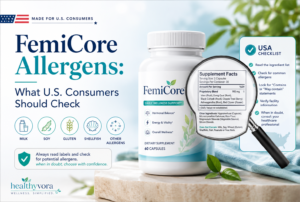
FemiCore Allergens: What U.S. Consumers Should Check
Do not rely solely on a front-label claim such as “natural” when evaluating allergies. In the United States, nine foods are recognized as major food allergens: milk, egg, fish, Crustacean shellfish, tree nuts, peanuts, wheat, soybeans, and sesame. Sesame became the ninth major allergen for packaged foods and dietary supplements beginning January 1, 2023.
One current FemiCore website describes its product as gluten-free, but because FemiCore ingredient information is inconsistent across current online listings, consumers with medically important allergies or gluten restrictions should verify the actual package rather than treating one webpage as universally applicable.
Use this allergy-check sequence
- Read the entire Supplement Facts panel.
- Read the separate “Other Ingredients” section.
- Look for a “Contains” allergen statement.
- Check whether the label mentions a shared manufacturing facility.
- Compare the label with the product listing you purchased from.
- If you have a history of severe allergic reactions and the labeling is unclear, ask the manufacturer or your healthcare professional before taking it.
An allergy can also involve an ingredient outside the nine major food allergens. Botanical extracts, capsule materials, coloring agents, fillers, or other components may cause individual reactions even when they are not classified as major allergens.
ORDER TODAY
What Does an Allergic Reaction to a Supplement Look Like?
An allergic reaction is different from ordinary mild bloating or digestive discomfort. Symptoms such as hives, swelling, breathing difficulty, throat tightness, or a rapidly worsening reaction require urgent medical attention rather than another dose of the supplement.
The FDA emphasizes careful label reading for people with food allergies because allergen exposure can produce serious reactions. see also.
If a new symptom appears soon after starting FemiCore, document when you took the capsule, when the symptom started, what other foods or medications you took, and whether the symptom occurred again. This information can help a physician or pharmacist evaluate the reaction.
Can FemiCore Interact With Medications?
Yes, interaction potential should be considered whenever the formula contains active herbal ingredients. The FDA warns that combining dietary supplements with medications can sometimes change drug effects or produce harmful outcomes. Supplements may alter medication absorption, metabolism, or other processes.
Berberine is the ingredient that deserves particular attention
NCCIH specifically warns that berberine can interact with medicines and notes a documented interaction with cyclosporine, an immunosuppressant used in transplant patients. Anyone taking prescription medication should discuss berberine-containing supplements with a healthcare professional.
Berberine has also been studied in relation to blood glucose. That makes professional review especially sensible for people using medication for diabetes or other conditions in which unexpected changes in drug effects could be important. NCCIH advises people with diabetes to discuss dietary supplements with their healthcare providers because supplements may interact with medicines.
Cranberry and warfarin
Evidence concerning cranberry and the anticoagulant warfarin is conflicting. NCCIH does not state that an interaction always occurs, but it specifically recommends discussing cranberry and other herbal products with a healthcare provider when medications are being used.
Do not assume “natural” means interaction-free
Herbs can increase or decrease the effects of medicines, and reliable interaction data are incomplete for many supplement ingredients. This uncertainty is one reason pharmacists and physicians need the complete supplement label rather than simply the product name.
Who Should Get Medical Advice Before Taking FemiCore?
Professional review is particularly important when a person takes prescription medication, has a serious chronic health condition, has a weakened immune system, is pregnant or breastfeeding, or has previously experienced significant reactions to supplements.
Pregnancy deserves special attention if the formula contains berberine. NCCIH advises that berberine should not be used during pregnancy or breastfeeding because of potential risks to infants and developing babies. U.S. LactMed also advises generally avoiding uva ursi during breastfeeding because of insufficient safety data and potential toxicity.
People with severe illness or compromised immunity should also discuss probiotic-containing products with a healthcare professional because rare serious complications have occurred in high-risk patients.
Why FemiCore Safety Matters Specifically in the United States
Dietary supplements in the United States are regulated differently from prescription and over-the-counter drugs. The FDA does not preapprove dietary supplements in the same way it approves medications before they enter the market. Manufacturers are responsible for meeting applicable safety and labeling requirements.
For U.S. shoppers buying supplements through online advertising, marketplaces, or unfamiliar websites, label verification is therefore an important part of the purchase decision. This is especially true when multiple pages using the same product name display different ingredient profiles.
How to Evaluate Your FemiCore Bottle Before the First Dose
A five-minute label review can answer many of the questions that broad online reviews cannot.
- Confirm the ingredient list. Do not assume your formula matches an older review.
- Check serving size. Ingredient risk depends partly on amount and frequency.
- Review Other Ingredients. Capsule shells, fillers, and excipients matter for allergies.
- Check allergen declarations. Pay particular attention if you have known food allergies.
- List your medications. Include prescription drugs, OTC products, vitamins, and other supplements.
- Show the bottle to a pharmacist when unsure. A pharmacist can evaluate the real ingredient panel rather than relying on a brand name alone.
The FDA specifically encourages consumers to tell healthcare professionals about all medications, vitamins, and dietary supplements they use because interactions can occur.
Common Mistakes When Researching FemiCore Side Effects
- Using a review instead of the bottle label: formulas and listings can differ.
- Assuming “natural” equals harmless: botanicals can cause side effects and medication interactions.
- Calling every symptom an adjustment reaction: significant symptoms deserve evaluation.
- Ignoring “Other Ingredients”: allergens and excipients may be listed outside Supplement Facts.
- Combining multiple new supplements at once: this makes it harder to identify what caused a reaction.
- Stopping prescribed medicine to use a supplement: dietary supplements should not replace prescribed treatment without professional guidance.
The NIH Office of Dietary Supplements advises consumers to obtain healthcare-provider approval before using supplements in place of, or alongside, prescribed medicines.
Why Use healthyvora When Researching FemiCore?
For healthyvora readers, the most useful way to evaluate a supplement is not to ask only whether online reviews call it “good” or “bad.” A better decision starts with four questions: What is actually in the bottle? What adverse effects are associated with those ingredients? Could those ingredients interact with current medication? And does the label match the product being discussed online?
This label-first approach is particularly important for FemiCore because current online pages using the product name do not provide a perfectly consistent ingredient profile. healthyvora therefore encourages readers to treat supplement research as a safety decision, not simply a buying decision.
Tips Before Deciding Whether to Use FemiCore
- Photograph the Supplement Facts panel before starting.
- Record the first day you take the supplement.
- Avoid exceeding the labeled serving size.
- Do not assume taking more will produce better results.
- Ask a pharmacist about medication interactions when you use prescription drugs.
- Seek professional advice before use during pregnancy or breastfeeding.
- Stop and seek appropriate medical help for symptoms suggesting a serious allergic reaction.
- Recheck the label when purchasing another bottle because formulas can change.
Bottom Line: Are FemiCore Side Effects a Major Concern?
FemiCore cannot be described as completely side-effect-free. Based on ingredients appearing in current formulations, digestive symptoms are among the most plausible mild concerns, especially when the product contains berberine or probiotics. Medication interactions deserve more attention than many supplement advertisements suggest, particularly with berberine-containing formulas.
The biggest practical issue is formula verification. Because current FemiCore pages show different ingredient profiles, the bottle in your hand—not an advertisement, review, or search snippet—should guide your allergen and interaction assessment.
If you take prescription medication, are pregnant or breastfeeding, have significant medical conditions, or have a history of serious allergies, discussing the complete label with a physician or pharmacist is the most appropriate next step.
Frequently Asked Questions About FemiCore Side Effects
1. What are the most common possible FemiCore side effects?
Depending on the formula, possible effects include bloating, nausea, diarrhea, constipation, abdominal discomfort, or other digestive symptoms associated with ingredients such as berberine and probiotics.
2. Does FemiCore cause bloating?
It may in some users. Berberine can cause bloating and gastrointestinal symptoms, and probiotic supplements can also produce mild digestive effects in some people.
3. How long is the FemiCore adjustment period?
There is no established universal FemiCore adjustment period. Persistent or severe symptoms should not automatically be dismissed as normal adjustment.
4. Can FemiCore cause an allergic reaction?
Yes. Any supplement ingredient can potentially trigger an individual allergic or hypersensitivity reaction. Check both active and inactive ingredients before use.
5. Is FemiCore gluten-free?
One current FemiCore webpage describes its formula as gluten-free, but because online ingredient information varies, verify the statement on your specific bottle if gluten avoidance is medically important.
6. Can I take FemiCore with prescription medications?
Do not assume there are no interactions. Berberine and other herbal ingredients can interact with medicines, so people taking prescriptions should review the label with a healthcare professional.
7. Does FemiCore interact with warfarin?
Some FemiCore formulas list cranberry. Evidence concerning cranberry and warfarin interactions is conflicting, so NCCIH recommends discussing use with a healthcare provider.
8. Can pregnant women take FemiCore?
If the formula contains berberine, NCCIH advises against its use during pregnancy. Always have the exact ingredient panel reviewed before taking a dietary supplement during pregnancy.
9. Is FemiCore FDA approved?
Dietary supplements are not FDA-approved for safety and effectiveness before marketing in the same manner as prescription drugs. The FDA regulates supplements under a different framework.
10. What should I do before trying FemiCore?
Verify the Supplement Facts panel, check allergens and inactive ingredients, review your medications, follow the labeled serving size, and consult a healthcare professional when relevant.
Final healthyvora Recommendation
Before making FemiCore part of your routine, make the ingredient label your starting point. Compare the formula with your allergies, medications, health conditions, and pregnancy or breastfeeding status instead of relying only on promotional claims.
Use healthyvora as a starting point for informed supplement research, then take the actual FemiCore label to your pharmacist or healthcare professional when you need personalized guidance about side effects or interactions.