
Nitric Boost Ultra Powder vs Capsules: Side Effects and Pre-Workout Timing
If you are comparing Nitric Boost Ultra powder vs capsules, the most important point is not simply which form is absorbed faster. You need to compare the actual Supplement Facts panel, ingredient amounts, convenience, possible side effects, and how the product fits around your workout. Current Nitric Boost Ultra product pages describe a formula built around beet root powder, L-arginine, L-citrulline DL-malate, niacin, and several botanical ingredients, although online descriptions of the available dosage forms are not completely consistent.
For readers in Egypt researching performance supplements through healthyvora, the practical answer is straightforward: powder may be more convenient for people who want a drink before training, while capsules can be easier to carry and use. Neither form should automatically be considered stronger, safer, or more effective without comparing the exact dose on the label.
Quick Answer: Nitric Boost Ultra Powder vs Capsules
If the powder and capsules contain identical ingredients at equivalent doses, the expected effects should depend more on the formula and dose than on whether the ingredients arrive in powder or capsule form. Powder may dissolve sooner and is easier to mix into a pre-workout drink, while capsules are more portable and avoid taste. There is no reliable evidence showing that one Nitric Boost Ultra form is universally superior.
| Factor | Powder | Capsules |
|---|---|---|
| Convenience before training | Easy to mix with water | Easy to carry and swallow |
| Taste | Flavor may matter | No ingredient taste |
| Dose capacity | Usually easier to provide gram-level ingredients | May require multiple capsules for large doses |
| Dissolution | Already dispersed in liquid | Capsule shell must first break down |
| Travel and storage | Requires scoop and container | Generally more portable |
| Best choice | Depends on formula and preference | Depends on formula and preference |
What Is Nitric Boost Ultra?
Nitric Boost Ultra is marketed as a dietary supplement intended to support nitric oxide production, circulation, stamina, and physical performance. Current product information lists eight principal ingredients: beet root powder, L-arginine, L-citrulline DL-malate, niacin, horny goat weed, ginkgo biloba, dong quai, and D-aspartic acid.
Nitric oxide is a signaling molecule involved in blood-vessel relaxation. This explains why amino acids such as arginine and citrulline, along with nitrate-rich beetroot, commonly appear in sports nutrition and “pump” formulas.
However, an important distinction is necessary. A supplement designed to support nitric oxide production is not the same thing as a clinically proven treatment for cardiovascular disease, erectile dysfunction, fatigue, or another medical condition.
Nitric Boost Ultra Ingredients and Why They Matter
L-Arginine
L-arginine is an amino acid the body can use to produce nitric oxide. The NIH Office of Dietary Supplements notes that although this biological mechanism makes sense, studies examining supplemental arginine for athletic performance have produced limited and generally unimpressive results. Higher supplemental amounts may also cause gastrointestinal discomfort and modest reductions in blood pressure.
L-Citrulline DL-Malate
Citrulline is converted partly into arginine in the kidneys, which can then participate in nitric oxide production. It is a common ingredient in pre-workout supplements. Some small studies have examined citrulline or citrulline malate roughly an hour before exercise, but overall evidence for improved athletic performance remains mixed. Stomach discomfort has been reported in some users.
Beet Root Powder
Beetroot naturally contains dietary nitrate. The body can convert dietary nitrate through the nitrate-nitrite pathway into nitric oxide. Research summarized by the NIH suggests that beetroot or beet juice may improve certain endurance activities in some recreational athletes, although the benefit is not universal.
This distinction matters for timing because research involving beet juice commonly administers it considerably earlier than a typical 20- or 30-minute stimulant pre-workout window.
Niacin
Niacin, or vitamin B3, participates in normal energy metabolism. Depending on its chemical form and dose, supplemental nicotinic acid can cause the familiar “niacin flush,” involving warmth, redness, tingling, or itching. NIH information notes that higher supplemental amounts may also produce headache, dizziness, or decreased blood pressure.
Ginkgo and Other Botanicals
The formula also lists ginkgo biloba, horny goat weed, and dong quai. Herbal ingredients deserve the same attention as amino acids because “natural” does not automatically mean interaction-free.
For example, the U.S. National Center for Complementary and Integrative Health states that ginkgo can cause headache, dizziness, or gastrointestinal symptoms and may increase bleeding risk when combined with anticoagulants such as warfarin.
What Is the Best Nitric Boost Ultra Pre-Workout Timing?
There is no scientifically established single perfect timing specifically for Nitric Boost Ultra. The best approach is to follow the serving directions printed on the exact container you purchase rather than increasing or repositioning doses based on gym advice.
For users specifically taking the product around exercise, approximately 30–60 minutes before training may be a convenient practical window for a mixed amino-acid supplement, but this should not be interpreted as a proven optimal timing rule for the entire formula.
The reason is that different nitric-oxide-related ingredients behave differently. Citrulline has been tested around one hour before exercise in some studies, whereas nitrate-rich beetroot protocols have sometimes been used approximately 2.5–3 hours before exercise.
A Practical Pre-Workout Routine
- Check the serving directions on your Nitric Boost Ultra label.
- Confirm the serving size rather than estimating with another scoop.
- Take the serving with sufficient water.
- Avoid testing a new supplement immediately before an important competition or very intense workout.
- Observe how your stomach, blood pressure, and overall energy respond.
- Do not double the serving because you did not feel an immediate “pump.”
Consistency, hydration, food intake, training status, and the amounts of the active ingredients can influence the experience far more than changing the timing by ten or fifteen minutes.
Should You Take Nitric Boost Ultra on an Empty Stomach?
An empty stomach is not automatically required. Some users tolerate amino-acid pre-workout formulas well without food, while others experience nausea, bloating, reflux, or stomach discomfort.
If you are sensitive to supplements, taking the product after a light meal may be easier on your stomach. A very large meal immediately before exercise may also be uncomfortable, so the goal is to find a routine that fits both digestion and training.
Because niacin can produce flushing and some nitric-oxide-related ingredients may influence blood pressure, first-time users should pay attention to symptoms instead of assuming every feeling after a serving represents increased workout effectiveness.
Possible Nitric Boost Ultra Side Effects
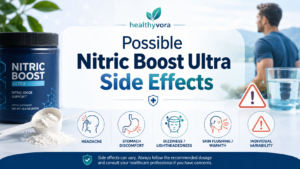
Possible side effects depend heavily on the doses actually supplied by the formula and on individual sensitivity. The most realistic concerns based on the listed ingredients include:
- Stomach discomfort or nausea.
- Bloating or diarrhea in sensitive users.
- Headache.
- Dizziness or light-headedness.
- Skin warmth, redness, itching, or tingling from some forms and doses of niacin.
- A reduction in blood pressure in susceptible users.
- Drug-herb interactions, particularly involving ginkgo.
The NIH notes that larger supplemental amounts of arginine may cause gastrointestinal problems and slightly reduce blood pressure. Ginkgo has also been associated with headache, digestive symptoms, dizziness, and clinically relevant interactions with some anticoagulant medicines.
Stop using the supplement and seek medical help if you develop severe symptoms such as fainting, chest pain, breathing difficulty, significant palpitations, facial or throat swelling, or abnormal bleeding. The FDA identifies these as examples of potentially serious adverse reactions associated with dietary supplements generally.
Who Should Be Especially Careful?
Professional advice is particularly important if you use medications that influence blood pressure, blood clotting, cardiovascular function, or erectile function.
Speak with a physician or pharmacist before using the product if you:
- Take prescription nitrates.
- Take medication for hypertension or have naturally low blood pressure.
- Use anticoagulant or antiplatelet medication.
- Use prescription erectile-dysfunction medication.
- Have a diagnosed heart or vascular condition.
- Are preparing for surgery.
- Have experienced adverse reactions to ginkgo or other herbal products.
- Are taking several supplements containing overlapping ingredients.
This becomes particularly important when multiple products are stacked together, because the safety of an individual ingredient does not automatically establish the safety of a multi-ingredient combination.
Can You Combine Nitric Boost Ultra With a Pre-Workout?
Do not automatically stack Nitric Boost Ultra with another pre-workout. First compare both Supplement Facts panels.
A second product might contain additional citrulline, arginine, beetroot, niacin, caffeine, stimulants, or other vasodilatory ingredients. That can increase total exposure without necessarily improving performance.
Before combining products, check:
- Total niacin per serving.
- Total L-arginine and L-citrulline intake.
- Whether both products contain beetroot or nitrate sources.
- Caffeine and other stimulant levels.
- Herbal ingredient duplication.
- Warnings regarding medications and cardiovascular conditions.
The NIH specifically notes that many combinations of exercise-supplement ingredients have not been adequately studied together, so more ingredients should not automatically be interpreted as better results.
Nitric Boost Ultra in Egypt: What Buyers Should Check
Egyptian buyers may encounter imported supplements through websites, marketplace sellers, gyms, pharmacies, or international shipping. This makes product verification particularly important.
Before purchasing, inspect the exact package for the manufacturer, lot or batch information, expiration date, tamper seal, ingredient amounts, storage instructions, and importer information where applicable.
The Egyptian Drug Authority provides official services and searchable regulatory resources covering pharmaceutical and complementary products. If you are uncertain about the regulatory status of a supplement sold locally, checking through official Egyptian Drug Authority resources is more reliable than relying solely on advertising claims.
Storage matters in Egypt as well. Follow the manufacturer’s temperature and moisture instructions and avoid leaving supplements for extended periods in a hot vehicle, direct sunlight, or a humid gym bag.
Do “FDA Registered” or “GMP” Claims Prove Effectiveness?
No. Manufacturing and regulatory terminology should not be confused with clinical proof.
The U.S. FDA states clearly that dietary supplements are not FDA-approved for safety and effectiveness before they are marketed. The agency also explains that registration of a manufacturing facility does not mean the FDA has independently approved that facility or every supplement made there.
GMP-related manufacturing information can still be useful when evaluating quality controls, but it does not demonstrate that a supplement will improve endurance, muscle pumps, sexual performance, testosterone, or another outcome for every user. see also.
Common Mistakes When Using Nitric Oxide Supplements
Assuming More Is Better
Taking two servings because one serving did not create an immediate sensation increases exposure and side-effect risk. Follow the label.
Ignoring the Supplement Facts Panel
The front of the container is marketing. The ingredient quantities and serving information are what matter when comparing powder and capsules.
Stacking Several Pump Products
Combining nitric oxide products can unintentionally duplicate arginine, citrulline, beetroot, or niacin.
Treating Flushing as Proof of Effectiveness
A niacin flush is a physiological side effect, not proof that a workout supplement is producing superior muscle growth or athletic performance.
Using Supplements to Replace Fundamentals
No nitric oxide product compensates for inadequate hydration, poor sleep, insufficient calories, weak programming, or inconsistent training.
Why Use healthyvora When Comparing Supplements?
healthyvora approaches supplement comparisons by focusing on formulation, realistic expectations, timing, potential interactions, and evidence rather than treating marketing language as proof.
That approach is particularly valuable for products such as Nitric Boost Ultra because buyers may see multiple online listings or dosage forms with slightly different descriptions. Instead of deciding based on words such as “ultra,” “natural,” or “advanced,” compare the current label, ingredient quantities, safety considerations, and how the product fits your actual goal.
For Egyptian consumers ordering an imported product, this extra verification step can also help reduce the risk of choosing an unclear listing or using a formula incorrectly.
Final Verdict: Powder or Capsules?
For most buyers, the Nitric Boost Ultra powder vs capsules decision should come down to the verified formulation and personal convenience.
Powder is a logical option if you prefer mixing a drink before training and the serving requires gram-level quantities. Capsules may be preferable when portability, ease of travel, and avoiding flavor are more important.
Do not assume powder works dramatically faster or capsules are automatically safer. If the ingredient amounts differ, you are no longer comparing only delivery forms—you are comparing two different formulas.
For pre-workout use, follow the product instructions first. A roughly 30–60-minute window may be convenient for a mixed amino-acid formula, but individual components such as beetroot nitrates have different research-based timing patterns. Most importantly, do not exceed the stated serving or combine the supplement blindly with another pre-workout.
If you are researching Nitric Boost Ultra in Egypt, use healthyvora as a starting point for comparing ingredients, practical timing, and safety considerations, then confirm the exact product label and discuss the formula with a qualified healthcare professional when medications or medical conditions are involved.
Frequently Asked Questions
1. Is Nitric Boost Ultra powder better than capsules?
Not necessarily. If both versions contain equivalent ingredients at equivalent doses, convenience may be the main difference. Always compare the current labels.
2. How long before a workout should I take Nitric Boost Ultra?
Follow the label first. Around 30–60 minutes before exercise may be practical for some formulas, but there is no proven universal timing specifically for Nitric Boost Ultra.
3. Does Nitric Boost Ultra contain caffeine?
Current ingredient lists reviewed for this article emphasize amino acids, beetroot, niacin, and botanicals rather than caffeine. Check your exact container because formulas can change.
4. Can Nitric Boost Ultra cause stomach problems?
Yes. Ingredients such as arginine and citrulline can cause gastrointestinal discomfort in some users.
5. Can Nitric Boost Ultra cause headaches?
Headache is possible with some ingredients in nitric-oxide and herbal formulas. Niacin and ginkgo can also cause headache or dizziness in susceptible users.
6. Can I take Nitric Boost Ultra with another pre-workout?
Only after comparing both ingredient panels. Avoid unintentionally doubling citrulline, arginine, beetroot, niacin, stimulants, or other active ingredients.
7. Should Nitric Boost Ultra be taken every day?
Use only according to the directions on your specific product label. Do not create a higher or more frequent dosing schedule yourself.
8. Is Nitric Boost Ultra FDA approved?
Dietary supplements are not FDA-approved for safety and effectiveness before marketing. FDA facility registration should not be interpreted as product approval.
9. Can people taking blood-pressure medication use Nitric Boost Ultra?
They should speak with a physician or pharmacist first because several nitric-oxide-related ingredients can influence circulation or blood pressure.
10. Where should Egyptian consumers verify supplement information?
Check the original product label and manufacturer information and use official Egyptian Drug Authority resources when verifying products marketed locally.