
ProDentim vs PowerBite Chewable Probiotic Dental Health Comparison
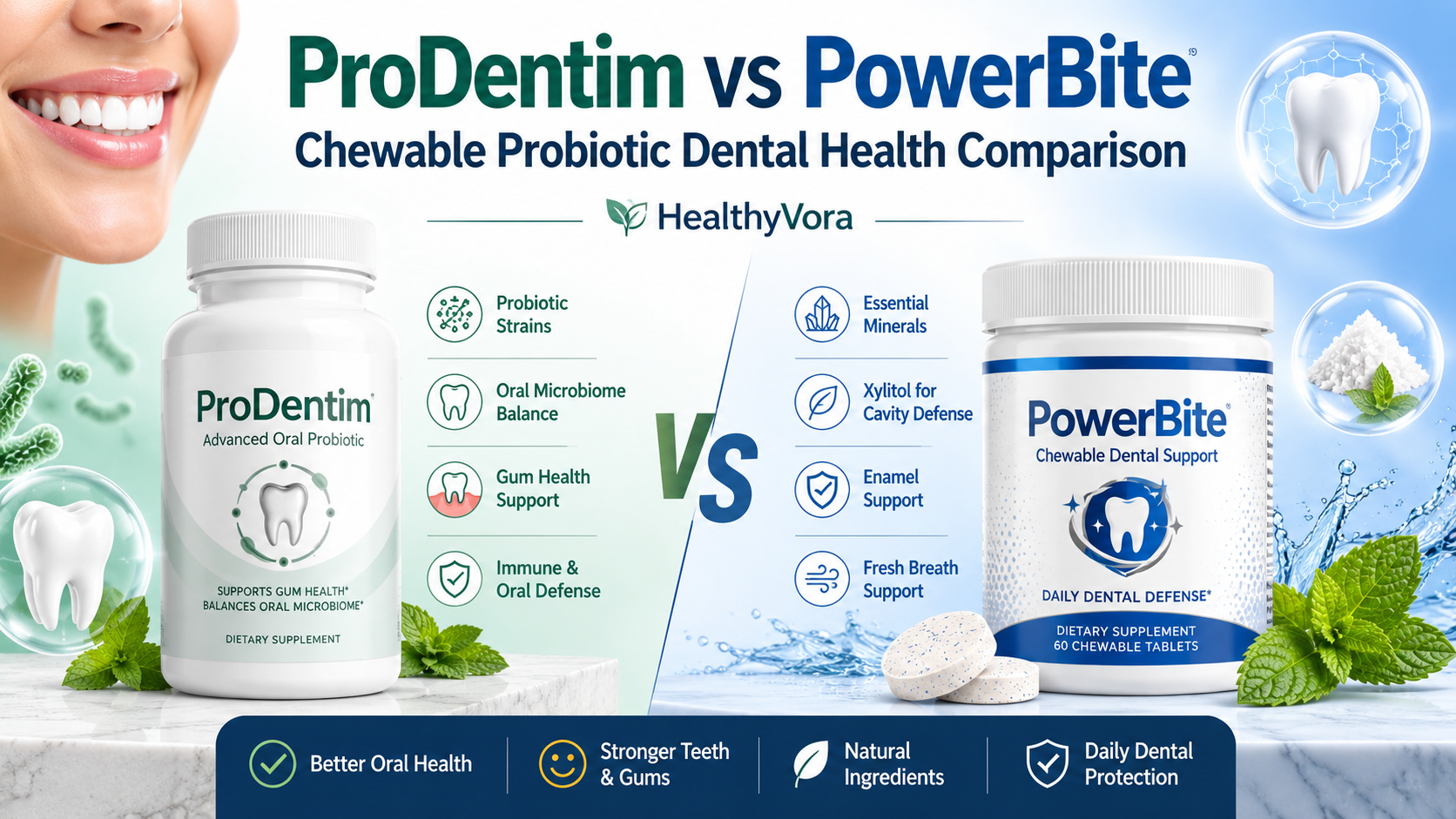
ProDentim and PowerBite take noticeably different approaches to supplemental oral care. ProDentim focuses primarily on probiotics and oral microbiome support, while PowerBite is positioned as a dissolvable mineral dental candy built around ingredients such as calcium carbonate, xylitol, myrrh, mint, sea salt, lysozyme, and clove oil. For U.S. consumers comparing the two, the most important question is therefore not simply which product is “better,” but which formulation better matches the type of oral-health support they are seeking.
This HealthyVora comparison examines their formulas, intended roles, practical differences, scientific context, and limitations without treating either supplement as a substitute for brushing, flossing, fluoride use when recommended, professional cleanings, or treatment from a licensed dentist.
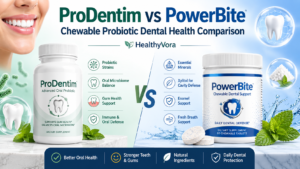
ProDentim vs PowerBite: Quick Answer
Choose based on formulation rather than marketing promises. ProDentim is the more logical option for someone specifically interested in an oral probiotic supplement because its formula centers on beneficial bacterial strains. PowerBite is better described as a mineral-and-botanical dental supplement rather than a probiotic formula.
| Feature | ProDentim | PowerBite |
|---|---|---|
| Primary approach | Oral microbiome and probiotic support | Mineral and botanical oral support |
| Format | Chewable/dissolvable tablet | Dissolvable dental candy |
| Probiotic focus | Yes | No clear probiotic-centered formula |
| Notable ingredients | L. paracasei, L. reuteri, B. lactis BL-04, inulin, tricalcium phosphate | Calcium carbonate, xylitol, myrrh, wild mint, lysozyme, sea salt, clove oil |
| Best fit | Consumers interested in oral microbiome support | Consumers interested in mineral-based dental support |
| Replaces dental care? | No | No |
What Is ProDentim?
ProDentim is a chewable oral-health dietary supplement marketed around the concept of supporting a healthier oral microbiome. Its manufacturer describes the formula as containing billions of probiotic microorganisms along with nutritional and botanical ingredients selected to support teeth and gums.
The named probiotic ingredients promoted in the formula include Lactobacillus paracasei, Lactobacillus reuteri, and Bifidobacterium lactis BL-04. The formula also includes supporting ingredients such as inulin, malic acid, tricalcium phosphate, and peppermint.
What makes ProDentim different?
The defining feature is its microbiome-oriented strategy. Instead of focusing exclusively on minerals or surface cleaning, ProDentim attempts to influence the bacterial environment inside the mouth by supplying beneficial microorganisms and a prebiotic ingredient.
This distinction matters because research into oral probiotics has expanded substantially. Scientific reviews suggest that certain probiotic strains may influence levels of bacteria associated with dental plaque, bad breath, and caries risk. However, results vary by bacterial strain, dosage, delivery method, study duration, and patient population. Oral probiotics should therefore be viewed as an adjunct to established dental hygiene rather than a treatment for dental disease.
What Is PowerBite?
PowerBite is marketed as a dissolvable “mineral dental candy” designed to complement routine oral care. Unlike ProDentim, its main positioning does not center on delivering live probiotic microorganisms.
The manufacturer’s ingredient information lists components such as calcium carbonate, myrrh, wild mint, xylitol, lysozyme, Mediterranean sea salt, and clove oil. The product is designed to dissolve slowly in the mouth, allowing these ingredients to mix with saliva.
Is PowerBite a probiotic?
PowerBite should not be treated as a direct probiotic equivalent to ProDentim. The currently promoted formula focuses primarily on minerals, botanicals, xylitol, and other oral-wellness ingredients rather than the named probiotic strains that characterize ProDentim.
This is one of the most important distinctions consumers should understand when searching for a “ProDentim vs PowerBite probiotic comparison.” They overlap in their general oral-wellness positioning, but their formulas attempt to support the mouth in different ways.
ProDentim vs PowerBite Ingredients Compared
ProDentim probiotic strains
ProDentim’s key differentiator is its inclusion of specific beneficial bacteria. Lactobacillus and Bifidobacterium strains have been studied in oral-health research because of their potential interactions with the existing oral microbiota.
Research does not establish that every probiotic product produces the same clinical effect. Probiotic activity is strain-specific, making the exact organisms used more important than simply seeing the word “probiotic” on a label.
Inulin in ProDentim
Inulin is a prebiotic fiber. Prebiotics serve as substrates that can support certain beneficial microorganisms. Its presence fits ProDentim’s broader microbiome-centered formulation.
Tricalcium phosphate
ProDentim also contains tricalcium phosphate, introducing a mineral component alongside its probiotics. Calcium and phosphate are important constituents of teeth, although consumers should avoid interpreting the presence of a mineral ingredient as proof that a supplement can repair cavities or reverse structural dental damage.
Calcium carbonate in PowerBite
Calcium carbonate is central to PowerBite’s mineral-based positioning. Calcium is essential for normal bones and teeth, but a supplement containing calcium carbonate is not automatically equivalent to professional remineralization treatments or fluoride-based preventive dental care.
Xylitol in PowerBite
Xylitol is a sugar alcohol widely used in sugar-free oral-care products. Because oral bacteria do not metabolize xylitol in the same way as conventional fermentable sugars, it can be useful in products intended to reduce sugar exposure.
However, U.S. dental guidance remains appropriately cautious. Evidence for xylitol as an independent caries-prevention intervention is mixed, so it should complement rather than replace proven oral-hygiene practices.
Myrrh, clove oil, and wild mint
PowerBite incorporates several botanical ingredients traditionally associated with mouth care. Mint contributes primarily to freshness, while clove-derived compounds and myrrh have histories of use in oral preparations.
Traditional use and laboratory findings should not be confused with proof that a finished dietary supplement can treat gum disease, dental infections, cavities, or tooth pain.
Which Product Is Better for the Oral Microbiome?
ProDentim is more directly aligned with oral microbiome support. Its formula specifically contains probiotic organisms, whereas PowerBite relies predominantly on minerals and plant-derived ingredients.
The human mouth contains complex communities of microorganisms living on the tongue, teeth, gums, and other oral surfaces. Oral health depends partly on the balance and behavior of these microbial communities rather than the presence of one universally “good” or “bad” bacterial species.
Recent scientific reviews suggest probiotics may modestly affect certain oral-health markers, including levels of Streptococcus mutans and some measures of halitosis. At the same time, researchers continue to emphasize substantial differences among studies and the need for more standardized, long-term clinical evidence.
For consumers, the practical takeaway is simple: an oral probiotic may be an interesting addition to preventive care, but it should not be interpreted as a replacement for plaque removal, fluoride exposure, professional dental evaluation, or treatment of active disease.
Which Is Better for Teeth and Enamel Support?
PowerBite has a stronger mineral-focused identity because calcium carbonate is a prominent part of its formulation. ProDentim also includes tricalcium phosphate, so the difference is not absolute.
However, neither supplement should be described as a proven method for rebuilding damaged enamel or repairing cavities. Early enamel demineralization can sometimes be managed through evidence-based preventive strategies, but a physical cavity cannot simply be restored by taking a dietary supplement.
Anyone experiencing visible tooth damage, persistent sensitivity, pain, or suspected decay should have the cause evaluated by a dentist rather than relying on an over-the-counter oral supplement.
Which Is Better for Gum Support?
The answer depends on the type of support being considered. ProDentim approaches gum wellness through probiotic and microbiome-related ingredients, while PowerBite includes botanicals and minerals commonly associated with oral-care formulations.
Research into certain probiotic strains has produced encouraging findings for selected gingival and periodontal outcomes, but probiotics remain an adjunct. Bleeding gums, swelling, gum recession, persistent bad breath, or loose teeth can indicate conditions requiring professional diagnosis.
A supplement should never delay an appointment for symptoms that may represent gingivitis, periodontitis, infection, or another dental problem.
ProDentim vs PowerBite for Fresh Breath
Both products may appeal to people concerned about breath freshness, but their approaches differ.
- ProDentim: targets the oral microbial environment and includes peppermint.
- PowerBite: uses ingredients including wild mint, clove oil, and xylitol while dissolving directly in the mouth.
Persistent halitosis deserves more attention than simply masking odor. It can be associated with tongue coating, plaque accumulation, gum disease, dry mouth, smoking, diet, dental infection, or other medical causes.
What Scientific Evidence Supports Oral Probiotics?
Oral probiotics are an active area of dental research, but the evidence should be interpreted carefully. Reviews of clinical trials have reported reductions in certain caries-associated bacteria and improvements in selected halitosis outcomes. Other measures, including plaque, gum health, salivary characteristics, and long-term cavity prevention, have produced less consistent findings.
This means it is more accurate to say that specific oral probiotics may provide useful supplemental benefits than to claim that probiotics have been proven to prevent or cure dental diseases broadly.
The effectiveness of one probiotic strain also cannot automatically be transferred to every other strain or every commercial supplement.
Why This Comparison Matters for U.S. Consumers
Dietary supplements are widely available throughout the United States, but consumers should understand how these products are regulated. The FDA does not pre-approve dietary supplements for effectiveness in the same manner that it approves prescription drugs.
A supplement may make qualifying structure/function statements about supporting normal body functions, but products marketed as dietary supplements cannot legally claim to diagnose, treat, cure, or prevent diseases unless they meet regulatory requirements applicable to drugs.
For shoppers in New York, Los Angeles, Chicago, Houston, Miami, or elsewhere in the United States, phrases such as “FDA-registered facility” should therefore not be interpreted as meaning the supplement itself has been FDA-approved as a dental treatment.
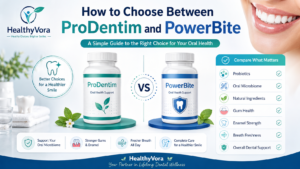
How to Choose Between ProDentim and PowerBite
Use the following decision process rather than choosing based on testimonials or aggressive marketing language.
- Define your objective. Decide whether you primarily want microbiome-focused support or a mineral-and-botanical supplement.
- Read the current Supplement Facts label. Formulations can change, so check the bottle you are actually purchasing.
- Review probiotic strains. If microbiome support is your goal, look for clearly identified bacterial strains rather than a vague probiotic claim.
- Check allergens and inactive ingredients. Review sweeteners, flavorings, botanical ingredients, and other compounds that could matter to you.
- Consider your medications and medical history. Discuss supplements with a physician, pharmacist, or dentist when appropriate.
- Keep established oral care unchanged. Continue brushing, interdental cleaning, and regular dental visits.
 Visit Official Website
Who May Prefer ProDentim?
ProDentim may make more sense for an adult specifically researching oral probiotics, beneficial mouth bacteria, or microbiome-focused dental supplements.
Its formula is conceptually closer to the current scientific discussion around probiotics and oral microbial balance. This does not guarantee better outcomes, but it provides a clearer match for that particular search intent.
Who May Prefer PowerBite?
PowerBite may appeal more to someone who prefers a dissolvable mineral-based oral supplement rather than a probiotic-centered formula.
Its combination of calcium carbonate, xylitol, botanical ingredients, and other components positions it closer to general tooth, gum, and breath support. Consumers specifically searching for probiotic strains, however, should recognize that PowerBite does not appear to be built around that mechanism.
Common Mistakes to Avoid Before Buying a Dental Supplement
- Assuming a supplement can repair an untreated cavity.
- Stopping fluoride toothpaste because a supplement contains minerals.
- Believing “FDA registered” means the product itself is FDA approved.
- Choosing a probiotic without checking which strains are included.
- Assuming every probiotic strain produces identical oral-health effects.
- Using supplements to postpone treatment for tooth pain or bleeding gums.
- Depending entirely on customer testimonials instead of ingredient information.
- Buying from an unfamiliar seller without checking product authenticity.
Why Use HealthyVora When Comparing Oral Health Supplements?
HealthyVora’s approach is to compare products according to formulation, intended use, scientific plausibility, and practical limitations rather than simply repeating promotional claims.
That distinction is especially valuable for oral-health supplements because products using words such as probiotics, minerals, enamel support, microbiome support, and natural dental care can sound similar even when their formulas are substantially different.
In the ProDentim vs PowerBite comparison, recognizing that one is primarily probiotic-focused and the other mineral-focused provides a more useful basis for making a decision than choosing solely on packaging or testimonials.
Final Verdict: ProDentim or PowerBite?
ProDentim is the stronger match for consumers specifically seeking a chewable oral probiotic, while PowerBite is better categorized as a dissolvable mineral-and-botanical dental supplement.
If your priority is oral microbiome support, ProDentim’s named probiotic strains make its positioning more relevant. If you are more interested in ingredients such as calcium carbonate, xylitol, mint, myrrh, and clove oil, PowerBite follows that approach more closely.
Neither product should be considered a substitute for brushing, flossing, professional cleanings, fluoride-based prevention when appropriate, or dental treatment. Evidence surrounding oral probiotics is promising but still developing, while individual ingredients in mineral dental supplements do not establish that the finished product can prevent or treat dental disease. see also.
The most useful choice is therefore the one that fits your objective, current oral-health status, ingredient preferences, and advice from your dental or medical professional.
Frequently Asked Questions
1. Is ProDentim better than PowerBite?
ProDentim may be more appropriate for people specifically seeking oral probiotic support, while PowerBite may appeal more to consumers interested in a mineral-and-botanical dental supplement.
2. Is PowerBite a probiotic supplement?
PowerBite’s promoted formula is primarily based on minerals, xylitol, botanicals, and related oral-care ingredients rather than a probiotic-centered blend.
3. Does ProDentim contain probiotics?
Yes. Its promoted formula names probiotic organisms including Lactobacillus paracasei, Lactobacillus reuteri, and Bifidobacterium lactis BL-04.
4. What are the main PowerBite ingredients?
The manufacturer lists ingredients including calcium carbonate, xylitol, myrrh, wild mint, lysozyme, Mediterranean sea salt, and clove oil.
5. Can ProDentim replace brushing and flossing?
No. Oral probiotics are supplemental products and should be used alongside established oral-hygiene practices.
6. Can PowerBite repair cavities?
No dietary supplement should be relied upon to repair an established cavity. Suspected tooth decay requires evaluation by a dental professional.
7. Are oral probiotics scientifically studied?
Yes. Clinical research exists, and some reviews report promising effects on selected oral bacteria and halitosis, although results are not consistent across every outcome or probiotic strain.
8. Is xylitol good for dental health?
Xylitol reduces exposure to fermentable sugar and is common in sugar-free oral products, but evidence for independent cavity prevention remains mixed.
9. Are ProDentim and PowerBite FDA approved?
Dietary supplements are not FDA-approved for effectiveness before marketing in the same way prescription drugs are. A product being manufactured in an FDA-registered facility is not equivalent to FDA approval of the supplement.
10. Which product should I choose if I have gum problems?
Persistent bleeding, swelling, recession, or discomfort should be evaluated by a dentist. Supplements may complement routine care but should not replace diagnosis or treatment.
Make a More Informed Oral Health Decision with HealthyVora
If you are evaluating ProDentim, PowerBite, or another dental health supplement, focus first on the formula and the problem you actually want to address. HealthyVora helps simplify these comparisons by separating probiotic, mineral, botanical, and oral-care claims so you can make a more informed decision and discuss the most appropriate options with your dentist or healthcare professional.