
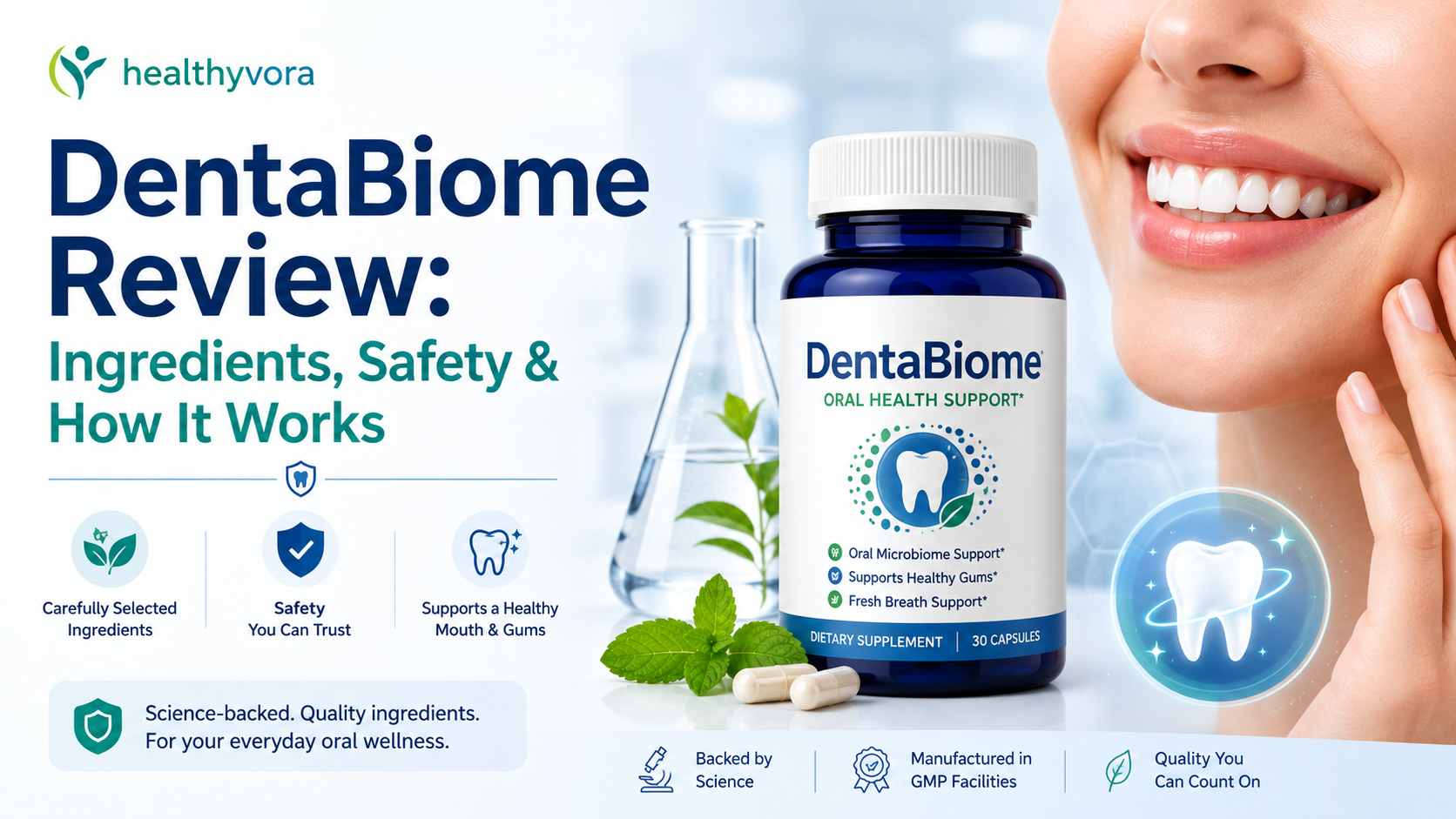
DentaBiome Review: Ingredients, Safety & How It Works
DentaBiome is marketed in the United States as a chewable oral-health dietary supplement designed to support the oral microbiome, gum wellness, fresh breath, and everyday dental care. Its formula is positioned around postbiotic or microbiome-focused ingredients together with compounds such as xylitol, cranberry extract, and purple carrot powder. The most important point for consumers, however, is that DentaBiome should be viewed as a supplement to normal oral hygiene—not as a treatment for cavities, gum disease, infections, or other dental conditions.
For Americans researching DentaBiome before purchasing it, the useful questions are not simply whether the marketing sounds convincing. It is more important to understand what is actually in the formula, what scientific research says about oral microbiome supplements as a category, what has and has not been established specifically for DentaBiome, and when professional dental care is still necessary.
What Is DentaBiome?
DentaBiome is a chewable dietary supplement developed around the idea that oral health involves more than mechanically removing plaque from the teeth. The mouth contains a complex community of microorganisms known collectively as the oral microbiome, and maintaining a balanced oral environment has become an increasingly important area of dental and microbiome research.
The manufacturer describes DentaBiome as an oral postbiotic formula. Instead of being swallowed immediately like a conventional capsule, the tablet is designed to be chewed so that its ingredients come into contact with the teeth, gums, tongue, and saliva before being swallowed.
In simple terms: DentaBiome is designed to complement brushing, flossing, and professional dental care by providing microbiome-focused ingredients directly in the mouth.
That distinction is important. A supplement may be convenient and may contain scientifically interesting ingredients, but it does not replace fluoride toothpaste, plaque removal, flossing or interdental cleaning, professional examinations, or treatment when dental disease is present.
How Does DentaBiome Relate to the Oral Microbiome?
The oral microbiome includes hundreds of microbial species living on the tongue, teeth, gums, saliva, and other surfaces of the mouth. Some microorganisms can coexist without creating problems, while changes in the oral environment may favor bacteria associated with plaque, tooth decay, gum inflammation, or unpleasant breath.
This is one reason researchers have investigated probiotics, prebiotics, and more recently postbiotics as possible tools for supporting oral health.
What Are Postbiotics?
Postbiotics are different from traditional probiotics. Probiotics are live microorganisms that are administered in adequate amounts for a health benefit. A scientific consensus definition of a postbiotic describes it as a preparation containing inanimate microorganisms and/or their components that provides a health benefit to the host.
For consumers, the practical difference is that a postbiotic product does not depend on keeping microorganisms alive in the same way a probiotic does. This can potentially make formulation and storage easier, although being labeled a “postbiotic” does not automatically prove that a particular finished supplement produces a meaningful clinical result.
That last point matters when evaluating DentaBiome. Research on individual microorganisms, postbiotic concepts, or oral microbiome mechanisms is not the same thing as a clinical trial proving that the completed DentaBiome formula produces a specific result in people.
DentaBiome Ingredients: What Is in the Formula?
The current DentaBiome product information lists several microbiome-focused and plant-derived ingredients. Consumers should always compare any online ingredient list against the current Supplement Facts panel on the bottle they receive because formulas and labeling can change.
| Listed Ingredient | Why It Is Included | What Consumers Should Know |
|---|---|---|
| L. plantarum complex | Included as part of the microbiome-focused formulation | Lactobacillus plantarum has been studied in microbiome research, but ingredient research does not by itself prove the effectiveness of the complete DentaBiome formula. |
| L. salivarius | Associated with oral microbial balance | Species within this group have appeared in oral probiotic research, although effects can depend on the particular strain and formulation. |
| L. rhamnosus | Used in microbiome-oriented formulations | Lactobacillus rhamnosus is widely researched, but evidence should be interpreted at the strain and product level. |
| Xylitol | Commonly used in sugar-free oral-care products | Xylitol does not ferment like ordinary sugar and is widely used in gums, toothpastes, and other dental products. |
| Cranberry extract | Provides plant-derived compounds | Cranberry compounds have been studied for biological effects, but supplementation should not be considered a treatment for dental disease. |
| Purple carrot powder | Provides naturally occurring plant compounds and pigments | It is best considered a supporting botanical ingredient rather than a proven dental treatment. |
| BioFresh Clean Complex | Marketed as part of the product’s oral-freshness formulation | Consumers should look at the current product label for exact composition and amounts whenever disclosed. |
What Are the Potential Benefits of DentaBiome?
DentaBiome is primarily positioned as an oral wellness supplement rather than a pharmaceutical treatment. Its potential value therefore needs to be considered in terms of supporting an existing dental-care routine.
1. Supporting the Oral Microbiome
The strongest scientific rationale behind products in this category is the growing understanding that dental health is connected to microbial ecology. Research on oral probiotics has produced promising findings in areas such as bacterial balance, halitosis, plaque-related outcomes, and periodontal health.
However, results across studies are not completely consistent. Effects may vary according to the organism, strain, dose, delivery format, frequency of use, duration, and health status of the person taking the product.
2. Supporting Fresh Breath
Bad breath can sometimes be associated with bacterial activity on the tongue and elsewhere in the mouth. A microbiome-focused product may therefore appeal to people who want additional support for everyday breath freshness.
Persistent bad breath should not automatically be treated as a supplement problem. It may also be connected with gum disease, cavities, dry mouth, smoking, certain foods, medications, sinus problems, or other medical issues. Persistent symptoms deserve professional evaluation.
3. Providing Xylitol Without Regular Sugar
Xylitol is frequently used in sugar-free dental products. Unlike ordinary fermentable sugars, it does not provide oral bacteria with the same substrate for acid production.
The American Dental Association notes that research into xylitol has produced mixed results, and evidence supporting xylitol specifically as an additional cavity-prevention therapy has limitations. It therefore makes more sense to view xylitol as one part of an oral-care strategy rather than a substitute for proven preventive practices.
4. Convenient Chewable Delivery
One practical advantage of DentaBiome is its format. A chewable oral supplement allows ingredients to remain temporarily in contact with saliva and oral surfaces rather than being swallowed immediately.
Chewable tablets and lozenges are already common delivery formats in oral microbiome research. Convenience can also matter because a supplement that is easy to incorporate into a routine may be used more consistently.
Does DentaBiome Really Work?
There is scientific interest in oral probiotics, postbiotics, and microbiome modulation, but that does not establish that DentaBiome itself has been clinically proven to prevent or treat dental disease.
Recent scientific reviews suggest that certain probiotic strains may influence oral bacteria and some measures associated with halitosis, tooth decay risk, gingivitis, or periodontal health. At the same time, researchers continue to emphasize variation between strains, study designs, doses, treatment periods, and clinical outcomes.
For DentaBiome specifically, a key distinction is between ingredient-level evidence and finished-product evidence.
- Ingredient-level evidence asks whether an individual organism or compound has been studied.
- Category-level evidence asks whether probiotics or postbiotics may have oral-health applications generally.
- Finished-product evidence would require clinical research using the actual DentaBiome formulation, at its marketed dose and delivery method, in people.
Consumers should avoid assuming that evidence for one Lactobacillus strain or another oral probiotic automatically proves the performance of every supplement containing a similarly named organism.
Is DentaBiome FDA Approved?
No dietary supplement should be described as FDA-approved for safety and effectiveness in the same way an approved drug is.
This point is especially important for U.S. consumers. Under American dietary supplement regulations, the Food and Drug Administration does not approve dietary supplements for safety and effectiveness before they are marketed.
A manufacturer may discuss manufacturing standards, an FDA-registered facility, regulatory compliance, or good manufacturing practices when those descriptions are accurate, but those statements do not mean the FDA has evaluated and approved the supplement itself as an effective dental treatment. see also.
If you encounter an online statement or graphic suggesting that a dietary supplement itself is “FDA approved,” interpret it carefully and distinguish facility or manufacturing compliance from product approval.
Is DentaBiome Safe?
Safety depends on the complete formula, dose, individual health status, allergies, medications, and how the supplement is used. Natural or microbiome-related ingredients should not automatically be assumed to be risk-free.
Before using DentaBiome or another dietary supplement, review the complete Supplement Facts panel and ingredient list. It is particularly sensible to discuss supplementation with a dentist, physician, or pharmacist if you take prescription medications, have a chronic medical condition, are pregnant or breastfeeding, have significant allergies, or have recently undergone dental or medical treatment.
Stop and Seek Dental Advice When Symptoms Suggest a Dental Problem
A supplement should never delay diagnosis. Schedule a professional dental evaluation if you have symptoms such as persistent gum bleeding, swelling, dental pain, pus, significant tooth sensitivity, loose teeth, unexplained mouth sores, persistent bad breath, or a suspected cavity.
How to Evaluate DentaBiome Before Buying in the United States
Instead of relying on testimonials alone, evaluate DentaBiome using the same practical checklist you would apply to any oral-health supplement.
- Read the current Supplement Facts panel. Verify the ingredient names, serving size, other ingredients, allergens, and directions.
- Check whether amounts are disclosed. Knowing ingredient quantities makes it easier to compare a commercial formula with research.
- Separate product claims from scientific evidence. Evidence for an ingredient does not necessarily establish a benefit for the finished supplement.
- Review current purchasing and refund terms. Policies can change, so confirm them at checkout rather than relying on an older review.
- Consider your existing dental routine. Supplements are most rational as additions to good oral hygiene rather than replacements.
- Ask a dental professional when symptoms are present. Tooth decay and periodontal disease require appropriate diagnosis and care.
Why DentaBiome Should Complement, Not Replace, Regular Dental Care
One of the most important mistakes consumers can make is expecting a supplement to accomplish what brushing, interdental cleaning, fluoride, professional examinations, and necessary dental treatment are designed to do.
Daily plaque control remains fundamental. For most people, that means brushing thoroughly with fluoride toothpaste, cleaning between the teeth, limiting frequent exposure to added sugars, maintaining appropriate hydration, and seeing a dentist according to individual risk and professional recommendations.
DentaBiome may fit into that routine as an optional oral wellness supplement for someone interested in microbiome-focused products. It should not be interpreted as permission to stop brushing, skip dental visits, ignore bleeding gums, or postpone treatment for a cavity.
Why Choose HealthyVora When Researching DentaBiome?
When evaluating a supplement such as DentaBiome, the most useful approach is neither automatic promotion nor automatic dismissal. HealthyVora focuses on the questions U.S. consumers should consider before making a supplement decision: what the product contains, how its proposed mechanism relates to current science, where evidence is promising, where uncertainty remains, and which claims require caution.
This evidence-aware approach matters especially in oral health because symptoms such as bleeding gums, chronic bad breath, tooth pain, and sensitivity can have causes that require professional dental attention.
HealthyVora therefore treats DentaBiome as what it is intended to be—a dietary supplement that may complement an oral-care routine—rather than presenting it as a replacement for dentistry or as a guaranteed solution.
Common Mistakes to Avoid With DentaBiome
Expecting Overnight Results
The oral microbiome is complex, and meaningful oral-health outcomes cannot reasonably be guaranteed after a single dose or a few days. Be cautious with testimonials that suggest dramatic universal results.
Assuming “Natural” Means Clinically Proven
Natural ingredients can still have biological effects, limitations, interactions, and different evidence levels. Ingredient origin does not establish clinical effectiveness.
Confusing FDA Registration With FDA Approval
An FDA-registered or compliant manufacturing facility is not the same as an FDA-approved dietary supplement. Dietary supplements are regulated differently from prescription and over-the-counter drugs.
Ignoring the Exact Strain or Formulation
Microbiome research can be highly strain-specific. Research involving one bacterial strain, formulation, or dose should not automatically be applied to another commercial product.
Using Supplements Instead of Seeing a Dentist
A supplement cannot diagnose the cause of bleeding, pain, sensitivity, gum recession, loose teeth, or chronic bad breath. Those symptoms require appropriate dental assessment.
Who Might Consider DentaBiome?
DentaBiome may appeal most to adults in the United States who already maintain good brushing and flossing habits but want to explore an additional microbiome-focused component in their oral wellness routine.
It may also interest people researching oral probiotics who prefer a chewable product rather than a conventional capsule.
Consumers expecting DentaBiome to cure periodontal disease, reverse established cavities, eliminate the need for fluoride, or replace professional treatment should reconsider those expectations. Those outcomes require evidence and appropriate dental care that a dietary supplement cannot substitute for.
Final Verdict on DentaBiome
DentaBiome is an interesting entry in the growing U.S. oral microbiome supplement category. Its chewable format, microbiome-oriented ingredients, xylitol, and plant-derived components give it a different positioning from conventional vitamins and basic oral-care products.
The scientific concept behind microbiome-focused oral care is legitimate and actively researched. Studies involving probiotics and related approaches have reported potentially useful findings, but results remain dependent on strain, formulation, dose, delivery method, and the outcome being measured.
The most responsible conclusion is therefore balanced: DentaBiome may be considered an optional addition to an established oral hygiene routine, but consumers should distinguish scientific evidence about individual ingredients or microbiome concepts from evidence proving the finished DentaBiome formula itself.
Before purchasing, review the latest product label, current terms, ingredient details, and your own dental needs. If you have active dental symptoms, consult a dentist instead of relying on supplementation alone.
For evidence-aware oral wellness information and practical supplement comparisons, HealthyVora can help you evaluate products such as DentaBiome with realistic expectations and a focus on informed decision-making.
Frequently Asked Questions About DentaBiome
1. What is DentaBiome?
DentaBiome is a chewable dietary supplement marketed to support oral microbiome balance, gum wellness, fresh breath, and everyday oral health.
2. Is DentaBiome a probiotic or postbiotic?
DentaBiome is marketed primarily as an oral postbiotic formula. Postbiotics involve inanimate microorganisms and/or their components rather than relying solely on live microorganisms.
3. What ingredients are in DentaBiome?
The product information lists microbiome-focused Lactobacillus ingredients alongside xylitol, cranberry extract, purple carrot powder, and a proprietary BioFresh Clean Complex. Always confirm the latest bottle label.
4. Does DentaBiome really work?
Research on oral microbiome supplements is promising in some areas, but ingredient-level research should not be confused with clinical proof of the complete DentaBiome formula.
5. Is DentaBiome FDA approved?
No dietary supplement is FDA-approved for safety and effectiveness before marketing in the same manner as an approved drug. Facility registration or compliance should not be confused with product approval.
6. Can DentaBiome replace brushing and flossing?
No. DentaBiome should only complement normal oral hygiene. Brushing, interdental cleaning, appropriate fluoride use, and regular dental care remain important.
7. Can DentaBiome treat gum disease?
DentaBiome should not be considered a treatment for periodontal disease. Persistent bleeding, swelling, gum recession, or loose teeth should be evaluated by a dental professional.
8. Does DentaBiome help with bad breath?
It is marketed to support oral freshness, but persistent bad breath may have dental or medical causes and should be professionally evaluated when it does not resolve.
9. Are there DentaBiome side effects?
Individual tolerance can vary. Review the complete ingredient label and speak with a healthcare professional if you have allergies, take medications, or have medical concerns.
10. What should I check before buying DentaBiome?
Check the current Supplement Facts label, ingredient amounts when available, directions, seller information, refund terms, and whether the product fits your existing dental-care plan.
Take the Next Step With HealthyVora
If you are considering DentaBiome, make the decision based on the current label, realistic expectations, your oral-health needs, and credible scientific evidence—not marketing claims alone. Explore HealthyVora for practical supplement guidance and evidence-aware oral wellness information before choosing the products that belong in your daily routine.
My spouse and I stumbled over here by a different page and thought I might as well check things
out. I like what I see so now i am following you.
Look forward to looking over your web page for a second time.