
ProDentim Dentist Reviews: Does It Help With Gum Bleeding and Breath?
ProDentim may have a plausible role as an oral-health supplement, but current evidence does not prove that the finished ProDentim formula treats bleeding gums, gingivitis, periodontal disease, or chronic bad breath. Research on certain oral probiotics suggests they may provide modest support for the oral microbiome, gum inflammation, and halitosis when used alongside normal dental care. However, persistent gum bleeding or bad breath should be investigated by a dentist rather than managed with a supplement alone.
For readers in Egypt comparing ProDentim reviews, HealthyVora recommends separating evidence about individual probiotic strains from claims about the branded formula itself. That distinction matters because positive research on one probiotic cannot automatically be applied to every oral probiotic supplement.
Do Dentists Recommend ProDentim? The Short Answer
There is no established professional dental consensus recommending ProDentim specifically as a treatment for gum disease or halitosis. Some dentists may consider oral probiotics a potentially useful addition to brushing, interdental cleaning, professional dental care, and tongue cleaning, but they should not replace established treatment.
More importantly, published studies on oral probiotics are not the same as clinical trials of ProDentim itself. Current research has produced mixed results. A 2025 systematic review and meta-analysis found potential benefits from probiotics when used as an adjunct in periodontal treatment, particularly for some periodontitis outcomes, while results for gingivitis and bleeding on probing were less convincing. Earlier reviews have also described the evidence as limited or inconsistent.
Think of an oral probiotic as a possible supporting tool, not as a substitute for diagnosing and treating the reason your gums bleed or your breath remains unpleasant.
What Does the Evidence Say About ProDentim?
The official ProDentim information currently describes the formula as providing approximately 3.5 billion probiotics and lists Lactobacillus paracasei, Bifidobacterium lactis BL-04, and Lactobacillus reuteri, together with supporting ingredients such as inulin, malic acid, tricalcium phosphate, and peppermint.
The important limitation is that evidence supporting an individual ingredient does not prove that the finished combination produces the same result. Independent clinical research on the complete branded ProDentim formula is not currently sufficient to establish it as a medical treatment for gingivitis, periodontal disease, or chronic halitosis.
| Question | Current Evidence | Realistic Interpretation |
|---|---|---|
| Can ProDentim stop bleeding gums? | Some probiotic research suggests possible improvements in periodontal inflammation, but results are inconsistent. | Possible supportive role, not a proven treatment. |
| Can it improve bad breath? | Some oral probiotics have shown benefits for halitosis, but results depend heavily on the strain and cause of bad breath. | It may help some people, but the cause should be identified first. |
| Does it treat gingivitis? | Evidence for probiotics in gingivitis remains mixed. | Brushing, interdental cleaning, and professional care remain more important. |
| Does it replace a dentist? | No. | Persistent symptoms require professional evaluation. |
Does ProDentim Help With Gum Bleeding?
ProDentim cannot currently be considered a proven treatment for bleeding gums. Some probiotic strains, including certain strains of Lactobacillus reuteri, have been studied for gingival inflammation and bleeding, but research findings across studies are not uniform.
One randomized controlled study involving people with moderate to severe gingivitis found improvements in gingivitis with a particular L. reuteri formulation. However, that does not establish the same effect for every product containing the species because probiotic benefits can depend on the exact strain, dose, formulation, treatment duration, and patient population.
A later meta-analysis of 11 randomized controlled trials found no clear significant improvement in bleeding on probing, plaque index, or gingival index from oral probiotics among patients with plaque-induced gingivitis. A newer 2025 analysis suggested more promising adjunctive effects in periodontitis but again found less certain results in gingivitis.
Why Do Gums Bleed in the First Place?
Bleeding gums are commonly associated with plaque-related gingivitis. Plaque accumulates around the gumline, triggering inflammation that can make gum tissue swollen, tender, and more likely to bleed during brushing or interdental cleaning.
The National Institute of Dental and Craniofacial Research identifies red, swollen, tender, or easily bleeding gums among the main symptoms of periodontal disease. Persistent bad breath can occur as well.
Bleeding may also be influenced by other factors, including aggressive brushing, changes in oral hygiene habits, smoking, certain medications, diabetes, hormonal changes, or more advanced periodontal disease.
When Bleeding Gums Need a Dentist
Do not rely primarily on ProDentim or another supplement if gum bleeding is frequent, increasing, accompanied by swelling, gum recession, loose teeth, pus, pain, or persistent bad breath.
Tartar is another important consideration. Once plaque hardens into tartar, normal brushing cannot remove it effectively. Professional cleaning may be necessary.
Does ProDentim Help With Bad Breath?
Oral probiotics may help certain types of bad breath, but there is not enough evidence to promise that ProDentim will eliminate halitosis. The outcome depends heavily on why the bad breath exists.
Most persistent oral malodor involves bacterial activity somewhere in the mouth. Bacteria on the tongue, dental plaque, gum disease, food debris, and reduced saliva can contribute to unpleasant-smelling compounds known as volatile sulfur compounds.
Dry mouth is another possible contributor. Reduced saliva allows odor-producing compounds and bacteria to remain in the oral cavity longer. NIDCR includes bad breath among the symptoms commonly associated with dry mouth.
What Do Probiotic Studies Show for Halitosis?
Research on oral probiotics and halitosis is promising but strain-specific. A 2026 randomized controlled trial examining Streptococcus salivarius K12 found that oral probiotics, tongue brushing, and especially the combination of both approaches reduced several measures associated with bad breath.
However, this should not be interpreted as direct evidence for ProDentim because the current official ProDentim ingredient information cited above lists different probiotic organisms. A clinical result for S. salivarius K12 cannot automatically be transferred to another probiotic formula.
This is one of the most important points consumers should understand when reading online ProDentim dentist reviews. A website may cite legitimate probiotic research while failing to explain that the researched strain and the product being promoted are not identical.
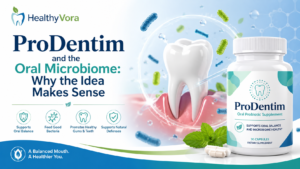
ProDentim and the Oral Microbiome: Why the Idea Makes Sense
The mouth contains a complex community of microorganisms collectively known as the oral microbiome. Many organisms are normal components of a healthy mouth, while imbalances involving plaque-associated bacteria can contribute to dental and periodontal problems.
Oral probiotics are designed around the idea of supporting a more favorable microbial environment rather than simply attempting to eliminate every bacterium.
That biological concept is reasonable, but it does not mean every probiotic formulation will produce a clinically important benefit. Probiotic effects are highly strain-specific, and researchers still need better standardized, longer-term clinical trials.
For this reason, HealthyVora considers the oral microbiome concept interesting but believes product-specific evidence should carry more weight than general microbiome marketing.
What Dentists Usually Prioritize for Bleeding Gums and Breath
A responsible dental approach starts with finding the cause rather than immediately choosing a supplement.
- Remove plaque effectively. Brush thoroughly with fluoride toothpaste according to your dentist’s recommendations.
- Clean between the teeth. Dental floss, interdental brushes, or another appropriate interdental cleaner can remove plaque that a toothbrush cannot easily reach.
- Clean the tongue. Tongue coating is an important source of odor-producing bacteria in many people.
- Maintain hydration. Dry mouth can worsen breath and alter the oral environment.
- Arrange professional cleaning when necessary. Hardened tartar cannot simply be dissolved by a probiotic supplement.
- Investigate persistent symptoms. Ongoing bleeding or halitosis may indicate gingivitis, periodontitis, tooth decay, dry mouth, or another health issue.
The American Dental Association notes that therapeutic mouthrinses containing appropriate active ingredients can also help manage plaque, gingivitis, or bad breath in selected patients, although mouthwash does not replace brushing and cleaning between the teeth.
Using ProDentim in Egypt: What Consumers Should Consider
For consumers searching for ProDentim in Egypt, whether in Cairo, Giza, Alexandria, or elsewhere, the medical considerations are essentially the same: a supplement should complement appropriate oral hygiene rather than delay diagnosis.
If you are considering an imported oral probiotic, check the current ingredient label carefully because supplement formulas can change. Compare the actual strain names on the bottle with those discussed in clinical research instead of relying solely on general phrases such as “billions of probiotics.”
Consumers should also be cautious with marketplace listings, unofficial sellers, damaged packaging, and products with unclear storage or expiry information. When possible, verify the current formula and purchasing information through the manufacturer’s official channels before ordering. see also.
If your gums bleed repeatedly, arranging an examination with a licensed dentist in Egypt is more important than deciding between probiotic brands.
Who Might Consider an Oral Probiotic?
An oral probiotic may be worth discussing with a dentist if you already maintain good oral hygiene and want an additional microbiome-focused product rather than a replacement for conventional care.
- People looking for an adjunct to an established dental hygiene routine.
- People interested in supporting oral microbial balance.
- People who understand that results may vary significantly.
- People whose dentist has ruled out problems requiring treatment.
Who Should See a Dentist Before Relying on ProDentim?
- Anyone with persistent or unexplained gum bleeding.
- Anyone with loose teeth or noticeable gum recession.
- Anyone experiencing gum swelling, pus, or significant pain.
- Anyone with persistent bad breath despite good oral hygiene.
- Anyone who has not had a dental examination for an ongoing oral problem.
Common Mistakes When Reading ProDentim Dentist Reviews
1. Treating Customer Testimonials as Clinical Evidence
Personal experiences can be useful for understanding taste, convenience, or purchasing experience, but testimonials cannot demonstrate that a product treats gum disease.
2. Assuming Every Probiotic Works the Same Way
A clinical trial involving one bacterial strain does not prove that another strain, or a multi-ingredient supplement containing a different dose, produces identical results.
3. Ignoring the Cause of Bad Breath
Bad breath caused by tongue coating may need a different approach from breath associated with gum disease, dry mouth, dental decay, or other medical issues.
4. Waiting Too Long to Investigate Bleeding
Temporary mild bleeding after improving interdental cleaning is different from persistent spontaneous bleeding. Repeated symptoms deserve professional assessment.
5. Replacing Proven Dental Care With Supplements
No oral probiotic should be considered a substitute for plaque removal, professional cleaning, periodontal treatment, or restorative dental care when those treatments are indicated.
Why HealthyVora Takes an Evidence-First Approach to ProDentim
HealthyVora focuses on the question consumers actually need answered: not whether a product has attractive ingredients, but how strongly the available research supports the result being promised.
For ProDentim, that means acknowledging both sides. There is genuine scientific interest in oral probiotics, and some strains have produced promising results for periodontal parameters or halitosis. At the same time, evidence remains strain-specific and does not establish the complete ProDentim formula as a treatment for gum disease or chronic bad breath.
This balanced approach is especially useful when comparing supplements sold online, where promotional articles may blur the difference between ingredient science and product-specific clinical evidence.
ProDentim Dentist Reviews: Final Verdict
ProDentim may be considered an optional oral-health supplement, but the available evidence is not strong enough to say that it reliably stops gum bleeding or cures bad breath.
Research into probiotics and periodontal health suggests possible adjunctive benefits in some situations, particularly alongside established periodontal therapy, but studies remain inconsistent. Likewise, promising halitosis research exists for specific oral probiotic strains, yet those results should not automatically be attributed to ProDentim.
If your main problem is occasional stale breath and your teeth and gums are otherwise healthy, improving tongue cleaning, hydration, interdental cleaning, and overall oral hygiene may be the logical starting point.
If you regularly notice blood while brushing or flossing, persistent unpleasant breath, swollen gums, gum recession, or loose teeth, a dental examination should come before experimenting with supplements.
HealthyVora recommends treating ProDentim as a possible addition to good oral care—not as a shortcut around it. If you are comparing oral probiotics in Egypt, use HealthyVora’s evidence-focused guidance to evaluate ingredients, research quality, and realistic expectations before making your next purchase.
Frequently Asked Questions About ProDentim, Bleeding Gums, and Bad Breath
1. Do dentists recommend ProDentim?
There is no broad professional dental recommendation for ProDentim specifically. Some dentists may consider oral probiotics as an optional adjunct to normal oral hygiene and professional care.
2. Does ProDentim stop bleeding gums?
There is not enough product-specific clinical evidence to say that ProDentim reliably stops bleeding gums. Persistent bleeding should be assessed by a dentist.
3. Can ProDentim treat gingivitis?
ProDentim should not be considered a proven gingivitis treatment. Plaque control and appropriate professional dental care remain the foundation of treatment.
4. Does ProDentim help bad breath?
It may support oral microbial balance, but there is insufficient evidence to guarantee an improvement in halitosis. The cause of bad breath is an important factor.
5. Are oral probiotics good for gum health?
Research suggests possible benefits in some periodontal situations, but results vary according to the probiotic strain, patient, condition, dose, and study design.
6. How long does an oral probiotic take to work?
There is no universal timeline. Clinical research on oral probiotics typically evaluates changes over several weeks or months rather than expecting immediate results.
7. Can I use ProDentim instead of flossing?
No. An oral probiotic cannot physically remove plaque and food debris from between the teeth. Interdental cleaning remains important.
8. Why are my gums bleeding when I brush?
Plaque-related gum inflammation is a common cause, although brushing technique, periodontal disease, medications, and certain health conditions may also contribute.
9. When is bad breath a dental warning sign?
Bad breath that persists despite brushing, tongue cleaning, and interdental cleaning should be investigated, especially when accompanied by bleeding or swollen gums.
10. Is ProDentim worth trying for gum and breath support?
It may be reasonable as an optional adjunct for someone with appropriate dental care and realistic expectations, but it should not replace diagnosis or treatment of persistent oral symptoms.