

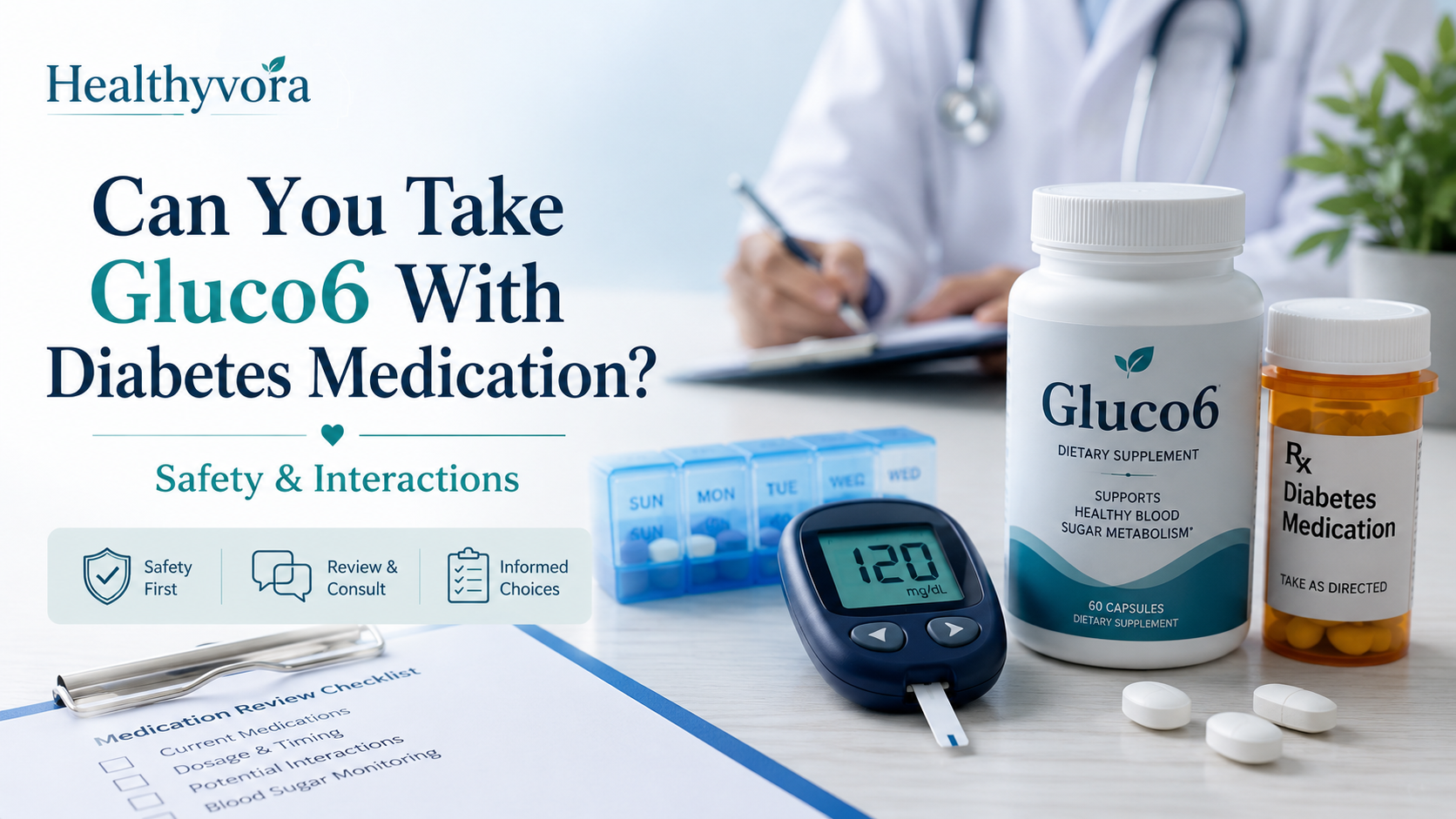
Can You Take Gluco6 With Diabetes Medication? Safety & Interactions
Short answer: If you take prescription diabetes medication, you should not start Gluco6 without first reviewing the supplement with your doctor, diabetes clinician, or pharmacist. Some ingredients marketed in Gluco6, particularly chromium and botanicals associated with glucose metabolism, may potentially add to the blood-sugar-lowering effects of diabetes treatment. This could matter most for people using insulin or medications already associated with hypoglycemia.
That does not automatically mean Gluco6 and diabetes medications can never be used together. It means the combination requires individualized medical review rather than assuming that a supplement is harmless because it is sold without a prescription. Healthyvora recommends approaching blood sugar supplements as additions that need to be evaluated alongside your existing treatment plan—not as substitutes for prescribed diabetes care.
Medical safety note: Never reduce, skip, or stop insulin or another prescribed diabetes medication because you start taking Gluco6 or another dietary supplement. Medication changes should be made with the clinician managing your diabetes.
Can You Take Gluco6 With Diabetes Medication?
Possibly, but only after a qualified healthcare professional reviews your medications, medical history, glucose readings, kidney and liver health, and the exact Gluco6 label you plan to use.
The concern is not necessarily a single proven Gluco6-drug interaction. Instead, several ingredients commonly promoted in blood sugar supplements may influence glucose metabolism. Combining those effects with prescription therapy could make glucose levels harder to predict.
According to the U.S. National Institutes of Health Office of Dietary Supplements, chromium supplementation may have an additive glucose-lowering effect when taken with metformin or other antidiabetes drugs. The same NIH guidance notes that taking chromium together with insulin could increase the possibility of hypoglycemia.
Gluco6’s current promotional materials list ingredients including chromium, Gymnema sylvestre, cinnamon, green tea, TeaCrine, and Sukre. Because supplement formulas and labels can change, consumers should always compare the Supplement Facts panel on the bottle they actually receive with their medication list.
Why Gluco6 May Interact With Diabetes Treatment
Diabetes medicines work through different mechanisms. Some increase insulin availability, some improve insulin sensitivity, some reduce glucose production, and others change how glucose is absorbed or eliminated.
A supplement marketed to support glucose metabolism may act on some of the same biological pathways. If both a medication and a supplement push blood glucose downward, the combined effect may be greater than expected.
Chromium Is One of the Most Important Interaction Concerns
Chromium is often included in blood sugar supplements because it has been studied for its relationship with insulin action and glucose metabolism. Evidence about its usefulness for diabetes is mixed, but its potential medication interactions are still important.
The NIH Office of Dietary Supplements specifically advises that chromium may increase insulin sensitivity. When combined with insulin, this may increase the risk of low blood glucose. Chromium may also have an additive effect when used with metformin or other glucose-lowering medications.
Gymnema Sylvestre May Affect Glucose Control
Gymnema sylvestre is a botanical traditionally used in Ayurvedic medicine and is commonly marketed for sugar cravings and glucose support. Research on herbal supplements for diabetes remains limited and inconsistent, and there is not enough evidence to treat Gymnema—or Gluco6—as a replacement for established diabetes therapy.
If a person taking insulin or glucose-lowering tablets also uses an herb intended to influence glucose metabolism, additional monitoring may be appropriate under professional supervision.
Cinnamon Is Not Automatically Risk-Free
Cinnamon is commonly associated with blood sugar supplements, but clinical research has produced mixed results. The National Center for Complementary and Integrative Health states that evidence does not clearly support cinnamon for treating diabetes.
Cinnamon supplements may also differ substantially in species, concentration, and coumarin content. People with liver disease or those taking multiple medications should be especially careful about using concentrated herbal products without professional review.
Green Tea Extract Can Interact With Non-Diabetes Medicines Too
Medication review should extend beyond diabetes prescriptions. Concentrated green tea supplements can interact with certain medicines. This matters because a person with diabetes may also take medications for cholesterol, blood pressure, heart disease, or other conditions.
For that reason, your pharmacist should review your complete medication and supplement list rather than checking only metformin or insulin.
Gluco6 and Common Diabetes Medications
| Medication Type | Main Safety Concern With Gluco6 | Recommended Approach | ||||||||||||
|---|---|---|---|---|---|---|---|---|---|---|---|---|---|---|
| Insulin | Potentially greater concern for hypoglycemia, particularly because chromium may influence insulin sensitivity. | Do not combine without clinician review and a glucose-monitoring plan. | ||||||||||||
| Metformin | Chromium may have an additive glucose-lowering effect with metformin. | Ask your doctor or pharmacist before starting the supplement. | ||||||||||||
| Sulfonylureas | These medications can already cause hypoglycemia, so adding glucose-support supplements may complicate control. | Medical supervision is strongly recommended. | ||||||||||||
| Meglitinides | These drugs stimulate insulin release and may cause low blood sugar. | Discuss any glucose-targeting supplement before use. | ||||||||||||
| GLP-1 receptor agonists | No reliable Gluco6-specific interaction has been established, but combinations with other glucose-lowering therapies require individualized review. | Show the complete supplement label to your prescriber or pharmacist. | ||||||||||||
| SGLT2 or DPP-4 medicines | Direct Gluco6 interaction data are limited. | Do not assume absence of published interaction data means the combination is risk-free. |
Can Gluco6 Cause Low Blood Sugar?
Gluco6 should not automatically be assumed to cause hypoglycemia in every user. However, the possibility becomes more important when a supplement intended to support glucose metabolism is combined with medication that lowers blood sugar.
Hypoglycemia is generally defined in diabetes care as blood glucose below 70 mg/dL, although individual treatment plans may differ. People who use insulin, sulfonylureas, or meglitinides are among those who need particular awareness of low glucose.
Warning Signs of Hypoglycemia
- Shaking or feeling jittery
- Sweating
- Sudden hunger
- Dizziness or lightheadedness
- Fast heartbeat
- Irritability or anxiety
- Headache
- Difficulty concentrating
- Confusion
- Blurred vision or difficulty speaking in more serious cases
Severe hypoglycemia can lead to seizures, loss of consciousness, or an inability to treat yourself and requires urgent medical attention.
What Should You Do If Your Blood Sugar Drops?
People with diabetes should follow the hypoglycemia treatment plan given by their healthcare professional. For many adults, U.S. public-health guidance describes the “15-15 rule” for treating a glucose reading below 70 mg/dL when the person is conscious and able to swallow.
- Consume approximately 15 grams of fast-acting carbohydrate.
- Wait 15 minutes.
- Recheck your blood glucose.
- If it remains below 70 mg/dL, repeat the treatment.
- Once glucose has recovered, follow your clinician’s instructions regarding food, medication, and further monitoring.
Examples of fast-acting carbohydrate include glucose tablets, glucose gel, regular—not diet—soda, or juice. Severe hypoglycemia may require glucagon and emergency medical care rather than oral carbohydrate.
Is Gluco6 a Replacement for Metformin or Insulin?
No. Gluco6 is marketed as a dietary supplement and should not be considered a substitute for prescription diabetes medication.
Diabetes is a chronic medical condition that can affect the heart, kidneys, nerves, eyes, and blood vessels when inadequately controlled. Treatment decisions depend on factors such as your diabetes type, A1C, glucose patterns, cardiovascular risk, kidney function, other medical conditions, and current medications.
The National Center for Complementary and Integrative Health states that there is not enough scientific evidence to show that any dietary supplement can manage or prevent type 2 diabetes on its own.
A supplement should therefore never be used as justification to discontinue metformin, insulin, or another medication prescribed by your healthcare professional.
Why This Question Is Especially Important for U.S. Consumers
Dietary supplements in the United States are regulated differently from prescription drugs. The FDA does not approve dietary supplements for effectiveness before they are marketed in the same way it approves prescription medications.
This distinction matters when shopping for products marketed for blood sugar support. A professional-looking label, an FDA-registered manufacturing facility, or an online testimonial does not mean a supplement has been FDA-approved as a diabetes treatment.
Consumers across the United States—from New York and California to Texas, Florida, and other states—should evaluate glucose-support supplements based on the actual Supplement Facts label, medication interactions, manufacturing information, and evidence behind individual ingredients.

Who Should Be Especially Careful Before Using Gluco6?
Medical review is particularly important if any of the following applies to you:
- You use insulin.
- You take more than one diabetes medication.
- You have experienced previous episodes of hypoglycemia.
- You have hypoglycemia unawareness.
- You have kidney disease.
- You have liver disease.
- You take several prescription medications or supplements.
- You are pregnant, breastfeeding, or planning pregnancy.
- You are preparing for surgery or a medical procedure.
- Your blood glucose levels have recently become unstable.
Older adults and people with complex medication regimens may also benefit from having a pharmacist perform a complete medication-and-supplement review before adding any new product.
How to Ask Your Doctor or Pharmacist About Gluco6
Simply asking, “Is Gluco6 safe?” may not provide enough information. Bring the bottle or a clear photograph of the Supplement Facts panel and ask specific questions.
- Could any Gluco6 ingredient interact with my diabetes medication?
- Could this combination increase my risk of hypoglycemia?
- Should I monitor my glucose more frequently after starting it?
- Does it interact with my blood pressure, cholesterol, thyroid, heart, or blood-thinning medications?
- Do I already take another supplement containing chromium or similar ingredients?
- Are there concerns related to my kidney or liver function?
- What symptoms would mean I should stop taking the supplement and seek medical advice?
Do not leave out over-the-counter medicines, vitamins, herbal products, energy products, or other blood sugar supplements. Interaction risk depends on the complete combination.
Common Mistakes to Avoid
Stopping Diabetes Medication After Seeing Better Readings
A few improved glucose readings do not mean prescription treatment is no longer needed. Stopping medication suddenly can allow glucose to rise again and may create serious health risks.
Taking Multiple Blood Sugar Supplements Together
Stacking several formulas may unintentionally duplicate chromium, cinnamon, Gymnema, green tea extract, or other ingredients. More ingredients do not necessarily mean better glucose control.
Assuming “Natural” Means No Interaction
Herbs and nutrients can have real biological effects. Those effects are exactly why interactions with medications are possible.
Ignoring the Supplement Facts Label
Product marketing pages may change, and supplements can be reformulated. Always use the actual label on your bottle when discussing safety with a healthcare professional.
Using a Supplement to Treat Symptoms of Uncontrolled Diabetes
Persistent high glucose, excessive thirst, frequent urination, unexplained weight loss, vomiting, severe fatigue, or other concerning symptoms deserve medical evaluation rather than self-treatment with supplements.
Why Healthyvora Takes a Safety-First Approach
Healthyvora approaches supplement research from an evidence-aware perspective: understand what a product contains, separate ingredient research from marketing claims, identify medication-interaction concerns, and know when professional medical guidance is necessary.
For a product such as Gluco6, the most useful question is not simply whether an ingredient has been studied. The more important question for someone already receiving diabetes treatment is whether adding that ingredient makes their overall regimen safer, more effective, or unnecessarily complicated. see also.
Healthyvora should be used as an educational starting point for researching supplements. Your physician, endocrinologist, diabetes care team, and pharmacist remain the appropriate sources for individualized treatment decisions.
Checklist Before Taking Gluco6 With Diabetes Medication
- Read the current Supplement Facts panel.
- Write down every medication and supplement you take.
- Check whether another supplement already contains chromium.
- Ask your doctor or pharmacist about interaction risks.
- Do not alter prescription medication on your own.
- Know your personal glucose targets.
- Know the symptoms of hypoglycemia.
- Keep appropriate hypoglycemia treatment available if your clinician recommends it.
- Monitor for unexpected changes in glucose after adding any supplement.
- Report repeated low or unusually high readings to your diabetes care team.
Final Verdict: Is It Safe to Take Gluco6 With Diabetes Medication?
Do not assume that Gluco6 is automatically safe to combine with diabetes medication. Gluco6 contains ingredients marketed for glucose and metabolic support, and chromium in particular has recognized interaction concerns with insulin, metformin, and other antidiabetes medicines.
That does not prove every Gluco6 user taking diabetes medication will experience an adverse interaction. It means there is enough potential overlap in glucose-lowering effects to justify professional review before starting the supplement.
The safest approach is simple: keep taking your prescribed medication as directed, show the current Gluco6 label to your physician or pharmacist, discuss your glucose targets and hypoglycemia history, and decide together whether adding the supplement makes sense for your individual situation.
Frequently Asked Questions
1. Can I take Gluco6 with metformin?
You should ask your doctor or pharmacist first. Chromium supplements may have an additive glucose-lowering effect with metformin, potentially increasing the chance of low blood sugar in some circumstances.
2. Can I take Gluco6 with insulin?
Do not combine Gluco6 with insulin without medical review. Chromium may increase insulin sensitivity, which could contribute to hypoglycemia when combined with insulin.
3. Can Gluco6 cause hypoglycemia?
There is not enough evidence to say Gluco6 will cause hypoglycemia in every user. The concern is greater when glucose-support supplements are combined with medications that already lower blood sugar.
4. Should I stop metformin before starting Gluco6?
No. Never stop or reduce metformin or another prescribed diabetes medicine to start a supplement unless your prescribing clinician specifically tells you to do so.
5. Is Gluco6 FDA approved for diabetes?
No dietary supplement should be confused with an FDA-approved prescription diabetes treatment. Dietary supplements are regulated differently and are not preapproved by the FDA for effectiveness before marketing.
6. What Gluco6 ingredient is most important for medication interactions?
Chromium deserves particular attention because NIH guidance identifies possible additive effects with insulin, metformin, and other antidiabetes medicines.
7. Is Gluco6 safe for people with type 2 diabetes?
Safety depends on the individual’s medications, glucose control, medical conditions, and the exact product formula. A clinician or pharmacist should review the supplement before use.
8. Should I monitor my blood sugar more often after starting Gluco6?
Your healthcare professional may recommend additional monitoring when adding a supplement that could influence glucose. Ask what monitoring schedule is appropriate for you.
9. What should I do if my blood sugar falls below 70 mg/dL?
Follow your personal diabetes treatment plan. For many adults who are conscious and able to swallow, U.S. guidance recommends 15 grams of fast-acting carbohydrate followed by another glucose check after 15 minutes.
10. Where can I get reliable advice about Gluco6 interactions?
Bring the current product label to your physician, endocrinologist, diabetes educator, or pharmacist. They can evaluate the supplement against your complete medication list and health history.
Take the Next Step With Healthyvora
If you are researching Gluco6, start with evidence rather than marketing claims. Use Healthyvora to understand ingredients and safety considerations, then take the Gluco6 Supplement Facts label and your complete medication list to your healthcare professional before making a decision. That extra step is especially important when diabetes medication, insulin, or a history of low blood sugar is involved.