

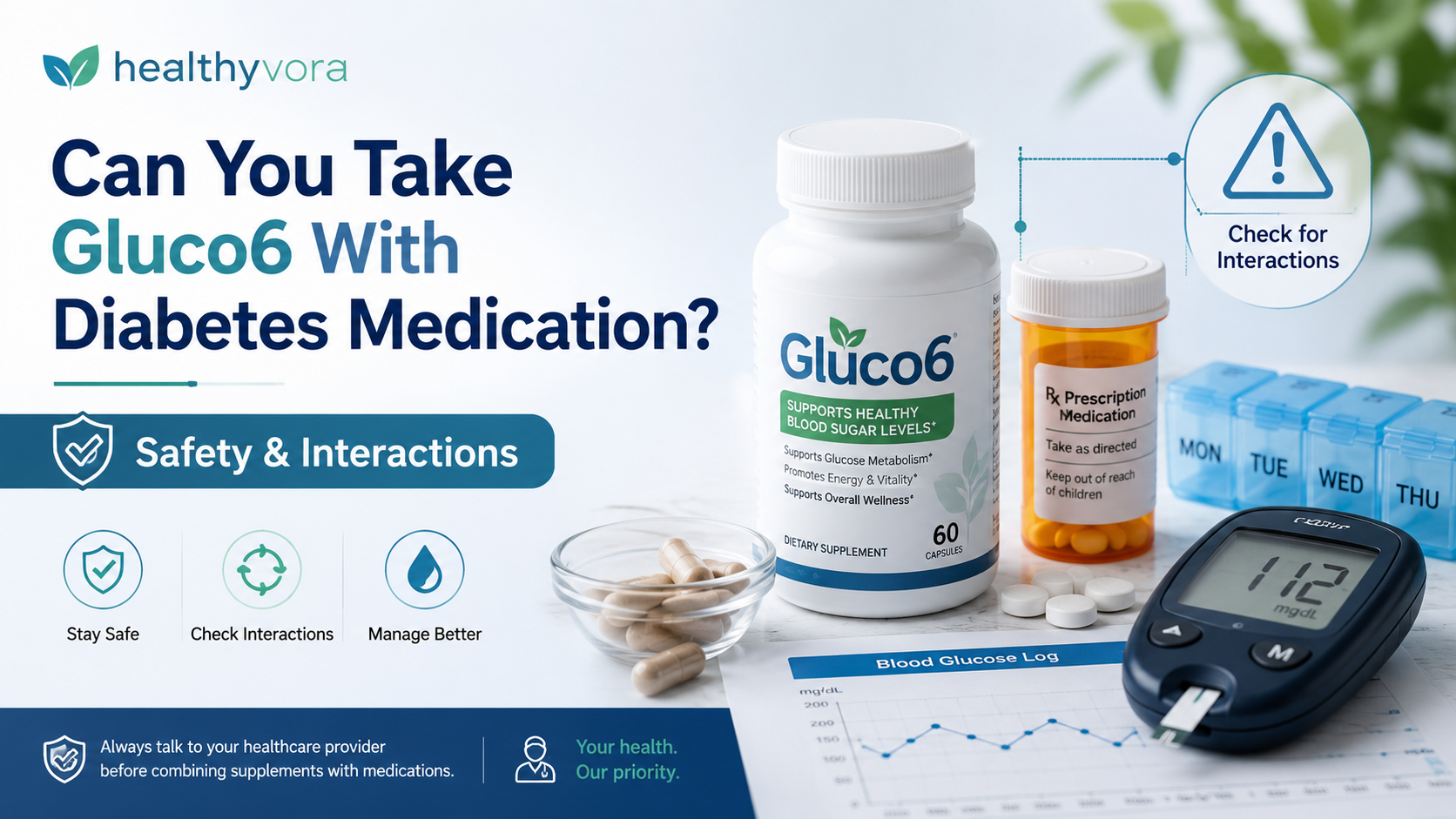
Can You Take Gluco6 With Diabetes Medication? Safety & Interactions
Can you take Gluco6 with diabetes medication? You should not start Gluco6 alongside metformin, insulin, sulfonylureas, or other glucose-lowering medicines without first reviewing the combination with your doctor or pharmacist. Gluco6 contains several ingredients marketed for glucose support, including chromium, Gymnema, Ceylon cinnamon, and green tea. Because some of these ingredients may influence blood glucose or interact with medicines, combining them with diabetes treatment could create additional safety concerns.
At healthyvora, the safest answer is not to assume that “natural” automatically means compatible with prescription treatment. The correct decision depends on your medications, glucose levels, kidney and liver health, other supplements, and the exact Gluco6 formula you are using.
Can You Take Gluco6 With Diabetes Medication? The Short Answer
Do not combine Gluco6 with diabetes medication without professional medical review. There is not enough reliable evidence showing that the complete Gluco6 formula is safe with every diabetes drug. The concern is especially important for people using insulin or medications already associated with hypoglycemia.
This does not mean that every person who combines Gluco6 with diabetes medication will experience an interaction. It means the interaction risk cannot safely be ruled out.
One specific reason for caution is chromium. Chromium is included in the current Gluco6 formula, and NIH guidance notes that chromium supplementation may increase insulin sensitivity and may have an additive glucose-lowering effect when used with insulin, metformin, or other antidiabetes medicines.
For someone whose blood glucose is already controlled with medication, adding another product intended to affect glucose metabolism without adjusting monitoring could make blood sugar management less predictable.
What Is Gluco6?
Gluco6 is marketed in the United States as a dietary supplement designed to support glucose metabolism, blood sugar levels, metabolism, and weight management. It is a supplement rather than an FDA-approved diabetes medication.
According to the current Gluco6 website, its formula includes:
- Sukre
- TeaCrine
- Gymnema
- Chromium
- Ceylon cinnamon
- Green tea
These ingredients should not be evaluated only by asking whether each ingredient is “natural.” What matters medically is whether an ingredient can alter blood glucose, affect drug metabolism, contribute to side effects, or create an additive effect when combined with medication.
The manufacturer itself advises people taking medication or living with a medical condition to consult a physician before using Gluco6. Its website also advises users to continue prescribed medication until their healthcare professional says otherwise.
Why Could Gluco6 Interact With Diabetes Medication?
The primary concern is additive glucose lowering. Diabetes medications are prescribed at specific doses to achieve an appropriate glucose range. Adding a supplement with ingredients that may influence insulin sensitivity or glucose metabolism could alter that balance.
Chromium deserves particular attention
Chromium is one of the clearest reasons to discuss Gluco6 with a healthcare professional. NIH’s Office of Dietary Supplements notes that chromium may increase insulin sensitivity. Taking supplemental chromium with insulin could therefore increase the risk of hypoglycemia.
NIH also notes that chromium may have an additive effect when combined with metformin or other antidiabetes medicines.
This does not prove that a particular dose of Gluco6 will cause hypoglycemia. The publicly available Gluco6 marketing page does not provide enough information to establish that conclusion for every patient. It does, however, provide a reasonable basis for caution.
Herbal ingredients can complicate medication use
Gluco6 also contains botanical ingredients including Gymnema, Ceylon cinnamon, and green tea. Herbal products can have biological effects, and supplements can sometimes affect the absorption, metabolism, or action of medications.
Green tea extracts also deserve attention because concentrated green tea supplements have been associated with medication interactions, and uncommon cases of liver injury have been reported with concentrated extracts.
Gluco6 and Common Diabetes Medications
| Medication Type | Examples | Main Consideration With Gluco6 | Recommended Approach |
|---|---|---|---|
| Insulin | Glargine, lispro, aspart and others | Higher concern for excessive glucose lowering | Discuss with your diabetes clinician before use |
| Metformin | Metformin | Chromium may add to glucose-lowering effects | Review the combination with a doctor or pharmacist |
| Sulfonylureas | Glipizide, glyburide, glimepiride | These medicines can already cause hypoglycemia | Avoid adding Gluco6 without professional guidance |
| Meglitinides | Repaglinide, nateglinide | These medicines stimulate insulin release and can cause lows | Professional review and glucose monitoring are important |
| GLP-1 receptor agonists | Semaglutide, dulaglutide and others | No universal Gluco6 interaction has been established, but combined treatment still requires review | Ask your prescriber before combining them |
| SGLT2 inhibitors | Empagliflozin, dapagliflozin | Direct interaction data with the full Gluco6 formula are limited | Have your complete medication and supplement list reviewed |
| DPP-4 inhibitors | Sitagliptin, linagliptin | Reliable interaction data with the complete formula are limited | Do not assume compatibility |
The table is a practical safety guide rather than a declaration that a specific interaction will occur. Because Gluco6 is a multi-ingredient supplement, assessing it is more complicated than assessing a single isolated ingredient.
Can You Take Gluco6 With Metformin?
Gluco6 should not automatically be considered safe with metformin. Metformin itself generally has a lower risk of causing hypoglycemia than insulin or sulfonylureas, but that does not eliminate potential supplement interactions.
The most relevant issue is chromium. NIH reports that chromium supplements may lower glucose and could have an additive effect with metformin or other diabetes medicines.
If you use metformin, show your doctor or pharmacist the complete Gluco6 Supplement Facts label rather than simply asking whether a “blood sugar supplement” is safe. Ingredient amounts, other medications, kidney function, glucose trends, and your treatment goals can all affect the answer.
Can You Take Gluco6 With Insulin?
People using insulin should be particularly cautious. Insulin is one of the diabetes treatments most strongly associated with hypoglycemia, and adding another product that could influence insulin sensitivity or glucose levels may increase uncertainty around glucose control.
This is not a situation where you should reduce your insulin dose on your own to “make room” for Gluco6. Insulin changes should be made according to the treatment plan provided by your diabetes healthcare team.
If your clinician approves a supplement, ask whether you need more frequent finger-stick checks or continuous glucose monitor reviews during the first days of use.
What Are the Signs of Low Blood Sugar?
Low blood glucose can develop quickly. Common symptoms include:
- Shaking or trembling
- Sweating
- Fast heartbeat
- Sudden hunger
- Dizziness or lightheadedness
- Weakness
- Anxiety or nervousness
- Blurred vision
- Confusion
- Difficulty concentrating
For many people with diabetes, glucose below 70 mg/dL is considered low. Severe hypoglycemia may cause major confusion, inability to safely treat yourself, seizures, or loss of consciousness and should be treated as a medical emergency.
What should you do if your glucose falls below 70 mg/dL?
If your personal diabetes plan does not specify something different, the American Diabetes Association recommends the 15-15 approach for many adults:
- Take 15 grams of fast-acting carbohydrate.
- Wait 15 minutes.
- Check your glucose again.
- If it remains below 70 mg/dL, take another 15 grams of fast-acting carbohydrate.
- Continue according to your diabetes treatment plan and seek medical assistance when needed.
Severe symptoms such as seizure, unconsciousness, or inability to safely swallow require emergency assistance rather than attempting to give food or drink normally.
How to Check Whether Gluco6 Is Appropriate for You
A structured medication review is much safer than experimenting with a supplement and waiting to see what happens.
- Check the current Gluco6 label. Supplement formulas can change, so use the ingredients and amounts on the bottle you actually plan to take.
- Write down every diabetes medication. Include insulin, tablets, injections, and combination products.
- Add all other supplements. This matters particularly if another product contains chromium, cinnamon, green tea extract, or glucose-support ingredients.
- Show the complete list to a pharmacist or prescriber. A pharmacist can often identify potential drug-supplement problems quickly.
- Ask about glucose monitoring. Your clinician may want additional checks if a new supplement is introduced.
- Know your hypoglycemia plan. Keep appropriate fast-acting carbohydrate available if you use medication capable of causing low blood sugar.
- Never change prescribed doses independently. Supplement use is not a reason to stop or reduce diabetes medication without medical direction.
Why U.S. Consumers Should Understand FDA Supplement Rules
For consumers in the United States, one distinction is particularly important: dietary supplements are not evaluated through the same premarket approval process as prescription diabetes drugs.
The FDA does not approve dietary supplements for safety and effectiveness before they reach the market in the way it approves medications. Manufacturers are responsible for meeting applicable safety and labeling requirements, while the FDA can take action against products that violate federal law after marketing.
That distinction matters when reading phrases such as “manufactured in an FDA-registered facility.” Facility registration should not be interpreted as FDA approval of the supplement itself. The FDA specifically explains that it does not “approve” facilities simply because they are registered.
Gluco6’s own website includes the standard notice that its statements have not been evaluated by the FDA and that the product is not intended to diagnose, treat, cure, or prevent disease.
Can Gluco6 Replace Diabetes Medication?
No. Gluco6 should not be used as a replacement for prescribed diabetes treatment.
The American Diabetes Association notes that dietary supplements have not been proven to be an effective option for lowering blood glucose or supporting diabetes management as a substitute for established care.
Stopping insulin or another prescribed medicine because a supplement claims to support healthy blood sugar can allow glucose levels to rise dangerously. Medication changes should be based on measured glucose trends and a healthcare professional’s assessment, not testimonials or supplement advertising.
Who Should Be Especially Careful?
Medical review is particularly important if you:
- Use insulin.
- Take a sulfonylurea such as glipizide, glyburide, or glimepiride.
- Have frequent episodes of low blood sugar.
- Have hypoglycemia unawareness.
- Take several prescription medications.
- Use another supplement containing chromium.
- Have kidney or liver disease.
- Are preparing for surgery or a medical procedure.
- Are pregnant, breastfeeding, or trying to become pregnant.
These situations do not automatically mean Gluco6 is unsafe for every person. They mean individualized review is more important.
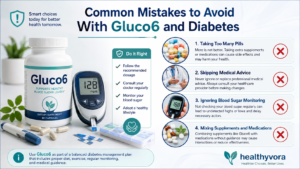
Common Mistakes to Avoid With Gluco6 and Diabetes
Assuming natural ingredients cannot interact with medications
Natural products can produce biological effects. A supplement capable of changing a biological process can also have side effects or interact with treatment.
Stopping diabetes medication because glucose improves
Do not discontinue medication without guidance. Improved glucose numbers may reflect your medication, diet, activity, weight changes, illness recovery, or several factors working together.
Taking multiple blood sugar supplements together
Combining several products can duplicate ingredients and make it more difficult to identify what caused an adverse effect. The Gluco6 website itself specifically cautions users about combining it with formulas containing high amounts of chromium.
Confusing FDA registration with FDA approval
An FDA-registered manufacturing facility does not mean that FDA has approved Gluco6 as a treatment for diabetes.
Ignoring glucose readings because a supplement is “gentle”
Objective glucose readings matter more than how mild a supplement sounds. If your numbers change significantly after adding any supplement, contact your diabetes care team.
Why Use healthyvora When Researching Gluco6?
healthyvora approaches products such as Gluco6 as an educational health topic rather than treating marketing claims as medical proof. For a question involving diabetes medications, the most useful information is not simply whether people like a supplement. It is whether the ingredients, regulatory status, medication risks, and limitations of the evidence are clearly explained. see also.
That is especially important for U.S. consumers comparing supplements with established diabetes therapies. Use healthyvora as a starting point for understanding the questions you should ask, then make medication-related decisions with your physician, endocrinologist, diabetes educator, or pharmacist.
Questions to Ask Your Doctor or Pharmacist Before Taking Gluco6
- Does any Gluco6 ingredient interact with my current medications?
- Does my diabetes medicine put me at significant risk of hypoglycemia?
- Should I monitor glucose more frequently if I start this supplement?
- Am I already getting chromium from another supplement?
- Could my kidney or liver function change the safety of this product?
- What symptoms should make me stop taking the supplement?
- Should I avoid taking the supplement close to any of my medicines?
Bring the actual bottle or a clear photograph of the Supplement Facts panel. That provides more useful information than the product name alone.
Final Verdict: Is Gluco6 Safe With Diabetes Medication?
There is no reliable basis for saying that Gluco6 is universally safe to combine with diabetes medications. Because Gluco6 contains ingredients intended to influence glucose metabolism—and because chromium may have additive effects with insulin, metformin, and other glucose-lowering medicines—the combination deserves professional review.
The concern is greatest when your current treatment can already cause hypoglycemia, particularly insulin, sulfonylureas, and meglitinides.
Do not stop, reduce, or replace prescribed medication to take Gluco6. Instead, discuss the current ingredient label with a healthcare professional who knows your medication list and glucose history.
healthyvora CTA: Before adding Gluco6 to your diabetes routine, use this healthyvora safety guide to prepare your medication and supplement list, then review the combination with your doctor or pharmacist. A short medication check is a more sensible next step than experimenting with blood sugar treatment on your own.
Frequently Asked Questions About Gluco6 and Diabetes Medication
1. Can I take Gluco6 with metformin?
Do not assume the combination is automatically safe. Gluco6 contains chromium, which may add to the glucose-lowering effects of metformin. Ask your doctor or pharmacist before combining them.
2. Can I take Gluco6 while using insulin?
Insulin users should be especially cautious because insulin can cause hypoglycemia. Adding a glucose-support supplement should be reviewed with your diabetes clinician first.
3. Can Gluco6 cause low blood sugar?
It cannot be stated that Gluco6 will cause hypoglycemia in everyone. However, some ingredients may influence glucose metabolism, creating additional concern when combined with glucose-lowering medicines.
4. Does Gluco6 interact with glipizide?
A specific interaction with the complete Gluco6 formula has not been established, but glipizide can cause hypoglycemia. Adding a glucose-support supplement without medical review is therefore not recommended.
5. Does Gluco6 interact with Ozempic or other GLP-1 drugs?
Reliable data evaluating the full Gluco6 formula with GLP-1 receptor agonists are limited. Ask your prescriber or pharmacist to review the combination before use.
6. Should I stop my diabetes medicine before taking Gluco6?
No. Never stop prescribed diabetes medication simply to start a supplement unless your healthcare professional specifically changes your treatment plan.
7. Is Gluco6 FDA approved?
No dietary supplement should be interpreted as FDA-approved for treating diabetes simply because it is made in an FDA-registered facility. Supplements follow a different regulatory pathway from approved drugs.
8. What Gluco6 ingredient is most relevant to medication interactions?
Chromium deserves particular attention because NIH reports that chromium may have additive glucose-lowering effects with insulin, metformin, and other diabetes medicines.
9. What should I monitor if my doctor allows Gluco6?
Follow the glucose-monitoring plan recommended by your healthcare team and watch for symptoms such as shaking, sweating, dizziness, weakness, fast heartbeat, hunger, or confusion.
10. Is Gluco6 a substitute for diabetes treatment?
No. Dietary supplements should not replace prescribed insulin, metformin, or other evidence-based diabetes treatment.
**Medical verification references:** The Gluco6 ingredient list, medication warning, and manufacturer-directed use above reflect the product’s official site as accessed on August 14, 2026. NIH specifically identifies a potential additive effect between supplemental chromium and insulin, metformin, or other antidiabetes medications. The ADA identifies insulin, sulfonylureas, and meglitinides as important medication-related risk factors for severe hypoglycemia and provides the 15-15 treatment approach for glucose at or below 70 mg/dL. FDA guidance confirms that dietary supplements are regulated differently from drugs and are not FDA-approved for safety and effectiveness before marketing; FDA also states that it does not “approve” facilities.