
Yu Sleep vs Magnesium Glycinate: Formula, Cost, Grogginess & Better Value
Yu Sleep and magnesium glycinate are not direct equivalents. Yu Sleep is a multi-ingredient liquid sleep supplement containing low-dose melatonin plus magnesium glycinate, tart cherry, L-theanine, GABA, 5-HTP, lemon balm, apigenin, and B vitamins. Magnesium glycinate supplements are simpler: they primarily deliver magnesium bound to glycine, usually at a much lower monthly cost.
For most budget-conscious U.S. shoppers who mainly want magnesium and nighttime relaxation, a clearly dosed magnesium glycinate product is usually the better value. Yu Sleep may make more sense if you specifically want a convenient, all-in-one sleep formula that includes melatonin and several calming ingredients. The healthyvora comparison below explains the important trade-offs in formula, price, grogginess, transparency, and safety.
Yu Sleep vs Magnesium Glycinate at a Glance
| Comparison | Yu Sleep | Magnesium Glycinate |
|---|---|---|
| Formula type | Multi-ingredient sleep formula | Single-mineral supplement in most products |
| Magnesium | Included inside a proprietary blend | Usually clearly listed as elemental magnesium |
| Melatonin | Yes, 0.9 mg per serving on the reviewed label | Normally no |
| Other sleep ingredients | Tart cherry, apigenin, lemon balm, 5-HTP, L-theanine, GABA | Usually none unless sold as a combination formula |
| Morning grogginess potential | Possible in sensitive users because it contains melatonin and calming ingredients | Generally less likely to cause melatonin-related morning sleepiness |
| Dose transparency | Limited for the seven-ingredient proprietary blend | Usually better when elemental magnesium is clearly stated |
| Typical U.S. cost | About $69 monthly one-time, with lower subscription pricing advertised | Common retail bottles can cost roughly $5–$25+, depending on brand and servings |
| Best fit | People seeking an all-in-one bedtime formula | People seeking a simple, lower-cost magnesium supplement |
Prices can change with subscriptions, promotions, bottle sizes, and retailers. Yu Sleep’s current store lists a one-time monthly price of about $69 and subscription pricing starting around $49 per month. U.S. magnesium glycinate listings at major retailers span a much wider and generally lower price range, including products under $10 and others around $15–$25 or more.
What Is in Yu Sleep?
The current Yu Sleep label uses a broader approach than magnesium alone. A 2 mL serving, described as two full droppers, provides 0.9 mg of melatonin, 0.5 mg of vitamin B2, 0.5 mg of vitamin B6, and a 637 mg proprietary blend.
The proprietary blend contains:
- Red tart cherry juice concentrate
- Magnesium glycinate
- Apigenin
- Lemon balm extract
- 5-HTP from Griffonia seed extract
- L-theanine
- GABA
The important detail is that the 637 mg number applies to the entire seven-ingredient blend. The label does not disclose how many milligrams of magnesium glycinate, L-theanine, GABA, 5-HTP, or the botanical ingredients are present individually. That makes it impossible to compare Yu Sleep’s magnesium dose directly with a standalone magnesium glycinate supplement.
Why the proprietary blend matters
A long ingredient list can look impressive, but ingredient count alone does not tell you whether each ingredient is present at a meaningful dose. If you want to know exactly how much magnesium you consume each evening, a standalone product that lists elemental magnesium clearly has an important transparency advantage.
This does not automatically make Yu Sleep ineffective. It simply means the label gives consumers less information for comparing individual ingredient doses with clinical research.
What Is Magnesium Glycinate?
Magnesium glycinate, also called magnesium bisglycinate, is magnesium bound to the amino acid glycine. It is commonly chosen by people looking for magnesium supplementation without the stronger laxative effect associated with some other magnesium forms.
Magnesium itself is involved in hundreds of biochemical reactions, including normal nerve and muscle function. When comparing products, however, focus on the amount of elemental magnesium listed on the Supplement Facts panel rather than the total weight of the magnesium compound. The NIH Office of Dietary Supplements specifically notes that supplement labels declare elemental magnesium.
Does magnesium glycinate actually improve sleep?
The evidence is promising but not strong enough to call magnesium a proven insomnia treatment. A 2025 randomized placebo-controlled trial involving adults with poor sleep found that 250 mg of elemental magnesium from magnesium bisglycinate produced a statistically significant but modest improvement in insomnia severity after four weeks. Earlier systematic reviews found inconsistent evidence and emphasized the need for larger, better-designed trials.
That distinction matters. Magnesium glycinate may support relaxation or sleep in some people, particularly when magnesium intake is inadequate, but it should not be marketed as a guaranteed sleep cure.
Which Formula Is Better for Sleep?
Yu Sleep offers the broader formula; magnesium glycinate offers the simpler formula. Which approach is better depends on what problem you are trying to solve.
Yu Sleep may fit you better if:
- You want several sleep-related ingredients in one product.
- You want low-dose melatonin as part of your bedtime routine.
- You prefer liquid drops instead of multiple capsules.
- You value convenience more than knowing the exact dose of every ingredient.
Magnesium glycinate may fit you better if:
- You specifically want magnesium rather than a complex sleep blend.
- You prefer to avoid melatonin.
- You want to know exactly how much elemental magnesium you take.
- You want a more affordable supplement for regular use.
- You prefer introducing one supplement at a time so you can judge how your body responds.
There are no head-to-head clinical trials showing that Yu Sleep is superior to magnesium glycinate alone. Research on an individual ingredient also should not automatically be treated as proof that a multi-ingredient finished product produces the same outcome.
Yu Sleep vs Magnesium Glycinate Cost in the United States
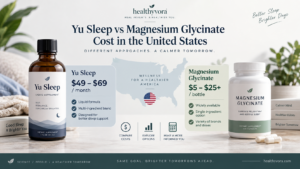
Magnesium glycinate wins on price in most straightforward comparisons. At the time of this review in September 2026, Yu Sleep’s store listed approximately 30 servings per bottle and advertised a one-time price of about $69 per month, with subscription pricing beginning around $49 per month.
By comparison, U.S. retailers currently list magnesium glycinate products from under $10 to around $25 and above, depending on the brand, elemental magnesium dose, capsule count, serving size, and formulation. For example, current Target listings include multiple magnesium glycinate options in this range, while The Vitamin Shoppe lists a 120-capsule magnesium glycinate product for about $19.99.
For shoppers across the United States, the relevant calculation is not simply bottle price. Compare:
- Price per bottle.
- Number of servings per bottle.
- Elemental magnesium per serving.
- Whether shipping or subscription fees apply.
- Whether you actually want every ingredient in the formula.
A $15 bottle providing a month’s supply of clearly dosed magnesium can represent better value than a $49–$69 multi-ingredient formula if magnesium is the only ingredient you need. On the other hand, buying magnesium, melatonin, L-theanine, lemon balm, and several other products separately could reduce the convenience advantage of the simpler option.
Which One Is More Likely to Cause Morning Grogginess?
Standalone magnesium glycinate has an advantage if avoiding melatonin-related morning sleepiness is your priority. Yu Sleep contains 0.9 mg of melatonin, while ordinary magnesium glycinate products do not.
Yu Sleep markets its low-dose melatonin formula around waking refreshed, but no supplement can guarantee zero grogginess for every user. Melatonin can cause sleepiness, dizziness, nausea, or headache in some people, and NCCIH notes that daytime drowsiness can be a concern, particularly in older adults because melatonin may remain active longer.
The 0.9 mg melatonin dose in Yu Sleep is lower than many high-dose melatonin products sold in U.S. stores, but individual sensitivity varies. Bedtime, sleep duration, other medications, alcohol use, and other calming supplements can all influence how someone feels the next morning.
How to reduce the chance of feeling groggy
- Use only the label-recommended serving.
- Take the product early enough before your intended bedtime.
- Allow sufficient time for a full night’s sleep.
- Avoid combining multiple sleep supplements unless a healthcare professional recommends it.
- Do not drive or perform safety-sensitive tasks if you wake feeling impaired.
Safety Differences You Should Know
A simpler formula usually means fewer potential interactions to evaluate, but neither option is interaction-free.
Magnesium supplements can interfere with the absorption of some antibiotics and oral bisphosphonates. High supplemental magnesium intake can also cause diarrhea, nausea, and abdominal cramping. For healthy adults, the U.S. tolerable upper intake level for magnesium specifically from supplements and medications is 350 mg per day unless a healthcare professional recommends otherwise; magnesium naturally present in food is not included in this limit. People with impaired kidney function require particular caution because their ability to eliminate excess magnesium can be reduced. see also.
Yu Sleep introduces additional considerations because it contains both melatonin and 5-HTP. Memorial Sloan Kettering advises that people taking SSRIs, MAOIs, tricyclic antidepressants, or other medications affecting serotonin should not use 5-HTP without physician supervision because of potential serotonergic interactions. NCCIH also advises people taking medications to discuss melatonin use with a healthcare professional and highlights particular concerns involving blood thinners and epilepsy.
If you are pregnant, breastfeeding, managing kidney disease, taking prescription medication, or being treated for a sleep or psychiatric condition, speak with a qualified healthcare professional before adding either product.
Why This Comparison Matters for U.S. Consumers
Dietary supplements in the United States are regulated differently from prescription drugs. The FDA does not approve dietary supplements for safety and effectiveness before they are sold. Manufacturers are responsible for complying with applicable safety, manufacturing, and labeling requirements, while the FDA performs regulatory and enforcement activities.
That makes careful label reading especially important when comparing sleep supplements. Claims such as “natural,” “fast acting,” or “no grogginess” should not replace an evaluation of ingredients, doses, interactions, cost, and the quality of evidence.
Which Offers Better Value: Yu Sleep or Magnesium Glycinate?
For most people who simply want magnesium for nighttime relaxation, magnesium glycinate offers the stronger cost-to-transparency ratio. You generally pay less, receive a clearly stated magnesium dose, and avoid adding melatonin or several other active ingredients unnecessarily.
Yu Sleep offers a different kind of value. Instead of competing as a magnesium supplement, it packages multiple sleep-related ingredients into one liquid serving. Someone who already intended to use melatonin, magnesium, L-theanine, and botanical ingredients may prefer that convenience even at a higher monthly cost.
| Priority | Better Fit |
|---|---|
| Lowest cost | Magnesium glycinate |
| Clearly measurable magnesium dose | Magnesium glycinate |
| Avoiding melatonin | Magnesium glycinate |
| Multi-ingredient sleep support | Yu Sleep |
| Liquid bedtime routine | Yu Sleep |
| Fewer active ingredients | Magnesium glycinate |
| All-in-one convenience | Yu Sleep |
How to Choose Before You Buy
A practical decision starts with your reason for taking a sleep supplement rather than the number of ingredients printed on the bottle.
- Define your goal. Decide whether you want magnesium supplementation, help with sleep timing, a multi-ingredient relaxation formula, or medical treatment for persistent insomnia.
- Read the Supplement Facts panel. Look for actual amounts, not only ingredient names.
- Calculate monthly cost. Compare cost per serving instead of promotional bottle prices.
- Check your medications. This is especially important with multi-ingredient formulas.
- Change one variable when possible. A simpler routine makes it easier to identify benefits or unwanted effects.
- Reassess persistent sleep problems. Frequent insomnia, loud snoring, breathing pauses, severe daytime sleepiness, or long-term nighttime waking deserves medical evaluation rather than endless supplement experimentation.
Common Mistakes to Avoid
- Assuming more ingredients automatically means better results. Dose and evidence matter as much as ingredient count.
- Comparing magnesium compound weight instead of elemental magnesium. Always check the Supplement Facts panel.
- Believing “no grogginess” is guaranteed. Responses to melatonin and calming ingredients vary.
- Stacking several sleep supplements immediately. This increases complexity and can increase interaction risk.
- Ignoring prescription medications. Ingredients such as 5-HTP deserve particular attention when serotonergic drugs are involved.
- Treating supplements as a cure for chronic insomnia. Persistent sleep problems may require evaluation and evidence-based treatment.
Why healthyvora Uses a Label-First Approach
For healthyvora, the most useful comparison is not the product with the longest ingredient list or the strongest marketing language. It is the option that matches the reader’s goal, budget, risk profile, and preference for transparent dosing.
That is why this comparison separates what the label actually discloses from what a product is designed or marketed to do. Yu Sleep provides broader convenience but limited individual dosing information for its proprietary blend. Magnesium glycinate provides a narrower approach but usually makes the magnesium dose easier to assess.
For readers deciding between sleep supplements in the United States, that distinction can be more useful than simply asking which product is “best.”
Final Verdict: Yu Sleep or Magnesium Glycinate?
Magnesium glycinate is the better value for people who want an affordable, simple, transparent magnesium supplement and prefer to avoid melatonin. Current evidence suggests magnesium bisglycinate may provide modest sleep benefits for some adults, but expectations should remain realistic.
Yu Sleep is the more comprehensive option for people specifically seeking an all-in-one liquid bedtime formula. Its 0.9 mg melatonin dose is clearly disclosed, and it combines several additional sleep-related ingredients. The main trade-offs are a significantly higher monthly price and the inability to see the individual doses of seven ingredients inside its 637 mg proprietary blend.
Neither product is universally better. Match the formula to the problem you are trying to solve, check medication interactions, and remember that chronic sleep difficulties deserve more than a supplement comparison.
Frequently Asked Questions
1. Is Yu Sleep better than magnesium glycinate?
Yu Sleep is broader, not necessarily better. It combines melatonin and several sleep-related ingredients, while magnesium glycinate is simpler, cheaper, and usually more transparent about its magnesium dose.
2. Does Yu Sleep contain magnesium glycinate?
Yes. Magnesium glycinate is one of seven ingredients in Yu Sleep’s 637 mg proprietary blend, but its individual amount is not disclosed on the reviewed label.
3. How much melatonin is in Yu Sleep?
The current reviewed formula lists 0.9 mg of melatonin per 2 mL serving, or two full droppers.
4. Can Yu Sleep cause morning grogginess?
It may in some users. Yu Sleep contains melatonin, and sleepiness is a recognized possible side effect of melatonin even though the product uses a relatively low dose.
5. Does magnesium glycinate cause grogginess?
Magnesium glycinate does not contain melatonin and is generally less associated with melatonin-style morning drowsiness. Individual responses still vary.
6. How much does Yu Sleep cost?
At the time of this September 2026 review, the Yu Sleep store advertised approximately $69 per month for a one-time purchase and subscription pricing beginning around $49 per month. Prices can change.
7. Is magnesium glycinate cheaper than Yu Sleep?
Usually, yes. Many magnesium glycinate products in U.S. stores cost substantially less per bottle than Yu Sleep, although serving sizes and elemental magnesium doses differ.
8. Does magnesium glycinate really help sleep?
Research suggests a possible modest benefit, but evidence remains limited. A recent randomized trial found a small improvement in insomnia severity with magnesium bisglycinate compared with placebo.
9. Can I take Yu Sleep with antidepressants?
Do not combine it without professional guidance. Yu Sleep contains 5-HTP, which can interact with medications that affect serotonin, including several antidepressant classes.
10. Which option gives the best value?
Magnesium glycinate generally offers better value for simple magnesium supplementation. Yu Sleep may offer better convenience value for someone who specifically wants several sleep-support ingredients in one liquid product.
Take the Next Step With healthyvora
Before spending more on a sleep supplement, compare the actual formula, serving size, monthly cost, medication considerations, and the reason you want to use it. If you are comparing Yu Sleep with magnesium glycinate or another sleep-support product, use healthyvora as your starting point for clear, evidence-aware comparisons—and contact the healthyvora team when you need help making sense of competing supplement labels before deciding what deserves a place in your routine.
This article is for educational purposes and is not medical advice. Dietary supplements are not substitutes for diagnosis or treatment by a qualified healthcare professional.