

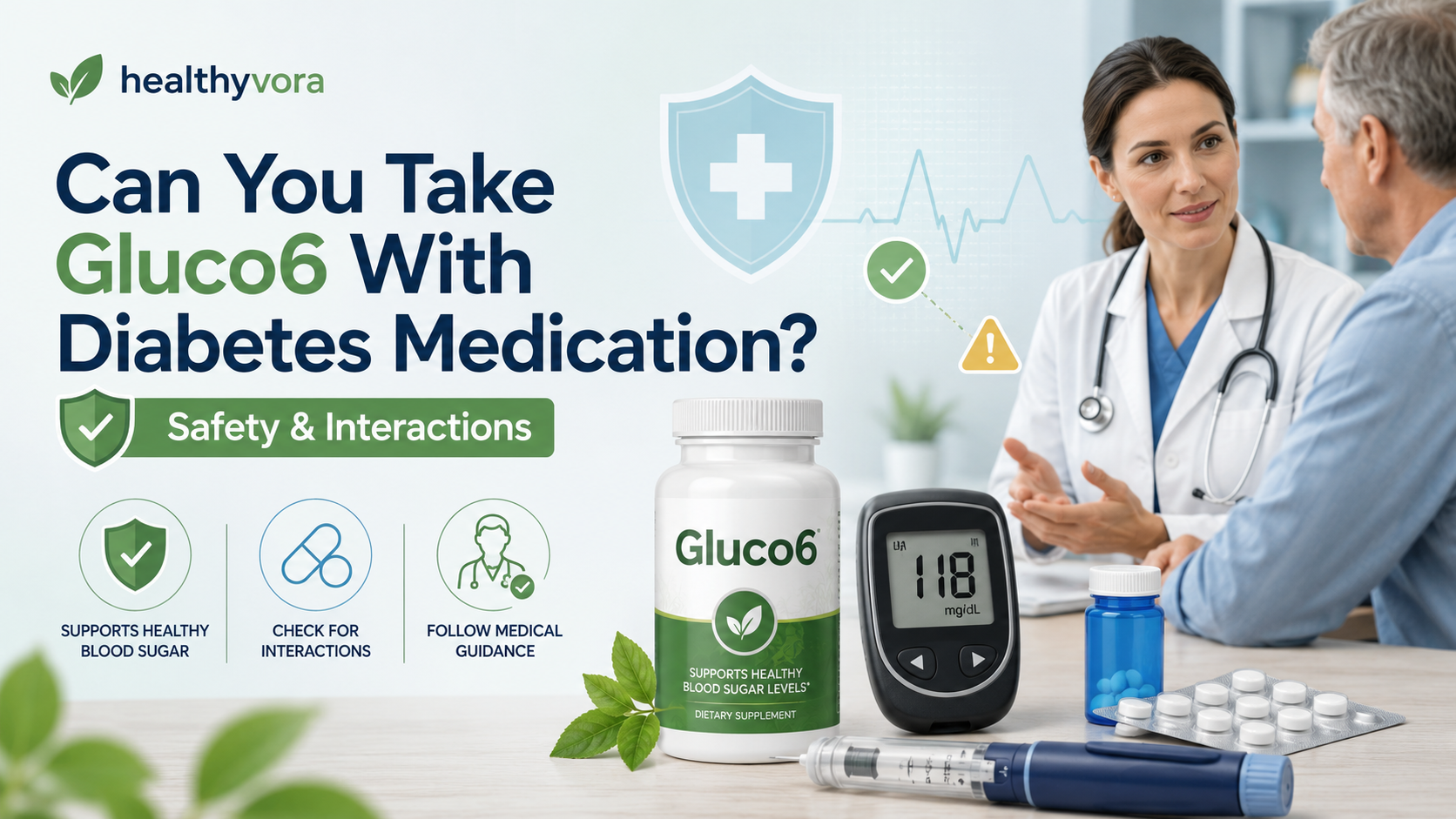
Can You Take Gluco6 With Diabetes Medication? Safety & Interactions
Can you take Gluco6 with diabetes medication? You should not combine Gluco6 with prescription diabetes medicine until your doctor, endocrinologist, or pharmacist has reviewed the combination. Gluco6 contains ingredients including chromium, Gymnema, cinnamon, green tea, TeaCrine, and Sukre according to its current official website. Some of these ingredients may affect glucose metabolism, and chromium in particular may have an additive glucose-lowering effect when taken with insulin, metformin, or other diabetes medicines.
This does not mean that everyone who combines Gluco6 with diabetes medicine will experience a dangerous interaction. It means that there is enough uncertainty—and enough potential for blood glucose changes—that professional review is the safer approach. Healthyvora recommends treating Gluco6 as a dietary supplement, not as a replacement for prescribed diabetes treatment.

Quick Answer: Is Gluco6 Safe With Diabetes Medication?
Do not add Gluco6 to insulin, metformin, sulfonylureas, or another glucose-lowering medication without first discussing it with a qualified healthcare professional. The concern is not necessarily a single proven Gluco6-drug interaction; rather, ingredients that may influence glucose could add to the effects of your existing treatment and potentially contribute to low blood sugar.
The FDA advises people taking prescription or over-the-counter medications to speak with a doctor, pharmacist, or other healthcare professional before using dietary supplements because supplements can alter how medications work.
The official Gluco6 website also tells users to consult their doctor and to continue taking prescribed medications until a healthcare professional advises otherwise.
What Is Gluco6?
Gluco6 is marketed in the United States as a dietary supplement intended to support glucose metabolism and related metabolic goals. Its official website currently identifies six principal ingredients: Sukre, TeaCrine, Gymnema, chromium, cinnamon, and green tea.
That distinction—dietary supplement rather than diabetes medication—is important. Dietary supplements sold in the United States are regulated differently from prescription drugs. The FDA does not approve dietary supplements for safety and effectiveness before they are marketed in the same way it approves drugs.
Therefore, seeing statements such as “manufactured in an FDA-registered facility” should not be interpreted as meaning that the supplement itself has been FDA-approved as a treatment for diabetes. FDA registration of a facility does not itself establish FDA approval of the product.
Why Can Gluco6 Interact With Diabetes Medication?
The main concern is overlapping effects on blood glucose. Prescription medications are dosed as part of an individual diabetes treatment plan. Adding a supplement that also influences glucose metabolism can make the overall response harder to predict.
This is particularly important for people using medications capable of producing hypoglycemia, including insulin and certain insulin-stimulating drugs.
Chromium Is One of the Most Important Ingredients to Consider
The NIH Office of Dietary Supplements specifically warns that taking chromium with insulin may increase the risk of hypoglycemia. It also notes that chromium may have an additive effect when combined with metformin or other antidiabetes medicines because chromium supplementation may lower blood glucose in some people.
Because Gluco6 currently lists chromium as one of its ingredients, this interaction deserves attention before combining the supplement with a prescription glucose-lowering regimen.
Gymnema May Also Influence Blood Glucose
Gymnema sylvestre has been studied for possible glucose-lowering activity. Evidence is not strong enough to assume that a particular Gluco6 dose will meaningfully lower glucose in every person, but its presence makes it reasonable to consider the possibility of additive effects alongside prescription treatment.
The broader point is important: an ingredient does not need to be a prescription drug to have biological activity.
Cinnamon Requires Similar Caution
Research on cinnamon and diabetes has produced mixed results. NCCIH notes that some studies have reported effects on fasting glucose or insulin resistance, but evidence is not consistent enough to establish cinnamon supplements as a diabetes treatment. NCCIH also advises people taking medicines to discuss herbal products with their healthcare provider because interactions are possible.
Green Tea Can Interact With Medicines Too
Green tea is often perceived as harmless because it is widely consumed as a beverage. Concentrated green tea extracts, however, can have different effects from drinking a normal cup of tea.
NCCIH reports that high-dose green tea has affected blood concentrations of certain medications, including nadolol, and that green tea extract can interact with other medicines. People taking medications are advised to discuss concentrated green tea supplements with their healthcare provider.
Gluco6 Interactions With Common Diabetes Medications
| Medication Type | Main Concern With Gluco6 | Recommended Approach |
|---|---|---|
| Insulin | Chromium and other glucose-active ingredients could theoretically add to glucose-lowering effects. | Consult your diabetes clinician before combining them and discuss glucose monitoring. |
| Metformin | NIH notes that chromium may have an additive effect with metformin and other diabetes medicines. | Have a doctor or pharmacist review the combination first. |
| Sulfonylureas | These medications can already cause hypoglycemia; another glucose-active product could complicate control. | Avoid starting the supplement without clinical guidance. |
| Meglitinides | These drugs stimulate insulin release and can cause low glucose. | Discuss supplement use and monitoring with your prescriber. |
| GLP-1 medicines | No specific Gluco6 interaction has been conclusively established, but combination safety has not been well studied. | Review the full supplement label with your clinician. |
| SGLT2 inhibitors | A direct interaction with Gluco6 has not been established; overall diabetes therapy still requires coordinated management. | Ask your doctor or pharmacist before adding the supplement. |
This table identifies areas of concern rather than proving that a particular interaction will occur. Supplement effects depend on ingredient dose, medication regimen, kidney and liver function, diet, glucose control, and individual response.
Can You Take Gluco6 With Metformin?
Possibly, but only after your healthcare provider reviews the combination.
Metformin itself usually has a relatively low risk of causing hypoglycemia when used alone. However, the issue with Gluco6 is that its chromium content and other glucose-related ingredients introduce another variable into your treatment.
NIH specifically states that chromium supplementation may have an additive effect with metformin and other antidiabetes medicines, potentially increasing the risk of low blood glucose.
Your pharmacist can often perform a medication-and-supplement interaction review quickly. Bring the actual Gluco6 bottle or a photograph of its Supplement Facts panel so the exact formulation can be checked.
Can You Take Gluco6 With Insulin?
Using Gluco6 with insulin deserves particular caution because insulin can directly cause hypoglycemia.
The NIH Office of Dietary Supplements warns that chromium taken together with insulin might increase the risk of low blood sugar. Because Gluco6 lists chromium among its ingredients, people using basal insulin, mealtime insulin, insulin pumps, or other insulin regimens should not assume the combination is automatically safe.
Do not reduce, skip, or discontinue insulin simply because you begin taking a supplement. Changes to insulin should be made according to your diabetes care plan and the advice of your healthcare professional.
Could Gluco6 Cause Low Blood Sugar?
Low blood sugar is a potential concern, particularly when Gluco6 is combined with medication that already lowers glucose. There is not enough high-quality clinical evidence to say how often Gluco6 itself causes hypoglycemia, but its ingredients make monitoring worth discussing with a clinician.
The American Diabetes Association considers glucose below 70 mg/dL to be low for many people with diabetes and recommends prompt treatment according to an individual’s diabetes plan.
Possible symptoms include:
- Shaking or trembling
- Sweating or clamminess
- Fast heartbeat
- Sudden hunger
- Dizziness or lightheadedness
- Anxiety or nervousness
- Irritability
- Confusion
These are recognized signs of hypoglycemia, although symptoms vary between individuals.
Severe confusion, loss of consciousness, inability to swallow, or seizures can indicate severe hypoglycemia and require emergency assistance.
How to Check Whether Gluco6 Fits Your Diabetes Treatment Plan
A safe decision should be based on your complete medication regimen rather than on the supplement name alone.
- Write down every diabetes medication you take. Include insulin names, doses, metformin, injectable medicines, and oral medications.
- Include non-diabetes medications. Green tea extracts and other supplement ingredients may interact with medicines unrelated to glucose.
- Show the Gluco6 Supplement Facts panel to a pharmacist or clinician. Ingredient amounts matter when assessing risk.
- Discuss kidney and liver health. These organs influence how many medicines and supplement compounds are processed.
- Ask whether additional glucose monitoring is appropriate. A clinician may want more finger-stick readings or CGM monitoring after any meaningful change to your regimen.
- Do not change prescription doses yourself. A supplement should not trigger an unsupervised reduction or discontinuation of prescribed therapy.
 Visit Official Website
Why U.S. Consumers Need to Distinguish Supplements From Diabetes Drugs
For people purchasing Gluco6 in the United States, the regulatory distinction matters. Prescription diabetes medications undergo FDA review for their approved uses. Dietary supplements do not receive the same premarket FDA approval for safety and effectiveness.
The American Diabetes Association also states that supplements have not been proven to be an effective substitute for established diabetes management and does not recommend routine supplementation for glucose control in the absence of a specific deficiency.
That does not mean every supplement is ineffective or unsafe. It means the evidence, manufacturing framework, dosing standards, and regulatory pathway differ from those used for approved medications.
Do Not Replace Diabetes Medication With Gluco6
Gluco6 should not be used as a substitute for prescribed diabetes medication.
NCCIH specifically advises people not to use dietary supplements instead of diabetes medicine because inadequate treatment can increase the risk of diabetes-related complications.
The official Gluco6 website itself tells customers to continue taking prescribed medications until cleared by a healthcare professional. see also.
This point is especially important for anyone with type 1 diabetes, people dependent on insulin, or people with significantly elevated glucose levels. Stopping insulin or another essential medication because a supplement appears to be improving glucose can be dangerous.
Common Mistakes to Avoid
1. Assuming “Natural” Means Interaction-Free
Natural compounds can alter biological pathways and medication effects. FDA specifically cautions consumers that natural does not automatically mean safe.
2. Stopping Medication When Glucose Improves
A better glucose reading does not automatically mean that medication is no longer needed. Medication adjustments should be based on repeated measurements and professional clinical assessment.
3. Taking Multiple Blood Sugar Supplements Together
Combining Gluco6 with chromium, cinnamon, Gymnema, or another glucose-support supplement may increase ingredient exposure and make side effects or glucose changes harder to identify.
4. Looking Only for an Interaction With Metformin
Your entire medication list matters. A Gluco6 ingredient may interact with a cardiovascular medicine, thyroid medicine, or another treatment even when the diabetes medicine itself is not the primary concern.
5. Ignoring the Supplement Facts Label
Product names are less useful than the exact ingredient list and doses. Formulas can also change over time, so use the label on the bottle you actually plan to take.
Who Should Be Especially Careful Before Taking Gluco6?
Professional review is particularly important if you:
- Use insulin.
- Take more than one diabetes medication.
- Have experienced hypoglycemia before.
- Use a sulfonylurea or meglitinide.
- Have kidney disease.
- Have liver disease.
- Take several prescription medications.
- Are preparing for surgery.
- Are pregnant, trying to become pregnant, or breastfeeding.
The FDA emphasizes discussing supplement use with healthcare professionals because supplements can interact with medications and may require special precautions around medical conditions or surgery.
Why Healthyvora Takes a Cautious Approach to Gluco6 and Diabetes Medication
When a supplement is marketed around blood glucose, the most useful question is not simply whether individual ingredients sound promising. The better question is how the product fits into a person’s existing treatment plan.
Healthyvora’s approach is to separate marketing claims from medication-safety questions. Evidence about an individual ingredient does not prove that an entire multi-ingredient supplement will produce the same result, and evidence that a supplement may influence glucose does not automatically make it an appropriate substitute for medication.
For that reason, the practical next step is a medication review with a physician, endocrinologist, diabetes educator, or pharmacist who can see your complete treatment plan.
What to Ask Your Doctor or Pharmacist Before Taking Gluco6
- Could any Gluco6 ingredient interact with my current diabetes medication?
- Does the chromium in the product create additional hypoglycemia risk for me?
- Should I monitor my glucose more frequently after starting it?
- Could it interact with my blood pressure, cholesterol, thyroid, or other medications?
- Are there reasons related to my kidney or liver function that make this supplement inappropriate?
- What symptoms should make me stop the supplement and contact you?
Bringing these questions to an appointment is much more useful than asking only, “Is Gluco6 safe?” Safety depends on the person, medication regimen, ingredient doses, medical history, and monitoring plan.
Final Verdict: Can You Take Gluco6 With Diabetes Medication?
Gluco6 should not automatically be combined with diabetes medication without professional review. Its current formula includes chromium and botanical ingredients that may affect glucose-related pathways, while NIH specifically warns that chromium taken with insulin, metformin, or other antidiabetes medications may increase the possibility of low blood sugar.
The safest approach is simple: keep taking your prescribed diabetes medicines as directed, show the Gluco6 label to your doctor or pharmacist, and discuss whether additional glucose monitoring is needed before adding the supplement.
If you are researching Gluco6 before making a decision, use Healthyvora as a starting point for understanding the ingredients and questions worth asking—but use your healthcare team to decide whether the product belongs in your personal diabetes treatment plan.
Frequently Asked Questions About Gluco6 and Diabetes Medication
1. Can I take Gluco6 with metformin?
You should ask your doctor or pharmacist first. Gluco6 contains chromium, and NIH states that chromium may have an additive glucose-lowering effect when combined with metformin or other diabetes medicines.
2. Can I take Gluco6 with insulin?
Do not combine them without professional guidance. Chromium taken with insulin may increase the risk of hypoglycemia.
3. Can Gluco6 cause low blood sugar?
It is possible that glucose-active ingredients could contribute to lower glucose, particularly when combined with medication. The actual risk for Gluco6 has not been established well enough to predict it for every user.
4. Should I stop metformin if I start Gluco6?
No. Do not stop or reduce prescribed diabetes medicine unless your healthcare professional specifically changes your treatment plan.
5. Does Gluco6 replace diabetes medicine?
No. Dietary supplements should not be used as replacements for proven diabetes treatment. NCCIH specifically advises against replacing diabetes medicine with supplements.
6. Is Gluco6 FDA approved?
Dietary supplements are not FDA-approved for safety and effectiveness before marketing in the way prescription drugs are. FDA facility registration also does not mean that a supplement itself has FDA approval.
7. What Gluco6 ingredient is most concerning with diabetes medication?
Chromium deserves particular attention because NIH specifically identifies potential additive effects with insulin, metformin, and other antidiabetes medicines. Other botanical ingredients should also be reviewed.
8. Should I check my glucose more often after starting Gluco6?
Possibly. Ask your diabetes care team whether temporary additional finger-stick or CGM monitoring is appropriate based on your medication regimen and hypoglycemia risk.
9. Can I take Gluco6 with other supplements?
Do not assume that combining supplements is harmless. Multiple products may contain overlapping ingredients such as chromium, cinnamon, or other glucose-related compounds.
10. Who should I ask about Gluco6 interactions?
A physician, endocrinologist, or pharmacist who knows your complete medication list is best positioned to assess whether Gluco6 is appropriate for you.